Why Parents Must Take Action for Struggling Readers

The Reality: Schools Can’t Help Every Struggling Reader
If your child is struggling with reading, waiting for the school to provide help may mean waiting months, years—or forever. This isn’t because schools don’t care. It’s because they lack the resources, staffing, and capacity to provide intensive one-on-one phonics instruction to every student who needs it.
The hard truth: students who don’t receive a phonics foundation by second grade rarely receive that foundation at all. Without parental intervention, many struggling readers never catch up.
Three Critical Reasons Parents Must Take Action
Reason 1: Schools Stop Teaching Phonics After Second Grade
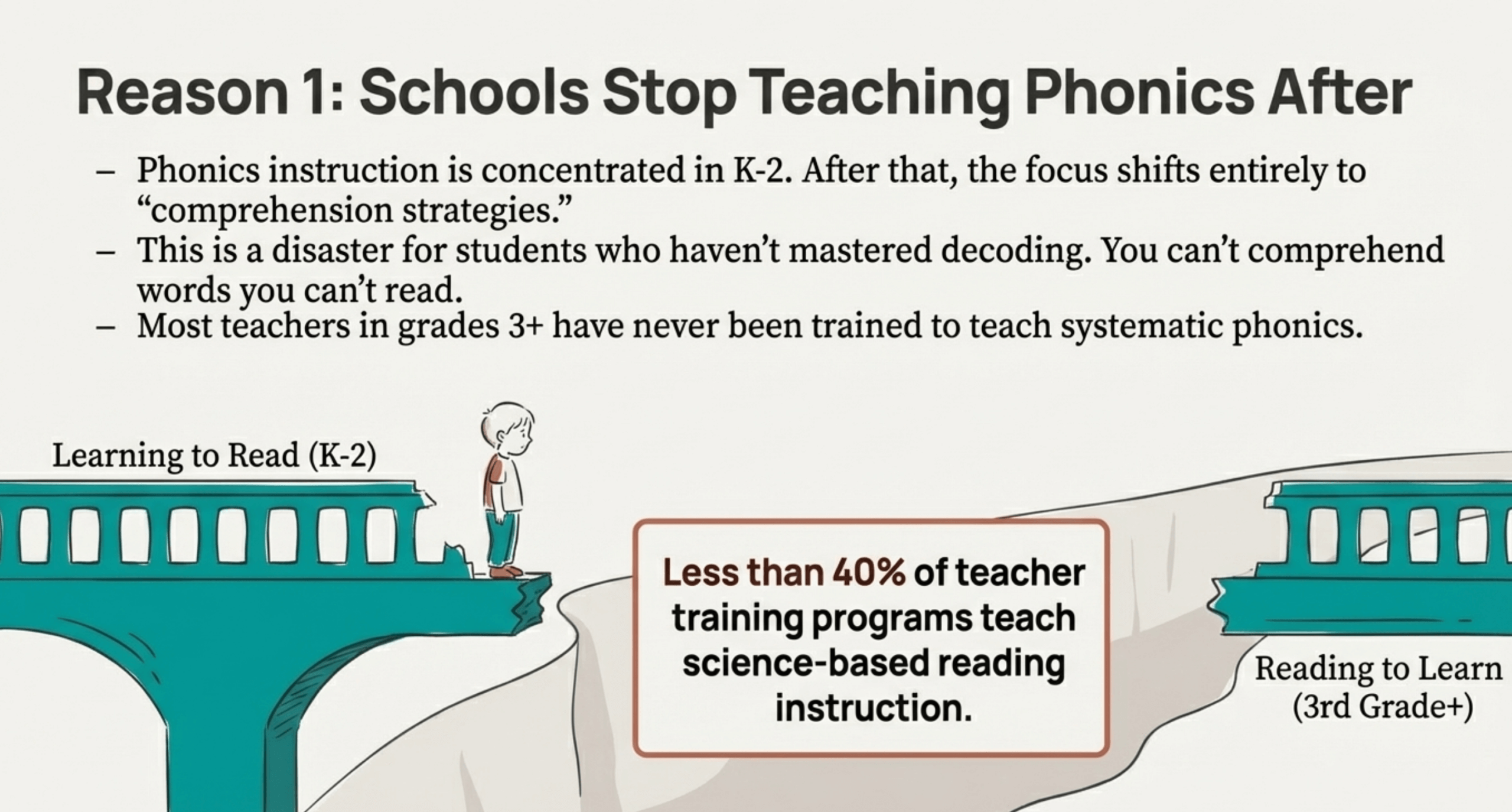
Most elementary schools that teach systematic phonics focus instruction in kindergarten through second grade. Beyond second grade, phonics instruction typically disappears. Schools operate under two assumptions:
- Students have already mastered phonics fundamentals
- Older students don’t need phonics—they need comprehension strategies
Both assumptions are wrong for struggling readers.
Students who didn’t master phonics by second grade continue struggling through third, fourth, fifth grade and beyond. Yet schools no longer teach the foundational skills these students desperately need. Instead, they focus on reading comprehension strategies—which does not help students who can’t decode the words on the page.
Research shows that less than 40% of teacher training programs teach science-based reading instruction. Most teachers beyond second grade have never been trained to teach systematic phonics. Even if they recognize a student’s phonics deficit, they don’t have the training or curriculum to address it.
Reason 2: Intervention Resources Are Overwhelmed
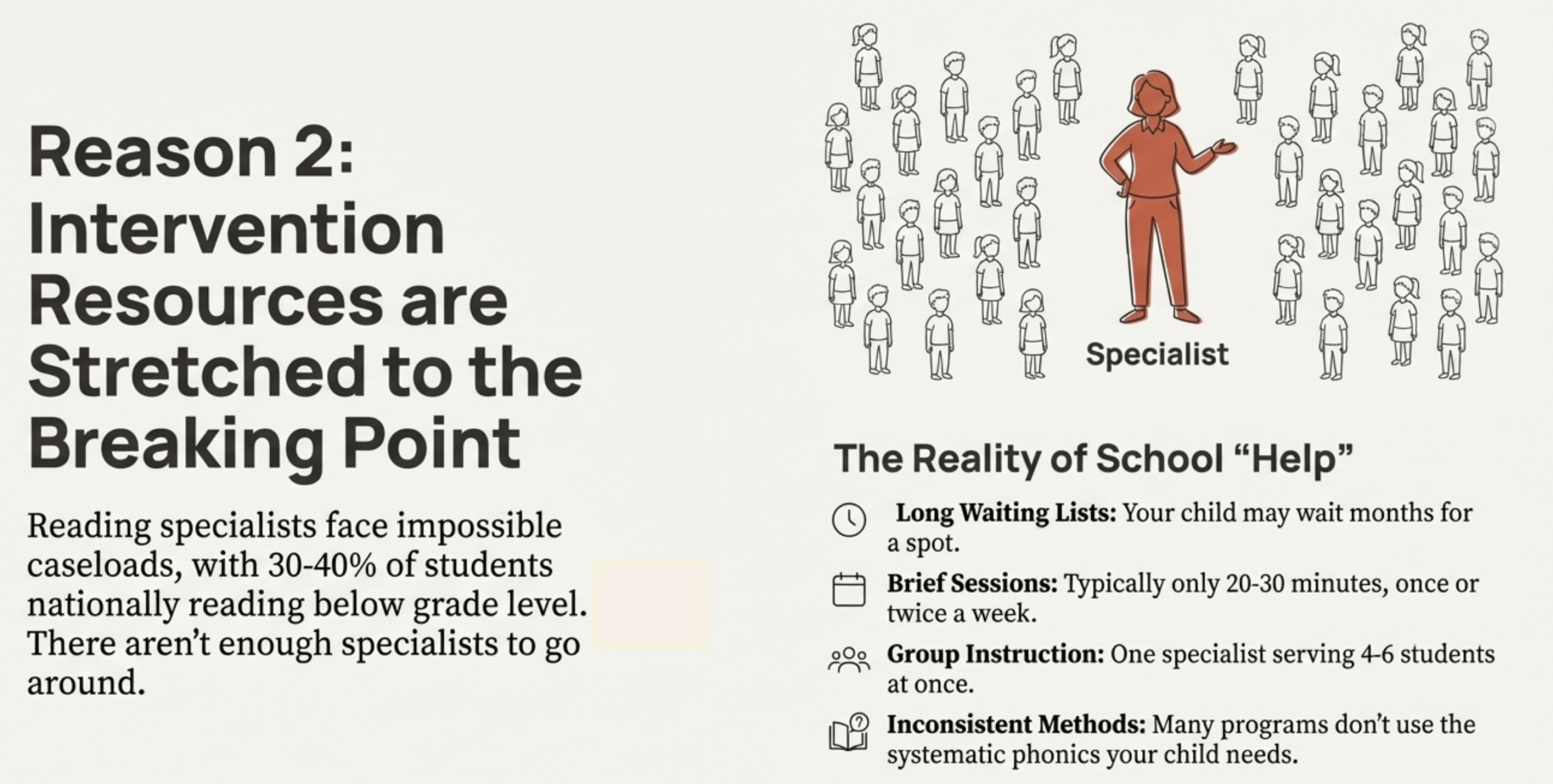
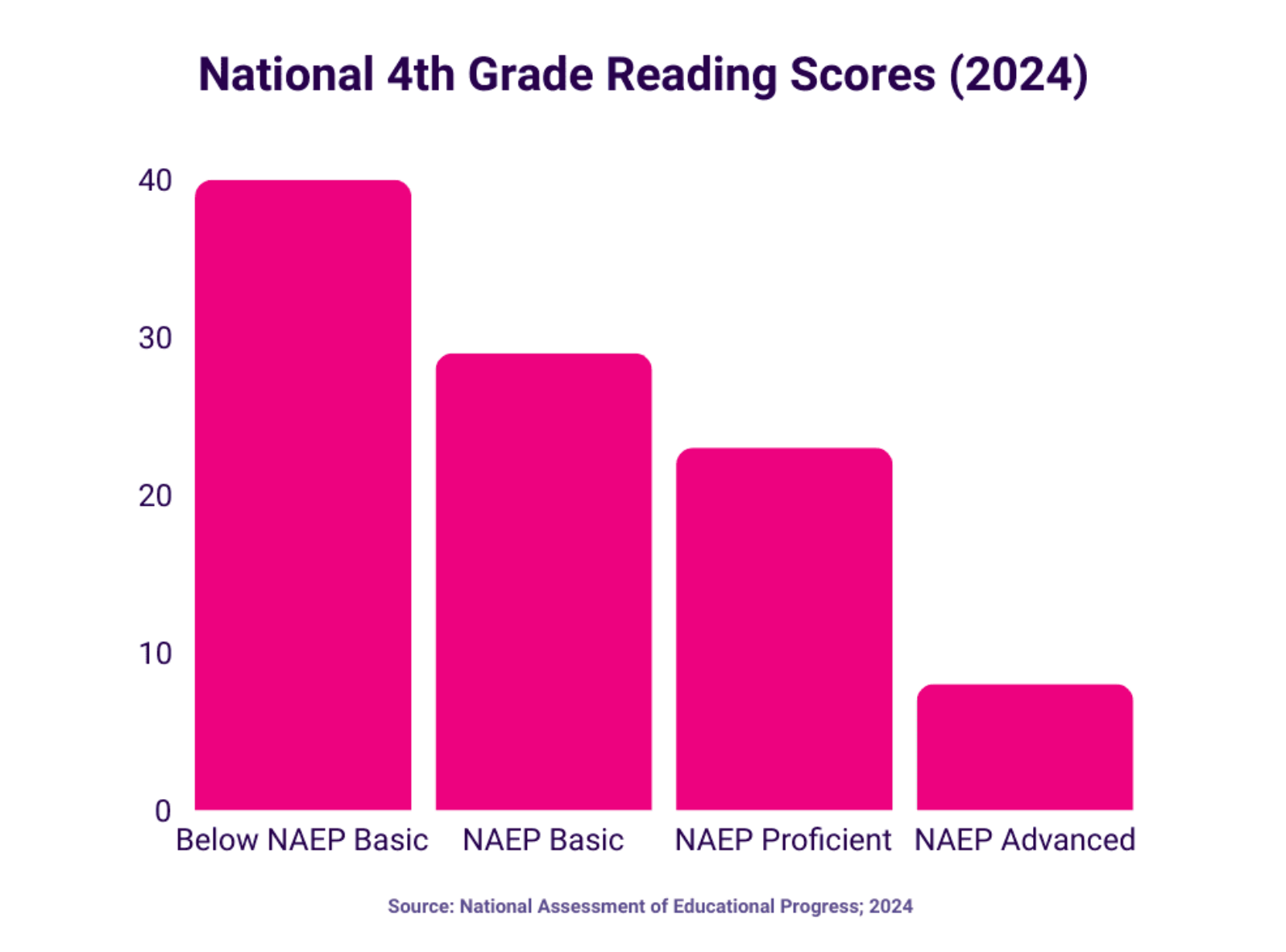
Reading specialists and intervention teachers face impossible caseloads. With 30-40% of students reading below grade level nationally, there simply aren’t enough specialists to serve every struggling reader.
Even when intervention programs exist:
- Waiting lists are long – Your child may wait months for a spot
- Sessions are brief – Often 20-30 minutes once or twice weekly
- Group instruction is common – One specialist serving 4-6 students simultaneously
- Instruction is inconsistent – Many programs don’t use systematic phonics approaches
This limited support isn’t enough for students with significant phonics gaps. Struggling readers need intensive, systematic, daily phonics practice—not 30 minutes of group instruction per week.
Reason 3: Time Is Working Against Your Child
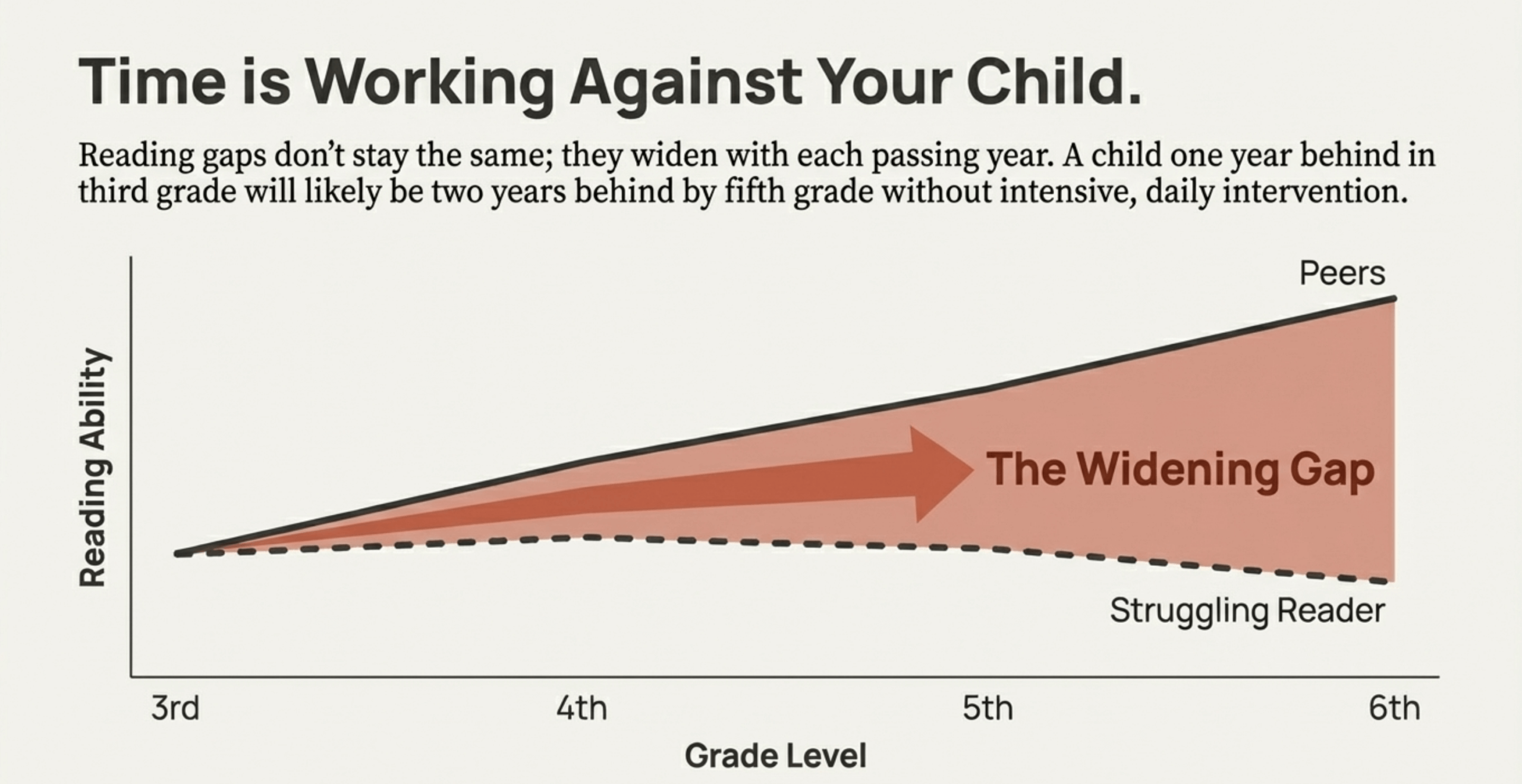
Reading gaps widen with each passing year. A child one year behind in third grade will likely be two years behind by fifth grade without intensive intervention. The further behind students fall, the harder catching up becomes.
The consequences compound:
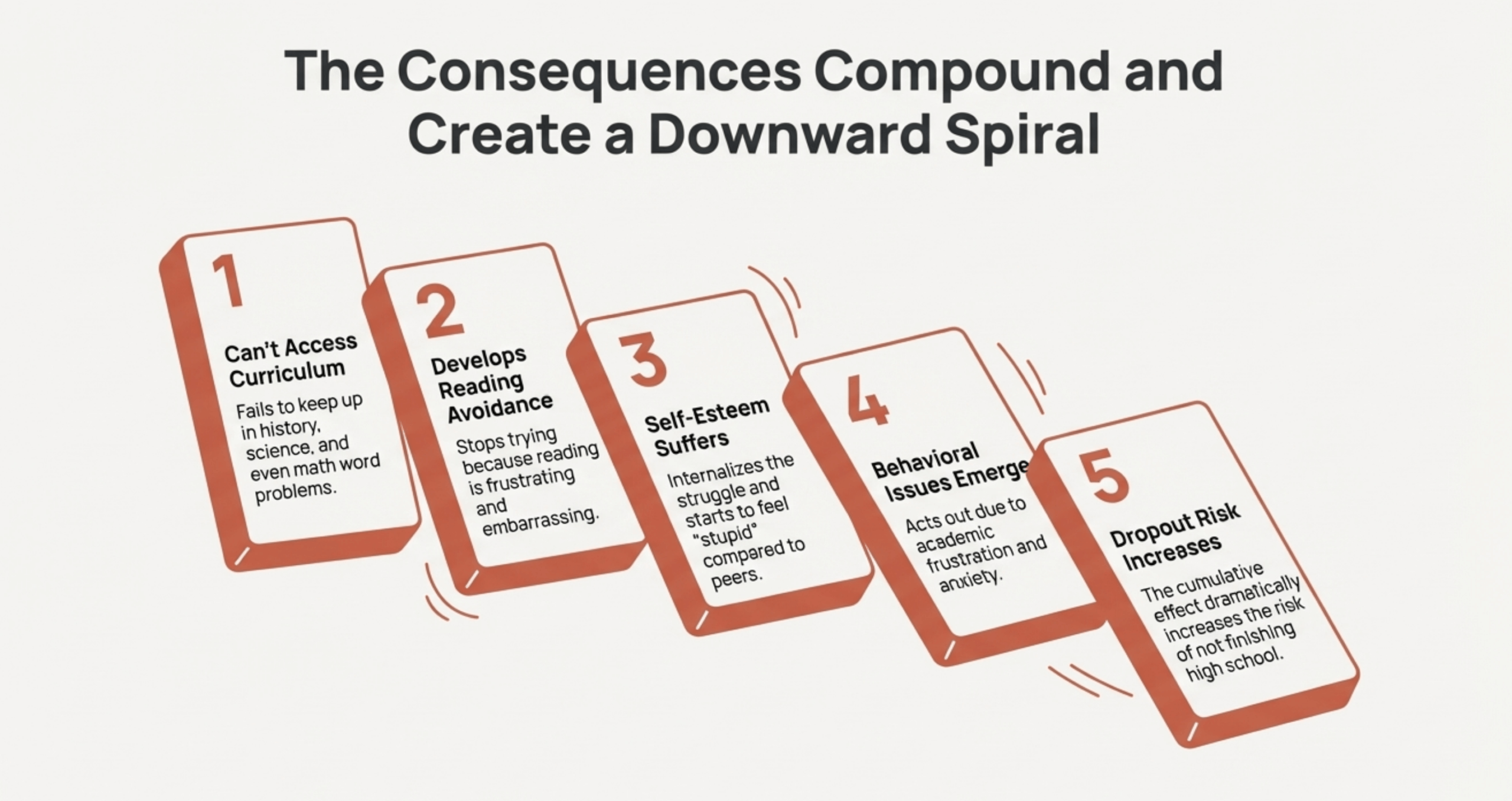
- Students can’t access grade-level content in any subject (history, science, math – all require reading)
- Reading avoidance develops (students stop trying because it’s frustrating)
- Self-esteem suffers (children feel “stupid” compared to peers)
- Behavioral issues may emerge (acting out from frustration)
- High school dropout risk increases dramatically
Every month you wait is a month of falling further behind. Schools move forward with curriculum regardless of whether struggling students have the foundation to access it.
What About Private Tutors?
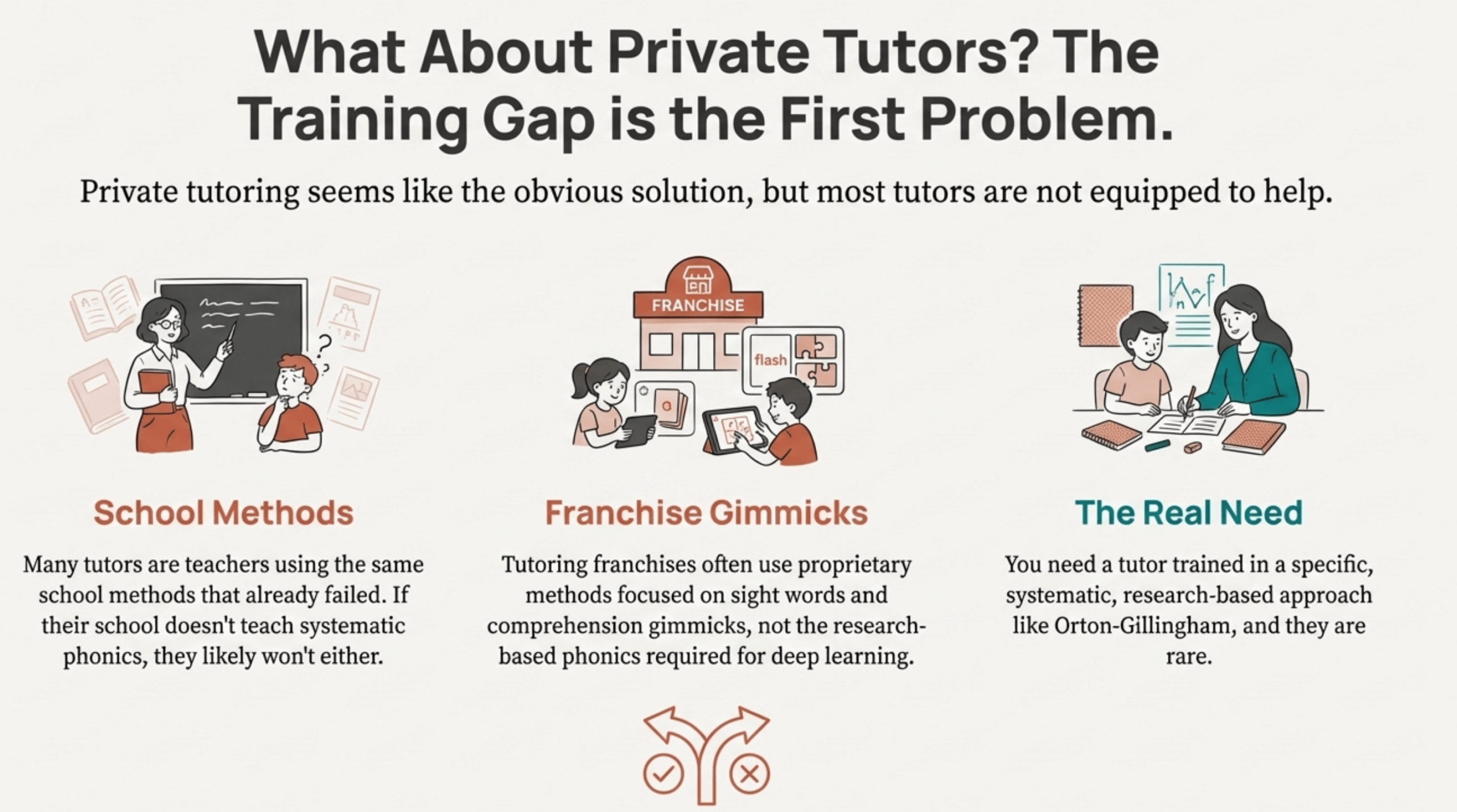
Private tutoring seems like an obvious solution, but parents quickly discover significant limitations:
Most Tutors Don’t Teach Systematic Phonics
Many private tutors are classroom teachers supplementing their income. They typically teach the same methods they use in school—which often aren’t research-based phonics approaches. If their school doesn’t teach systematic phonics, they probably won’t either.
Tutoring franchises frequently use proprietary methods that focus on comprehension strategies, sight word memorization, and multi-sensory gimmicks rather than systematic, explicit phonics instruction.
Cost Makes Intensive Help Unaffordable
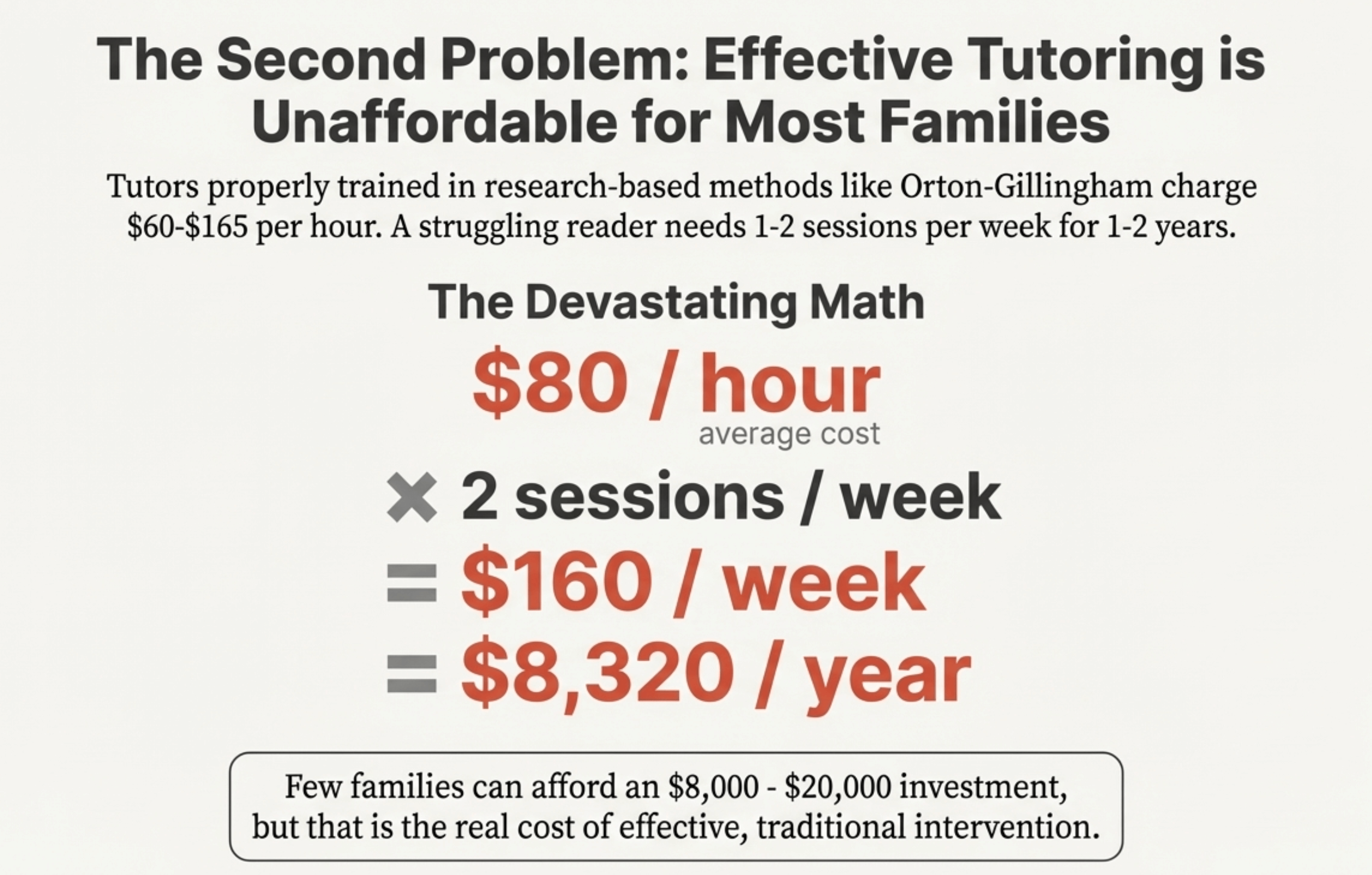
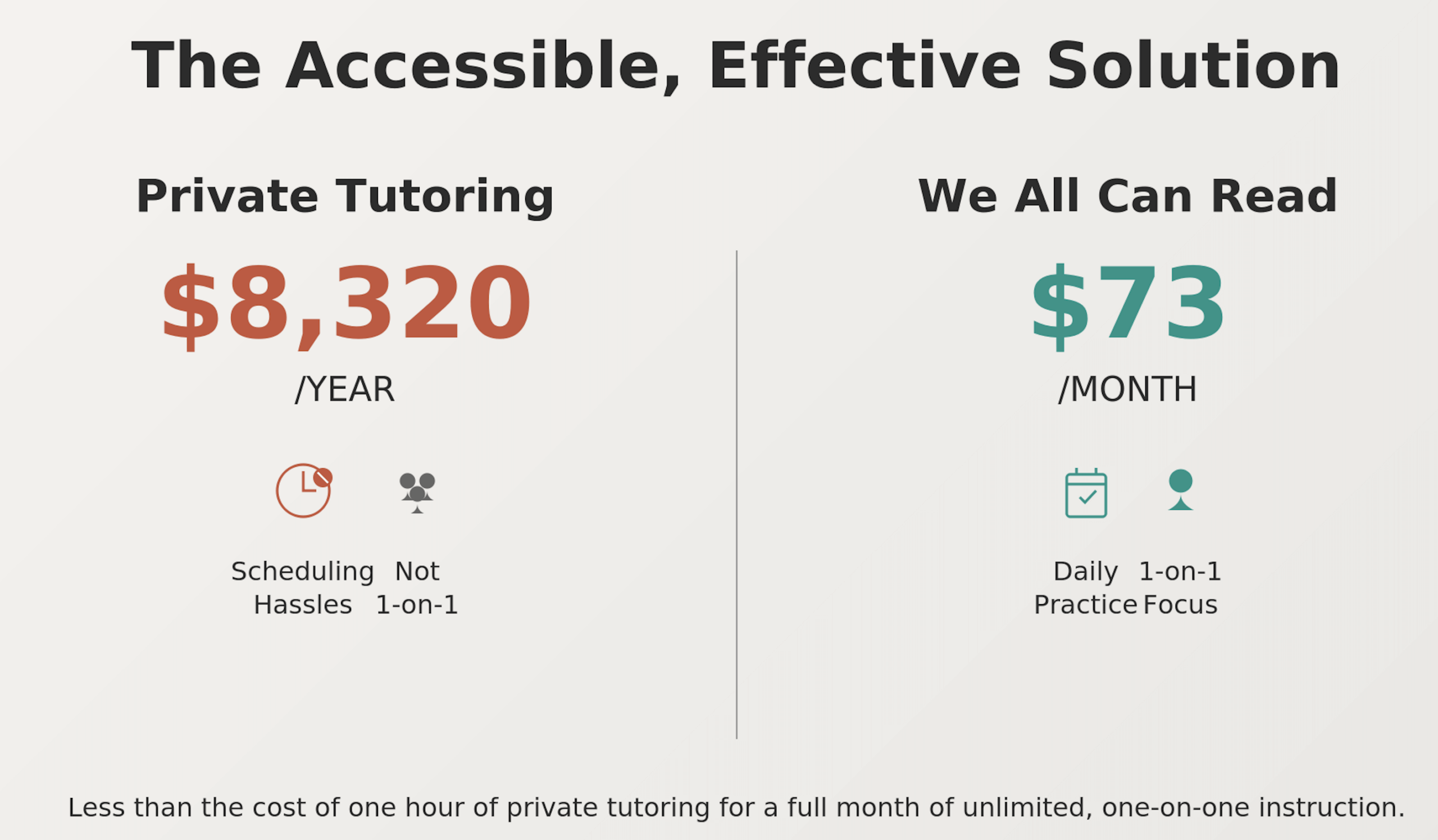
Research-trained Orton-Gillingham tutors charge $60-$165 per hour. Struggling readers on average need 1-2 sessions per week over many months to several years to build a complete phonics foundation. The math is devastating:
- $80/hour × 2 sessions/week = $160/week
- $160/week × 52 weeks = $8,320/year
- Most students need 1-2 years of intensive instruction
Few families can afford $8,000-$20,000 for reading tutoring—yet that’s what truly effective intervention costs through traditional tutoring.
Scheduling Creates Barriers
Coordinating tutor availability with your family schedule is challenging. Sessions require driving time, making 1-2 weekly appointments logistically difficult for working parents.
The Solution: Parents Teaching Systematic Phonics at Home
Ready to Take Control? Homeschool with Confidence
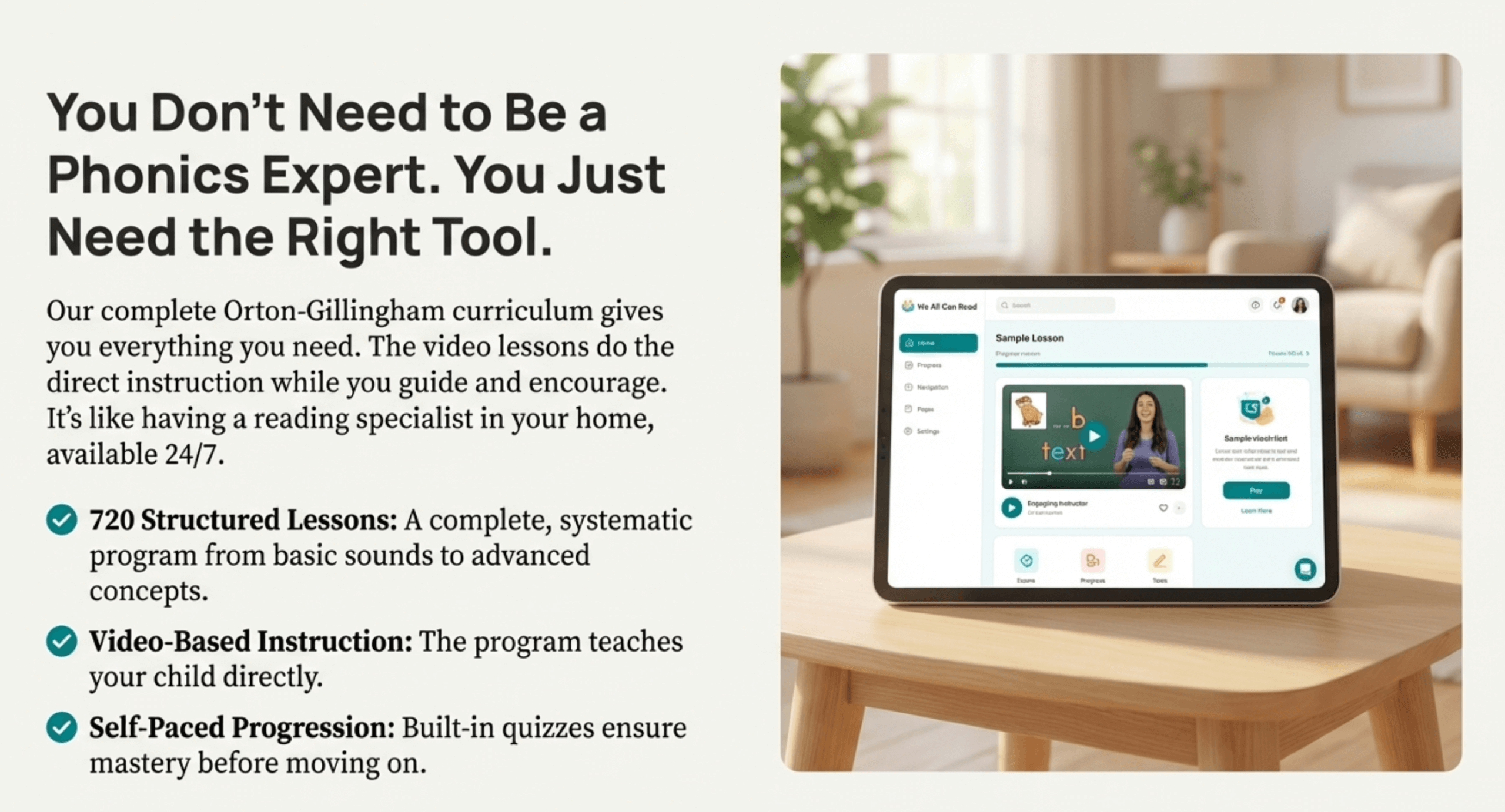
Many parents choose to homeschool when school isn’t meeting their child’s needs. Our complete Orton-Gillingham curriculum gives you everything you need—no teaching degree required. The video lessons do the instruction while you guide and encourage.
Parents who take direct action to teach phonics at home see dramatic results. You don’t need teaching credentials, phonics expertise, or hours of free time. You need:
- A systematic, research-based phonics program that teaches every phonetic element in logical sequence
- 20-30 minutes daily for your child to work through lessons
- Consistency over months, not perfection in every session
- Patience and encouragement as your child builds skills step-by-step
What Parents Can Control
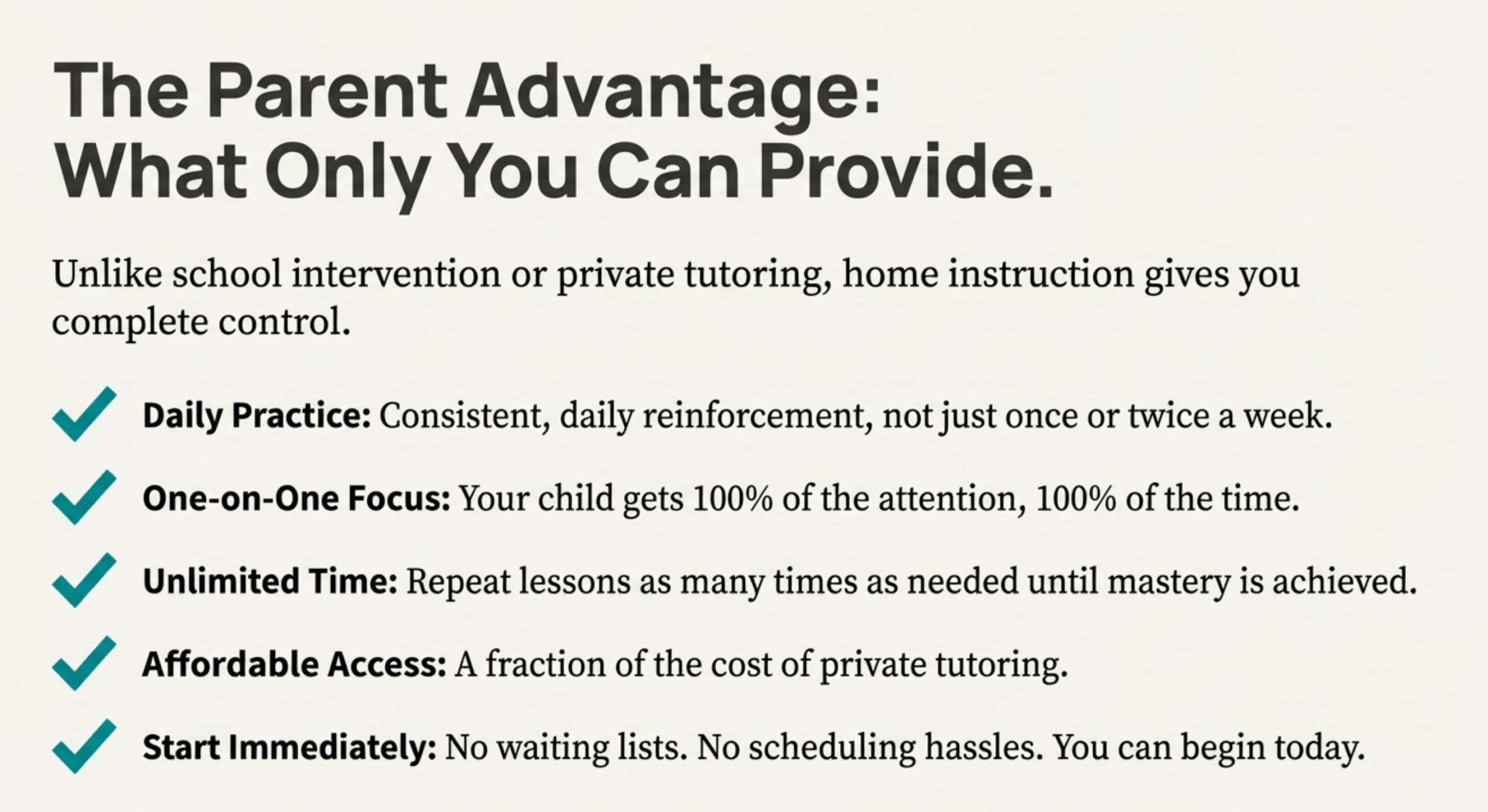
Unlike school intervention (limited, inconsistent, unavailable) or private tutoring (expensive, scheduling-dependent), home instruction gives you:
- ✅ Daily practice – Not once weekly, every single day
- ✅ Intensive focus – One-on-one attention, working at your child’s exact level
- ✅ Unlimited time – Repeat lessons as needed until mastery achieved
- ✅ Consistent methodology – Same systematic approach every day
- ✅ Affordable access – Research-based program cost $73/month, not $1,000+/month
Most importantly: you can start immediately. No waiting lists, no scheduling hassles, no delays while your child falls further behind.
What Should Parents Teach?
Struggling readers need systematic instruction in specific skill areas. Our program addresses nine essential components:
- Why parents must take action – Understanding the crisis and your role
- Letter sounds and spelling rules – The foundation of all reading
- Decoding strategies – How to sound out any word without guessing
- Decodable text practice – Reading materials matching phonics knowledge
- Spelling instruction – Encoding reinforces decoding skills
- Integrated reading and spelling – Teaching both skills simultaneously
- Mastery-based progression – Complete understanding before advancing
- Fluency development – Building speed alongside accuracy
- Guided oral reading practice – Specific techniques for fluency building
Each component builds on the previous ones, creating a comprehensive approach that addresses every aspect of reading development.
Our Program Makes Parent-Led Instruction Possible
Our systematic phonics program was designed specifically to enable parents to help struggling readers at home:
- 720 structured lessons teaching complete phonics foundation
- Video instruction in our lessons – the program teaches directly to your child
- Self-paced progression – repeat lessons until mastery achieved
- Built-in quizzes ensure understanding before advancing
- Age-appropriate content for grades 3-12 and adults
- $73/month – less than one hour of private tutoring
Parents don’t need to be phonics experts. The video lessons teach directly to students while parents supervise and encourage. It’s like having a full-time reading specialist available 24/7 in your home.
Start with 10 Free Lessons

Experience our systematic approach risk-free. The first 10 lessons are completely free—no credit card, no obligation. These introductory lessons teach consonant sounds and the first short vowel, showing you exactly how the program works.
Continue Reading: The 9 Essential Strategies
← Previous: Help for Struggling Readers
Next: What to Teach: Letter Sounds & Spelling Rules →
Questions about teaching phonics at home? Contact us or return to the complete struggling readers guide.