What to Teach Struggling Readers: Letter Sounds & Spelling Rules
Start at the True Beginning
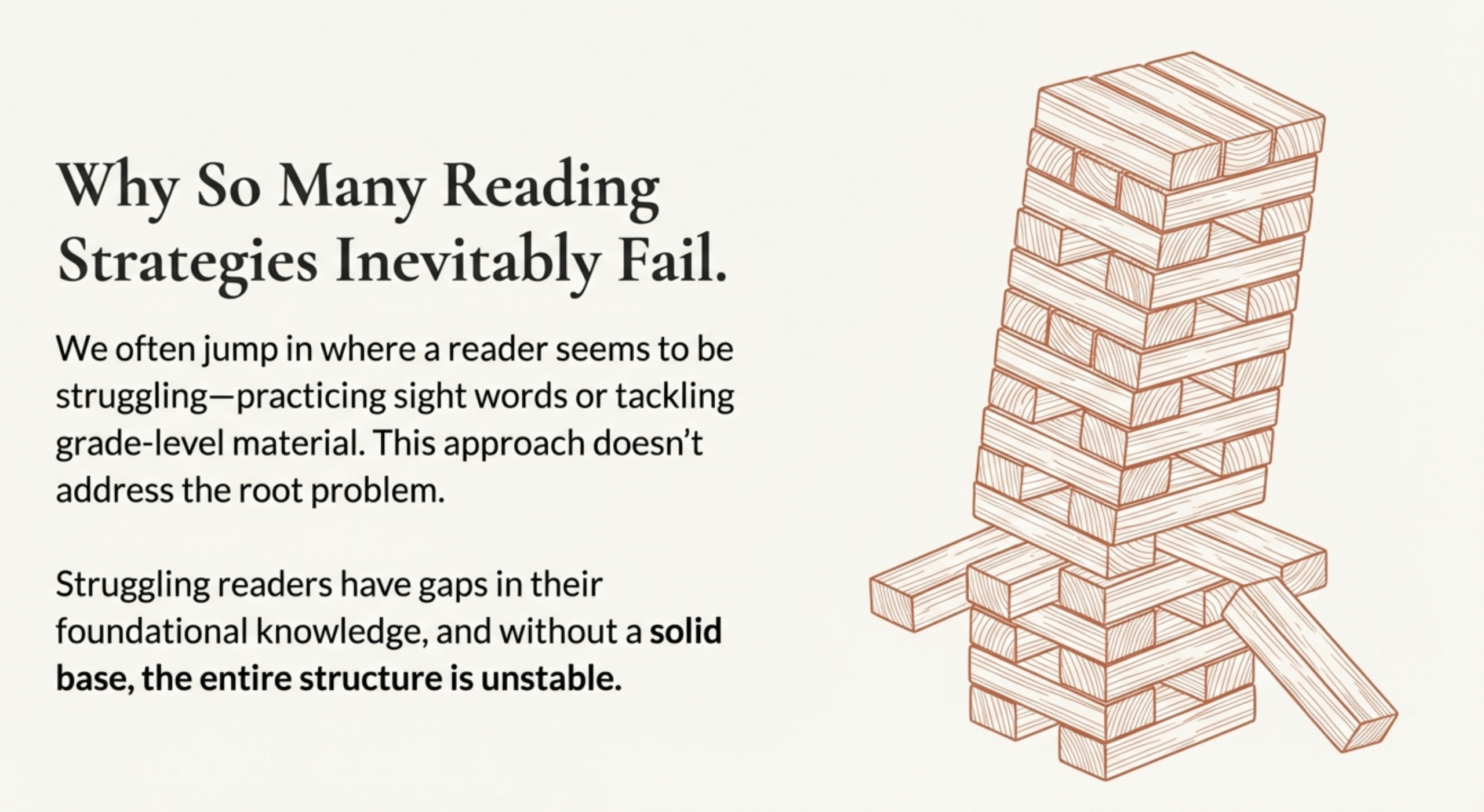
When helping a struggling reader, the temptation is to jump in wherever they seem to be having trouble—practicing sight words, working on comprehension strategies, or tackling grade-level material. This approach inevitably fails because it doesn’t address the root problem.
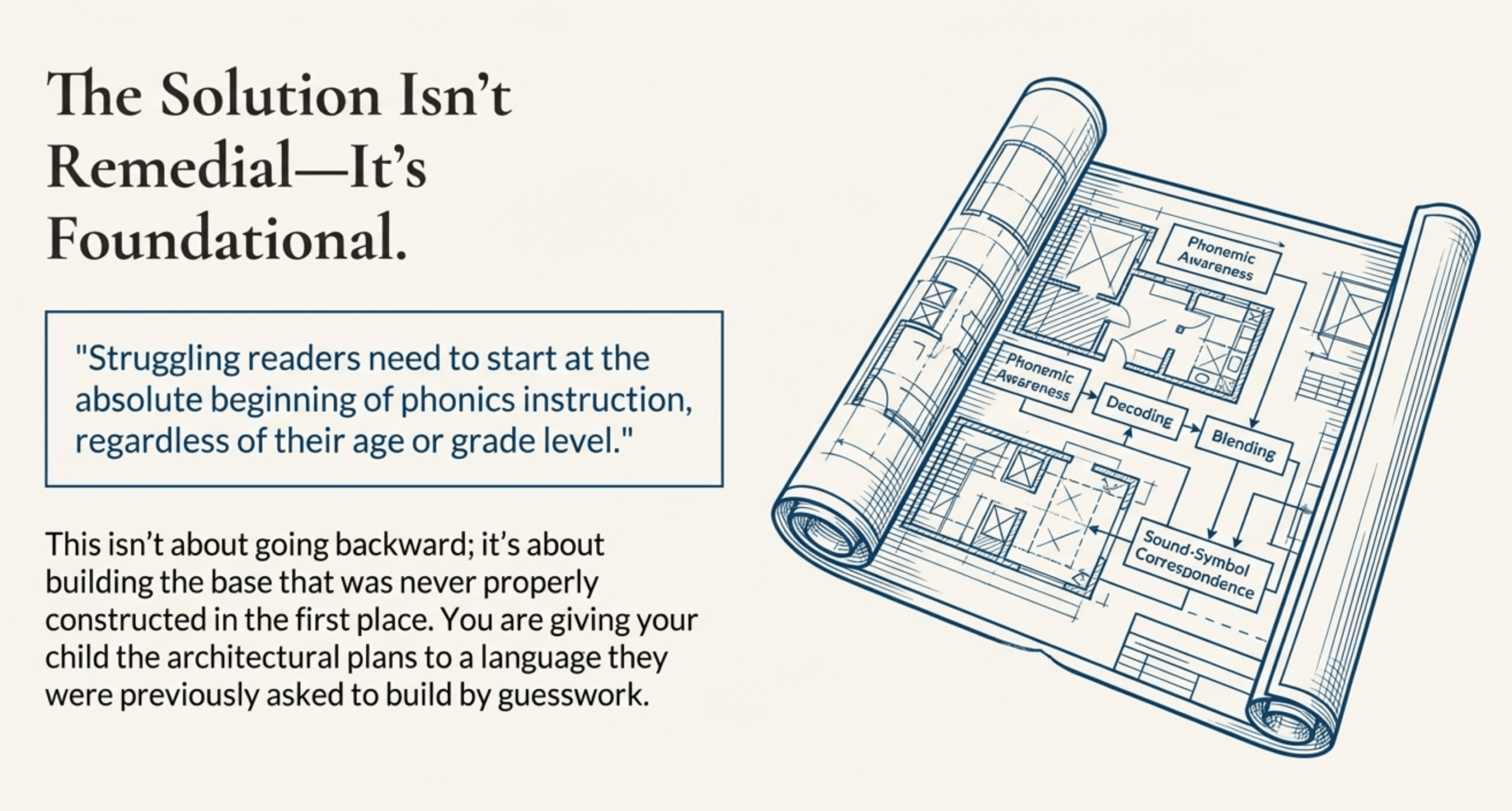
Struggling readers need to start at the absolute beginning of phonics instruction, regardless of their age or grade level. Even if your child is in fourth grade, sixth grade, or high school, if they’re struggling with reading, they need systematic instruction starting with the most basic letter-sound relationships.
This isn’t remedial—it’s foundational. You’re not going backward; you’re building the base that was never properly constructed.
Begin with Consonant Sounds
Why Consonants Come First
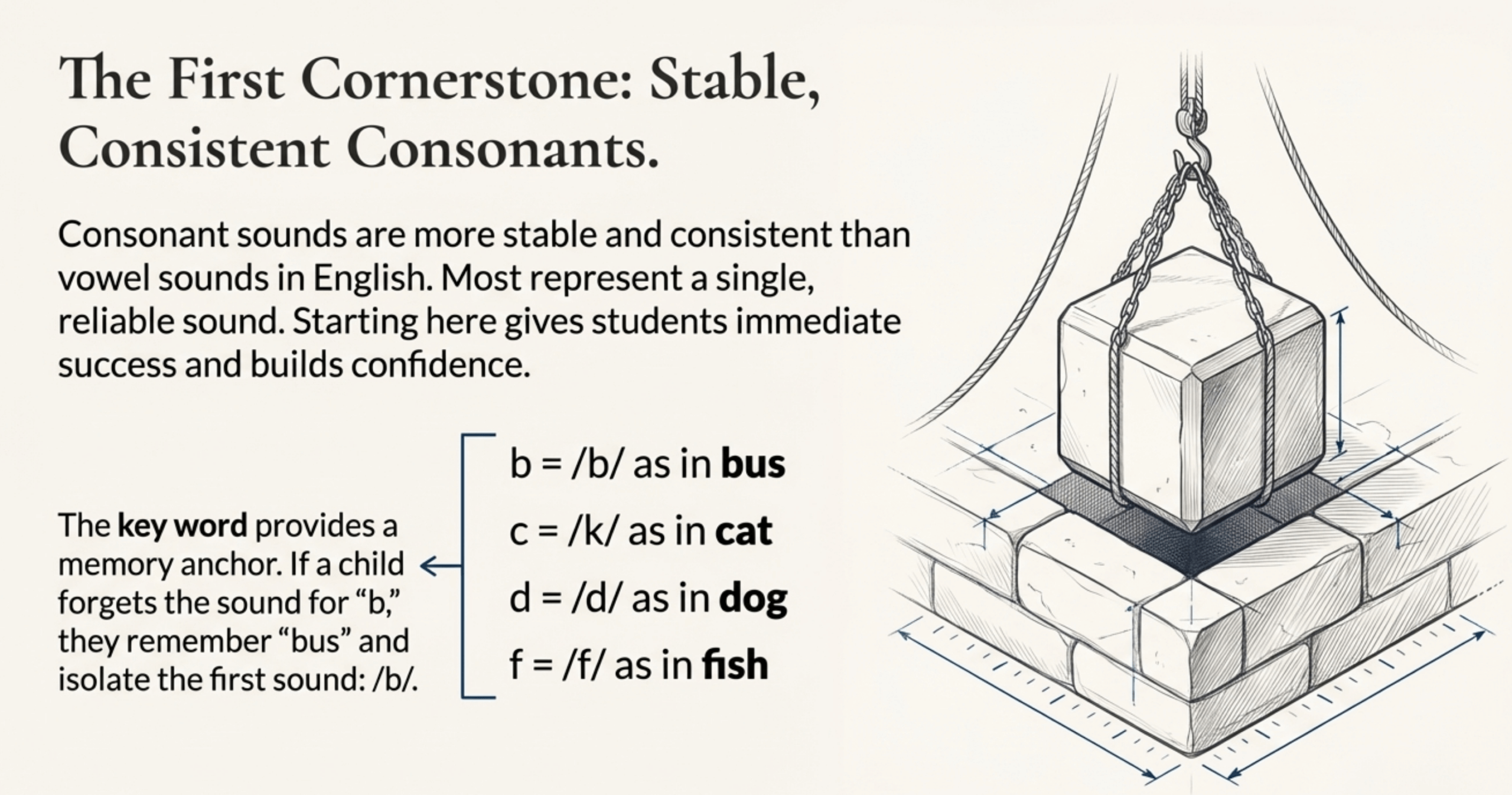
Consonant sounds are more stable and consistent than vowel sounds in English. Most consonants represent a single, reliable sound, making them easier for struggling readers to learn and remember. Starting with consonants gives students immediate success and builds confidence.
Teaching the Consonant Sounds
Introduce consonants systematically with clear instruction:
Use key words for each letter:
- b = /b/ as in bus
- c = /k/ as in cat
- d = /d/ as in dog
- f = /f/ as in fish
- g = /g/ as in goat
The key word provides a memory anchor. If your child forgets the sound for “b,” they remember “bus” and isolate the first sound: /b/.
Teach Sounds, Not Letter Names
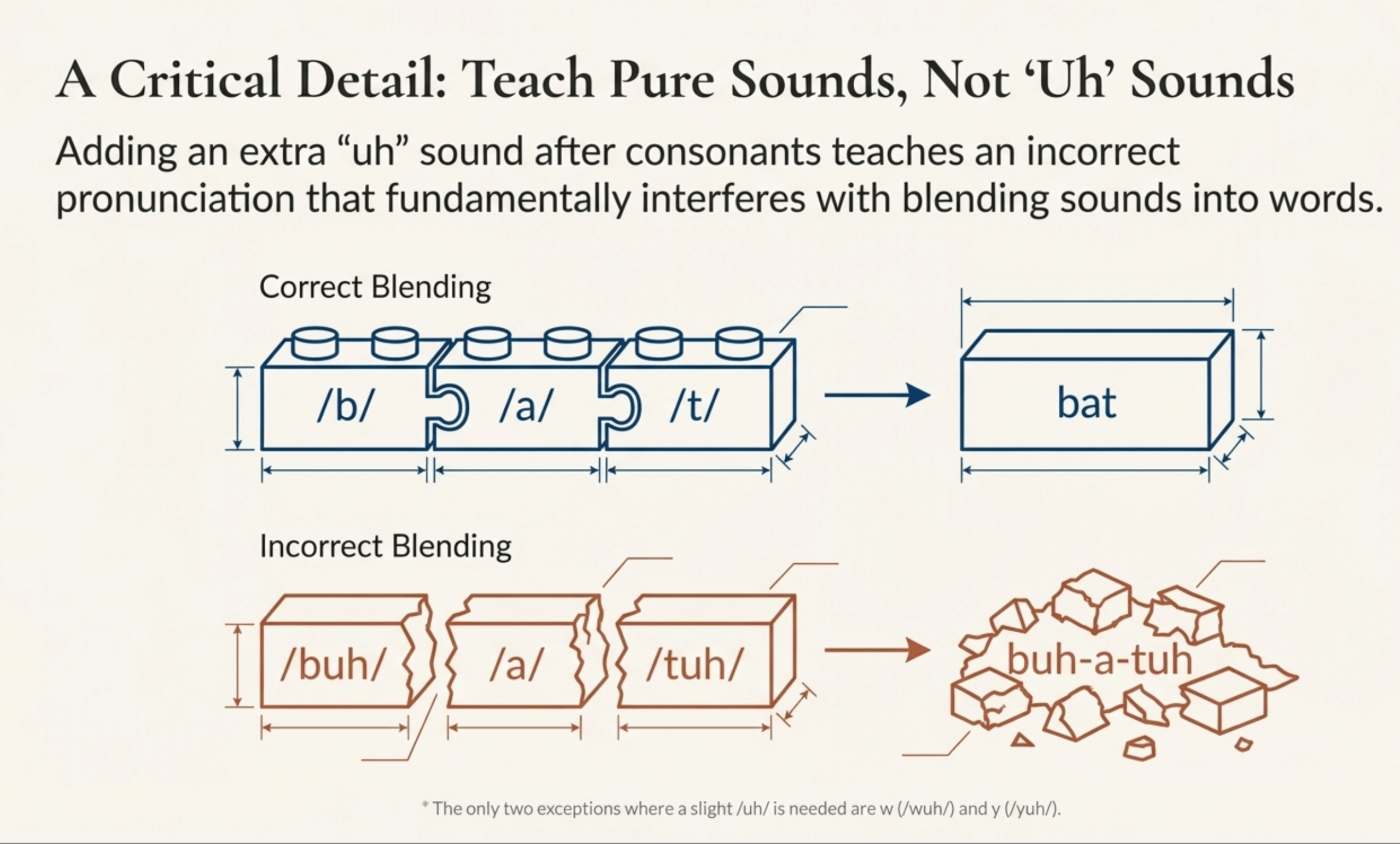
This is critical: when teaching letter sounds, avoid adding an extra “uh” sound after consonants.
Incorrect: b = /buh/, c = /cuh/, d = /duh/
Correct: b = /b/, c = /k/, d = /d/
Adding the “uh” sound teaches an incorrect pronunciation that interferes with blending. When students try to blend /buh/ + /a/ + /tuh/, they get “buh-a-tuh” instead of “bat.”
Two exceptions: The letters w and y require a slight /uh/ sound to pronounce correctly: w = /wuh/, y = /yuh/. These are the only consonants where adding /uh/ is necessary.
Two Letters With Dual Sounds
Introduce c and g with their primary sounds first:
- c = /k/ as in cat
- g = /g/ as in goat
Explain that these letters each have a second sound that students will learn later in the program. For now, c and g always represent their primary sounds. This prevents confusion while building initial consonant knowledge.
Essential Spelling Rules to Teach From the Start
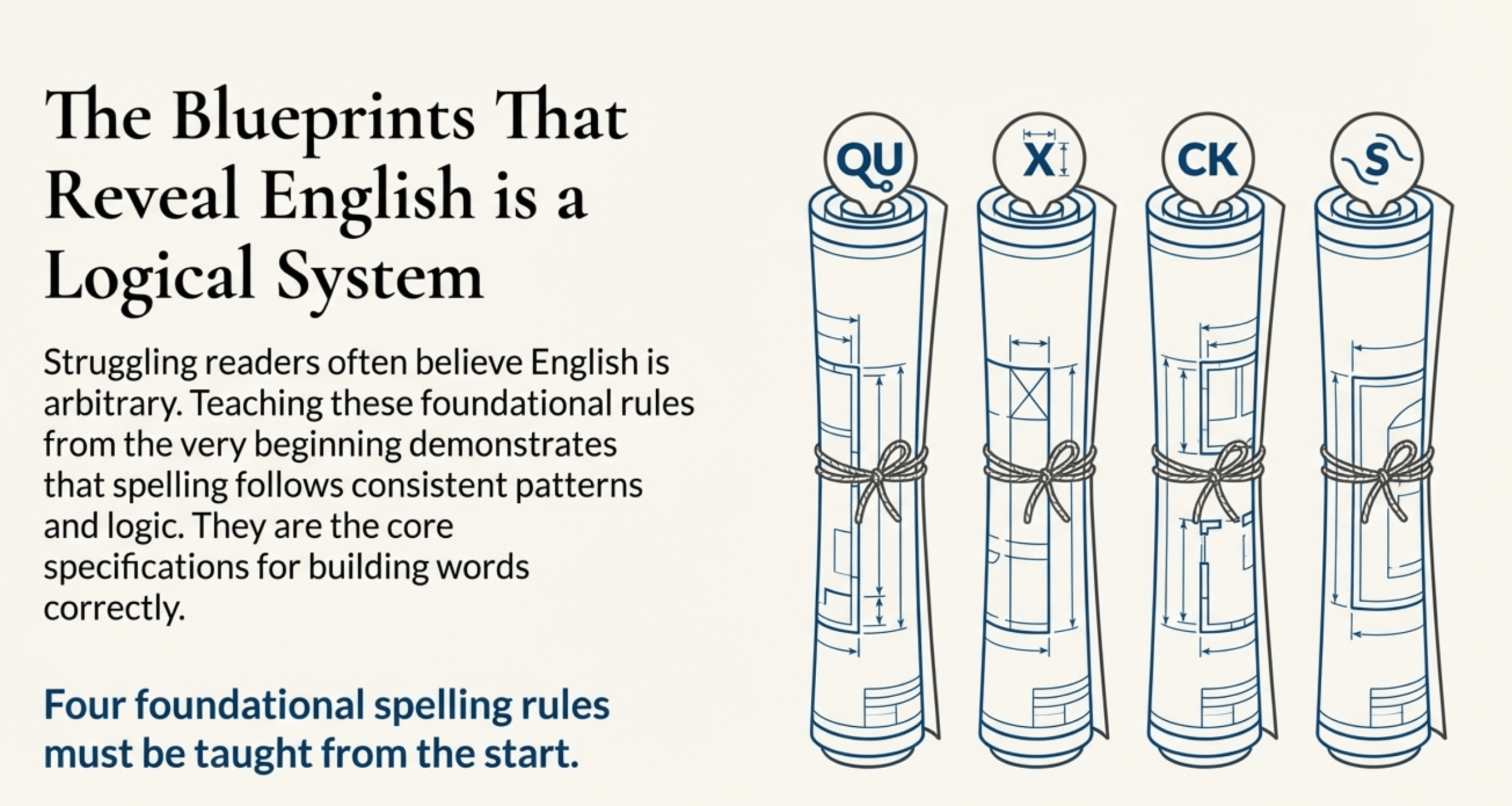
As soon as students begin learning letter sounds, introduce these foundational spelling rules. These aren’t advanced concepts—they’re the basic logic that governs English spelling.
Rule 1: The Letter Q
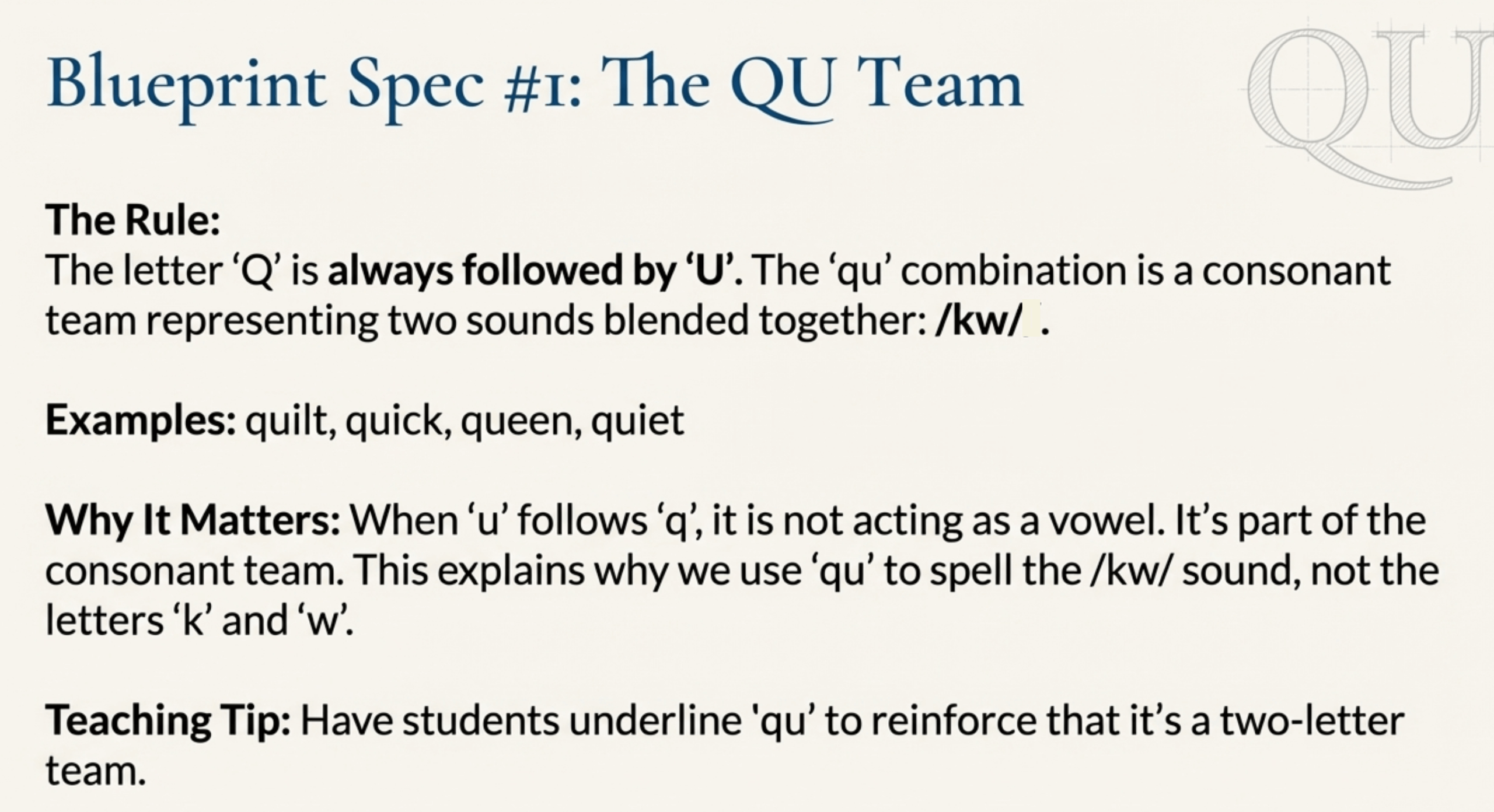
Q is always followed by u. The qu combination is classified as a consonant team and represents two sounds blended together: /kw/.
Important clarification: When u follows q, it’s not functioning as a vowel—it’s part of the consonant team. We use qu to spell the /kw/ sound, not the individual letters k and w.
Examples: quilt, quick, queen, quiet, question
Teaching tip: Have students underline qu whenever they encounter it, reinforcing that it’s a two-letter team representing /kw/.
Rule 2: The Letter X
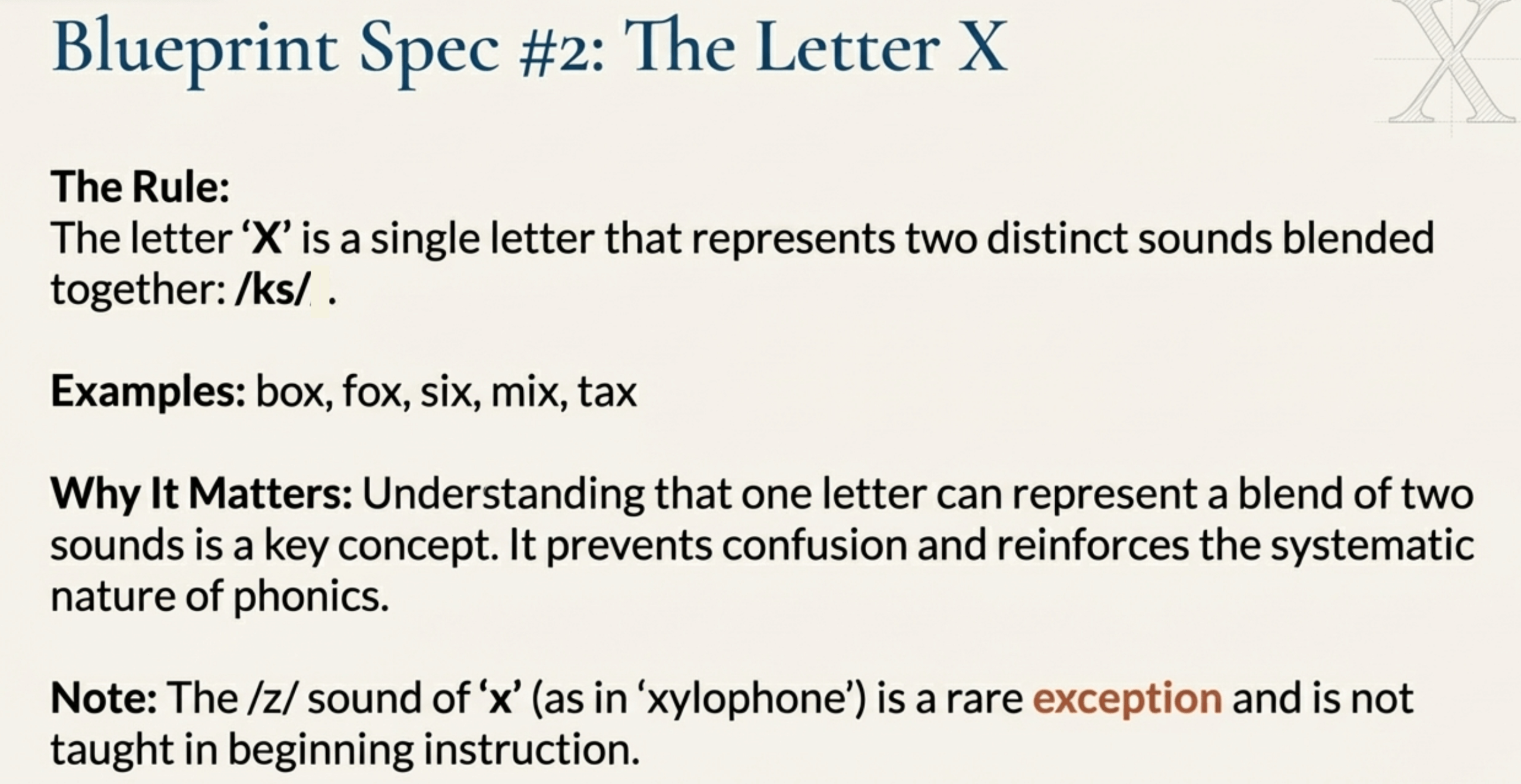
X represents two sounds blended together: /ks/
The letter x is unique—it’s a single letter representing two distinct sounds pronounced in rapid sequence.
Examples: box, fox, six, mix, tax
Note: When x appears before a vowel (as in “xylophone”), it represents a different sound. However, very few common English words use x in this position, so this exception isn’t taught in beginning instruction.
Rule 3: The Consonant Team CK
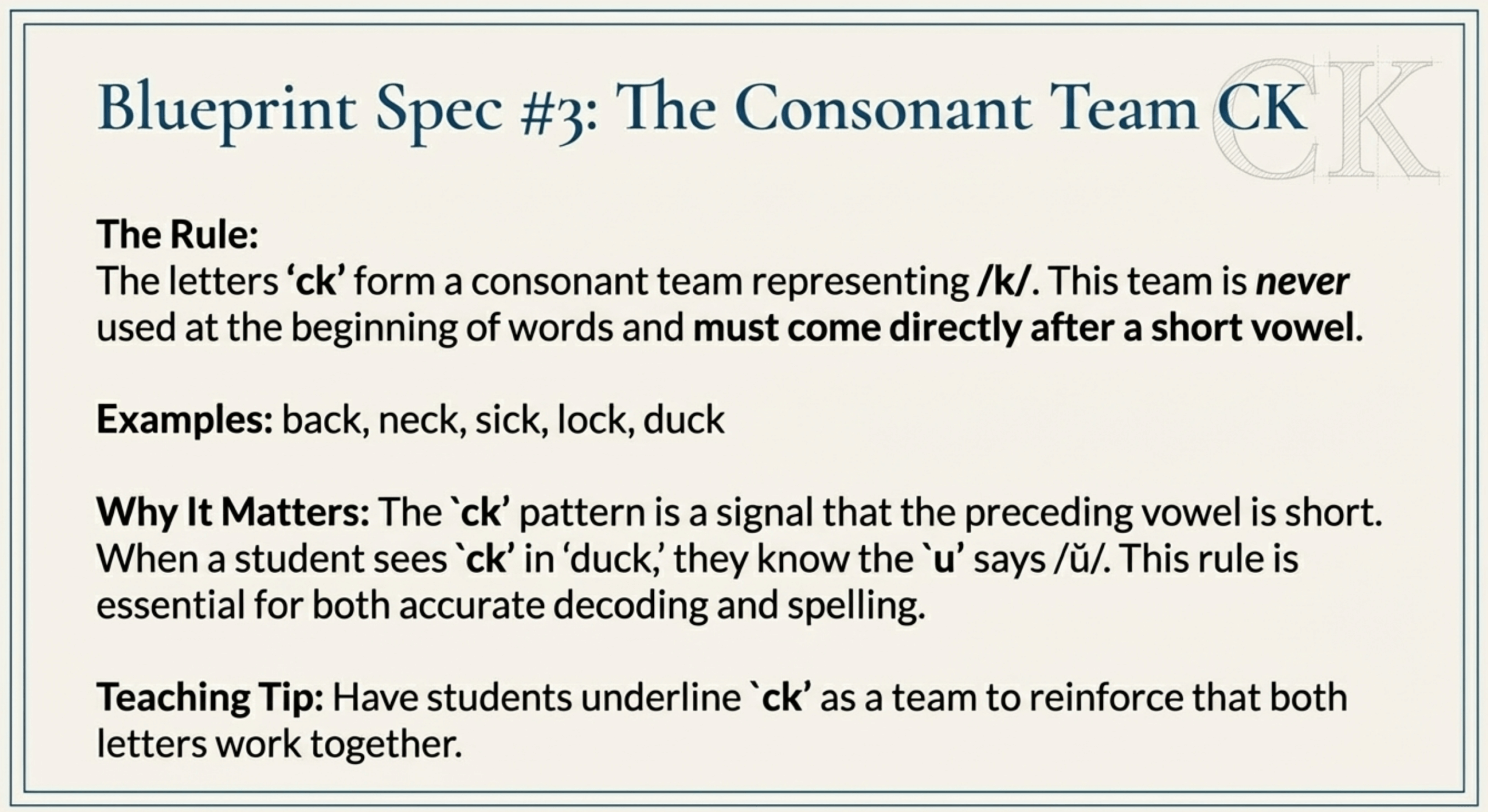
The letters ck form a consonant team representing /k/. This team is never used at the beginning of words and must come directly after a short vowel.
Examples: back, neck, sick, lock, duck
Why this matters: The ck pattern signals that the preceding vowel is short. Students learning to read “sock” know the o says /ŏ/ because ck follows it. Students learning to spell /sŏk/ know to use ck after the short vowel, not just k.
Teaching tip: Have students underline ck as a team whenever they write it, reinforcing that both letters work together to represent a single /k/ sound.
Rule 4: The Letter S and Its Two Sounds
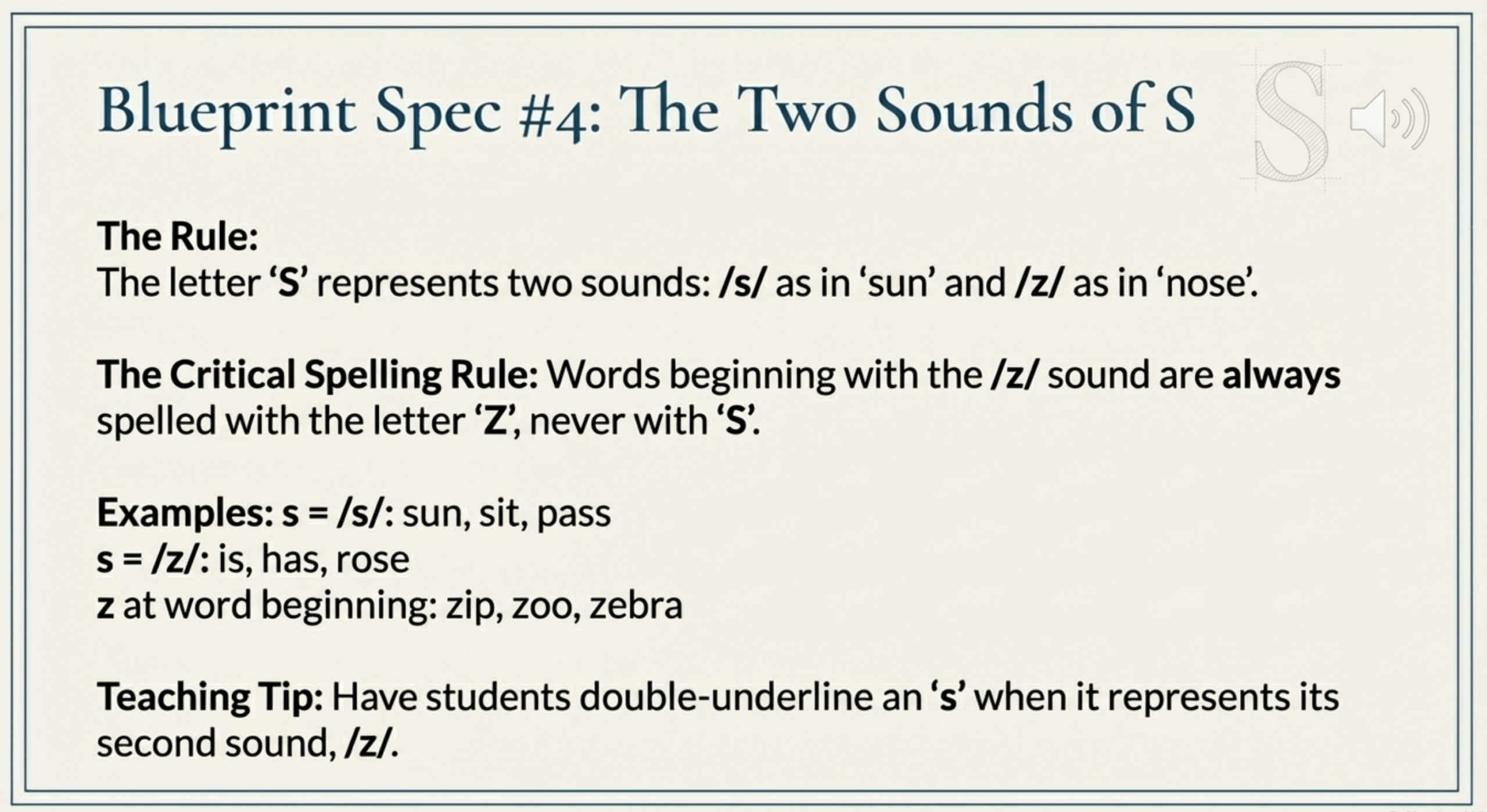
S represents two sounds: /s/ as in “sun” and /z/ as in “nose.”
Most students easily learn s = /s/. The challenge comes when s represents /z/, which happens frequently in English (is, has, his, was, nose, rose, etc.).
Critical spelling rule: Words beginning with the /z/ sound are always spelled with the letter z, never with s.
Examples:
- s = /s/: sun, sit, pass, less, boss
- s = /z/: is, has, his, rose, nose
- z at word beginning: zip, zoo, zebra, zero
Teaching tip: When students encounter s representing /z/, have them double-underline the s to show it’s using its second sound. This visual marking builds awareness that s can represent two different sounds.
Why These Foundational Rules Matter
They Reveal English as Logical, Not Random
Struggling readers often believe English spelling is arbitrary and unpredictable. Teaching these foundational rules from the very beginning demonstrates that spelling follows consistent patterns and logic.
When students understand why “quick” uses qu instead of kw, or why “duck” uses ck instead of just k, they begin to see English as a system they can master rather than a mystery they must memorize.
They Build Decoding Confidence
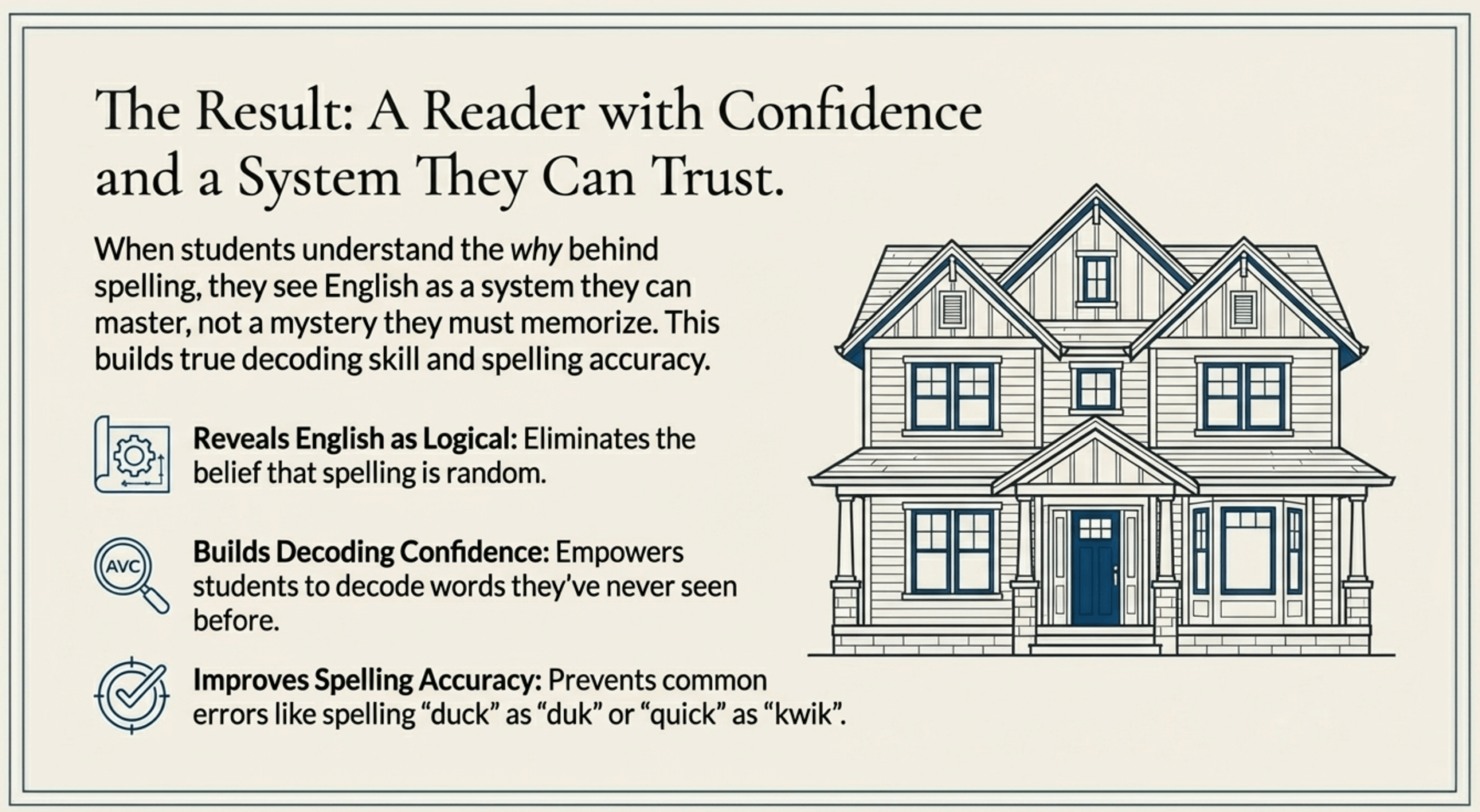
Students who know these rules can decode words they’ve never seen before. When they encounter “quack” for the first time, they recognize qu as /kw/, identify the short a, and know ck means /k/ after a short vowel. They decode the word successfully using systematic knowledge, not guessing.
They Improve Spelling Accuracy
These rules prevent common spelling errors:
- Without the ck rule, students might spell “duck” as “duk” or “duc”
- Without the qu rule, students might spell “quick” as “kwik”
- Without understanding s = /z/, students might spell “rose” as “roze”
Explicit instruction in these foundational rules eliminates confusion and builds accurate spelling from the start.
The Teaching Sequence
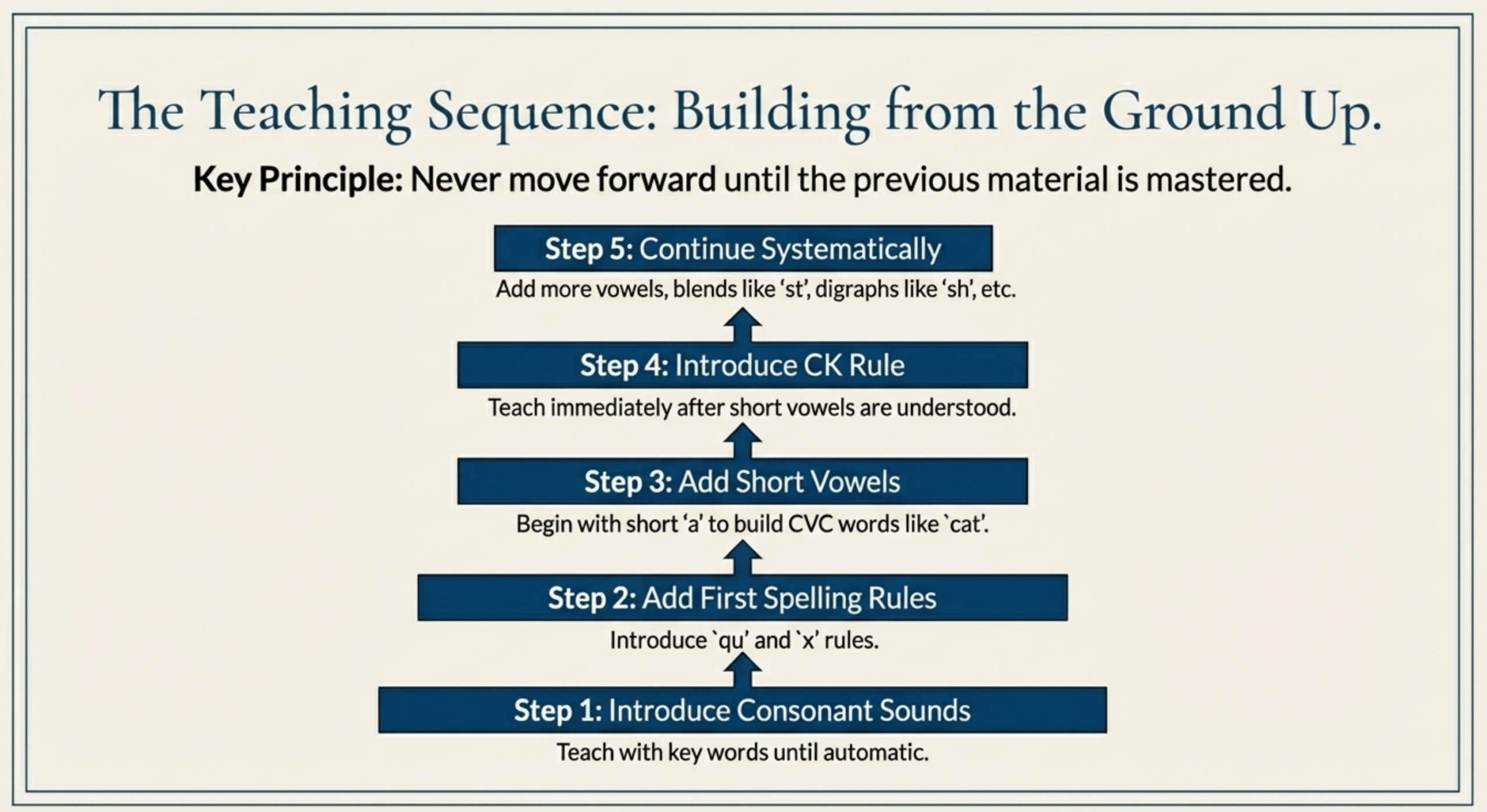
Step 1: Introduce Consonant Sounds
Teach all consonant sounds with key words. Practice daily:
- Point to each letter and have student give its sound
- Say a sound and have student identify the letter
- Practice until student achieves automatic, confident responses
Step 2: Add First Spelling Rules
Introduce the qu and x rules. Practice reading and spelling simple words using these patterns:
- Reading: quit, quiz, box, fox
- Spelling: Dictate the same words for student to write
Step 3: Add Short Vowels
Introduce the first short vowel (short a). Now students can begin reading and spelling complete words:
- Reading: cat, hat, mat, sat, rat, bat
- Spelling: Dictate CVC words with short a
Step 4: Introduce CK Rule
Once students can read and spell short vowel words, introduce the ck team:
- Reading: back, sack, pack, neck, peck
- Spelling: Dictate words requiring ck after short vowels
Continue Building Systematically
For each new step add one new element:
- Additional short vowels (e, i, o, u)
- Consonant blends (st, tr, bl, gr)
- Consonant digraphs (sh, ch, th, wh)
- Long vowel patterns
- Advanced phonetic elements
The key: never move forward until previous material is mastered. Better to spend an extra week on consonants than rush ahead and create gaps.
Common Mistakes to Avoid
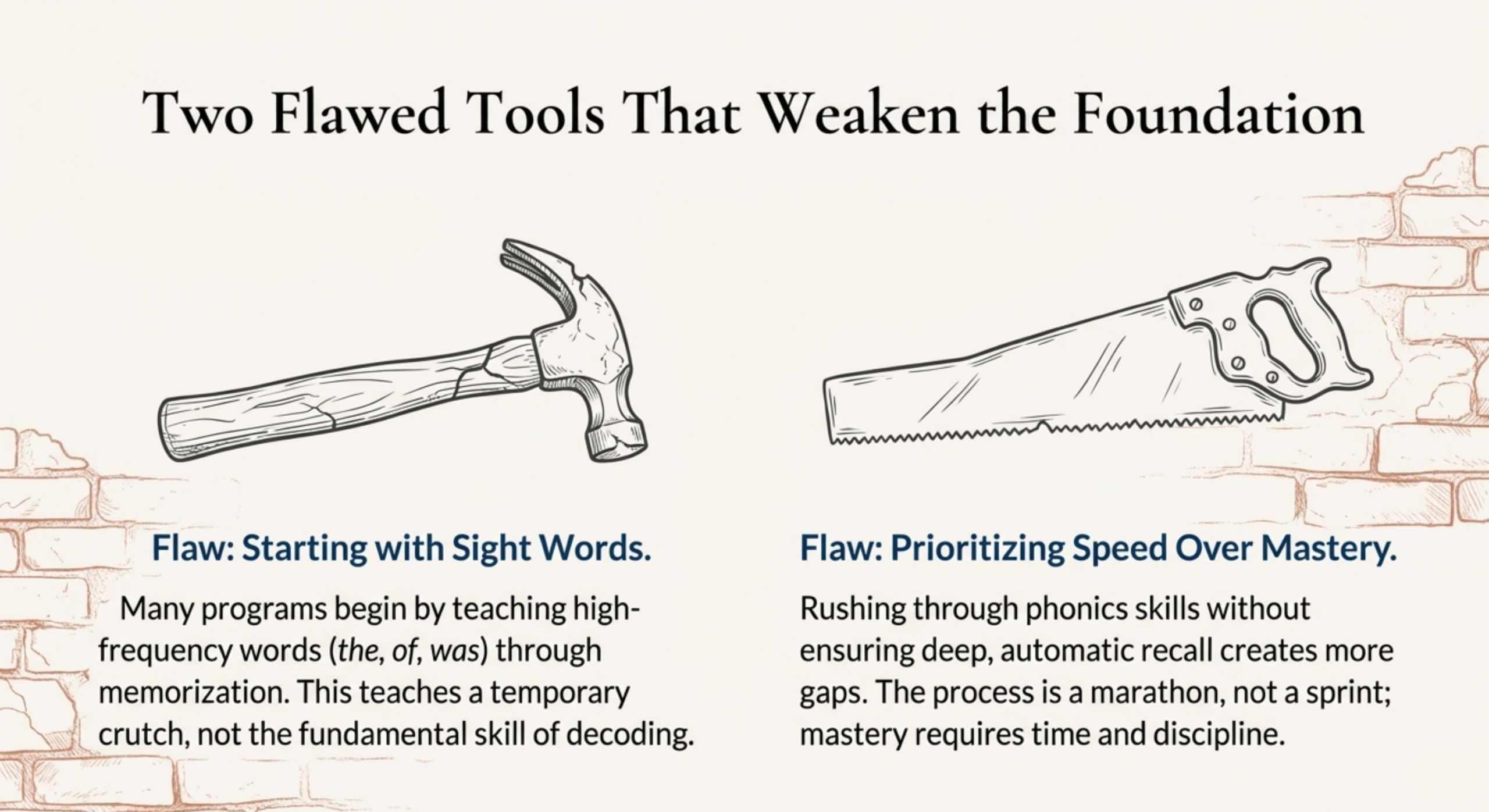
Mistake 1: Starting With Sight Words
Many programs begin by teaching high-frequency sight words (the, of, was, said). This teaches memorization, not reading. Start with systematic phonics—teach students to decode words using letter-sound relationships. Sight words can be gradually introduced as they are encountered.
Mistake 2: Prioritizing speed over mastery
Learning phonics skills to a point of mastery takes time and consistent practice. Understand that this learning process is a marathon, not a sprint. Time, discipline and commitment are necessary ingredients for students to be successful.
Mistake 3: Giving Spelling Less Emphasis than Decoding
Parents sometimes focus only on teaching reading skills to their children, but spelling is equally important. Balance instruction so that overall instructional time is equally divided between reading and spelling activities.
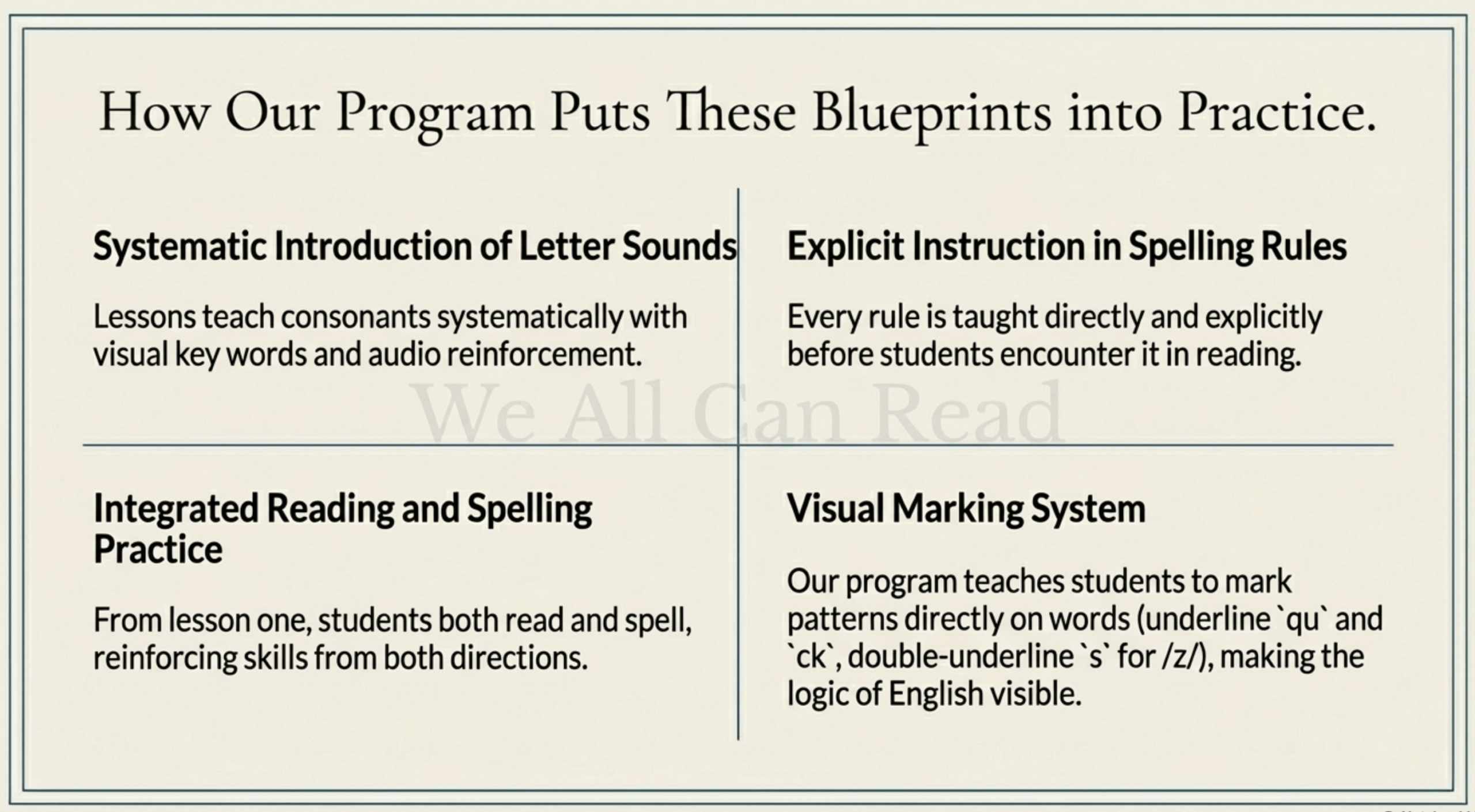
How Our Program Teaches These Foundations

Systematic Introduction of Letter Sounds
Our initial lessons teach all consonant sounds systematically with visual key words, audio reinforcement, and extensive practice. Students master consonants before encountering any vowels.
Explicit Instruction in Spelling Rules
Every spelling rule is taught explicitly when students are ready to apply it. The qu rule is taught before any qu words appear in reading. The ck rule is taught immediately after short vowels. Nothing is assumed or skipped.
Integrated Reading and Spelling Practice
From lesson one, students both read and spell. They see the letter b, say its sound, and then write words containing /b/. This dual practice reinforces letter-sound relationships from both directions.
Visual Marking System
Students learn to mark spelling patterns in words:
- Underline consonant teams (qu, ck)
- Double-underline letters using second sounds (s = /z/)
- Mark vowels as short or long
This marking system makes phonics patterns visible and builds metacognitive awareness of how English works.
Continue Reading: The 9 Essential Strategies
← Previous: Why Parents Must Take Action
Next → How to Sound Out Words: Step-by-Step Method
↑ View all 9 essential strategies
Questions about what to teach struggling readers? Contact us or return to the complete guide.