The Spelling Code
The Spelling Code
Understanding over memorization. Discover why systematic spelling instruction is the missing piece in your child’s literacy journey.
The Spelling Paradox
Many students can decode complex words while reading but struggle to construct them correctly when writing. This disconnect reveals a fundamental gap in how spelling is traditionally taught.
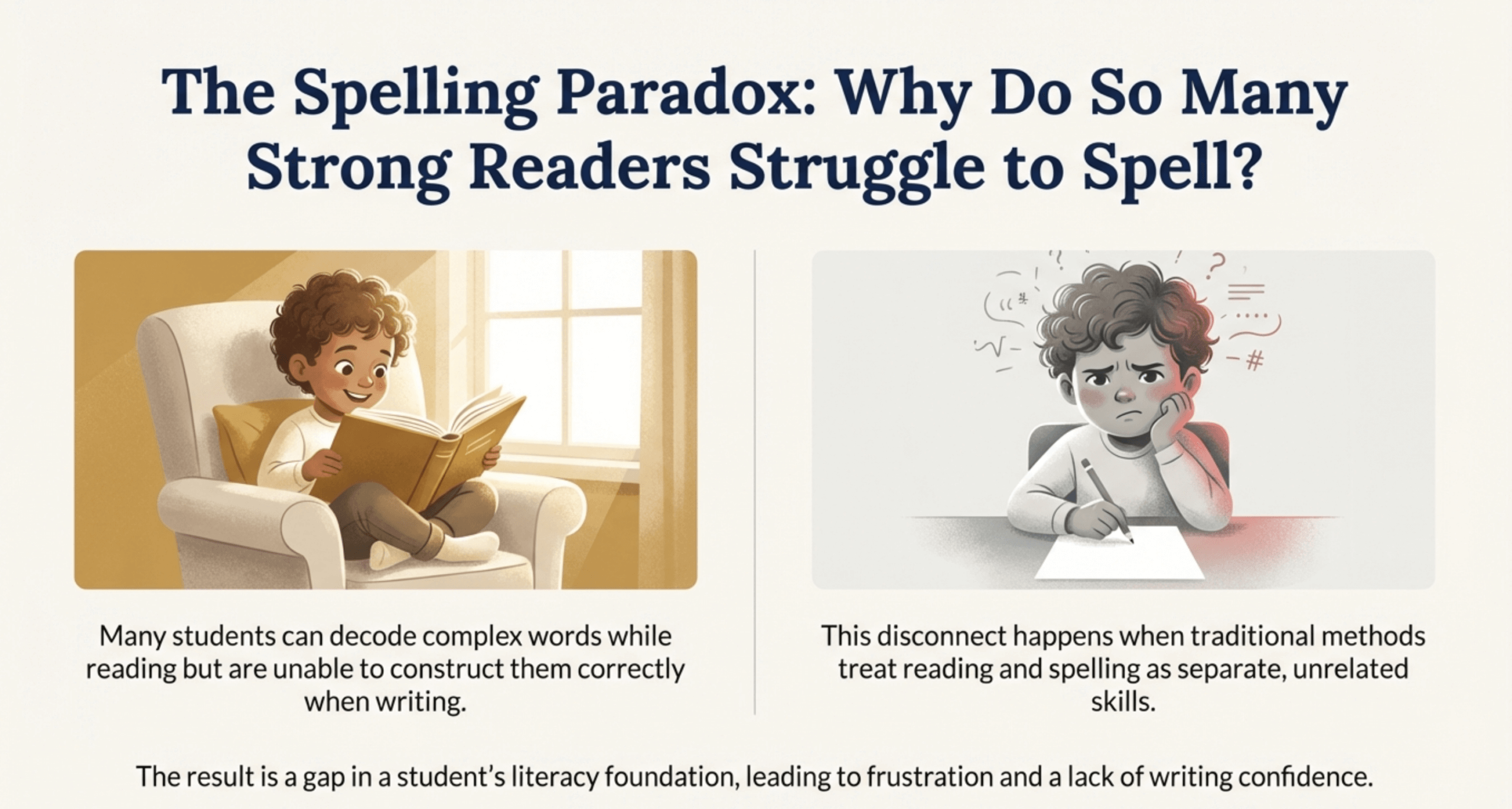
The Problem: Traditional methods treat reading and spelling as separate, unrelated skills. This creates a gap in a student’s literacy foundation, leading to frustration and lack of writing confidence.
The Traditional Approach Treats Spelling as an Afterthought
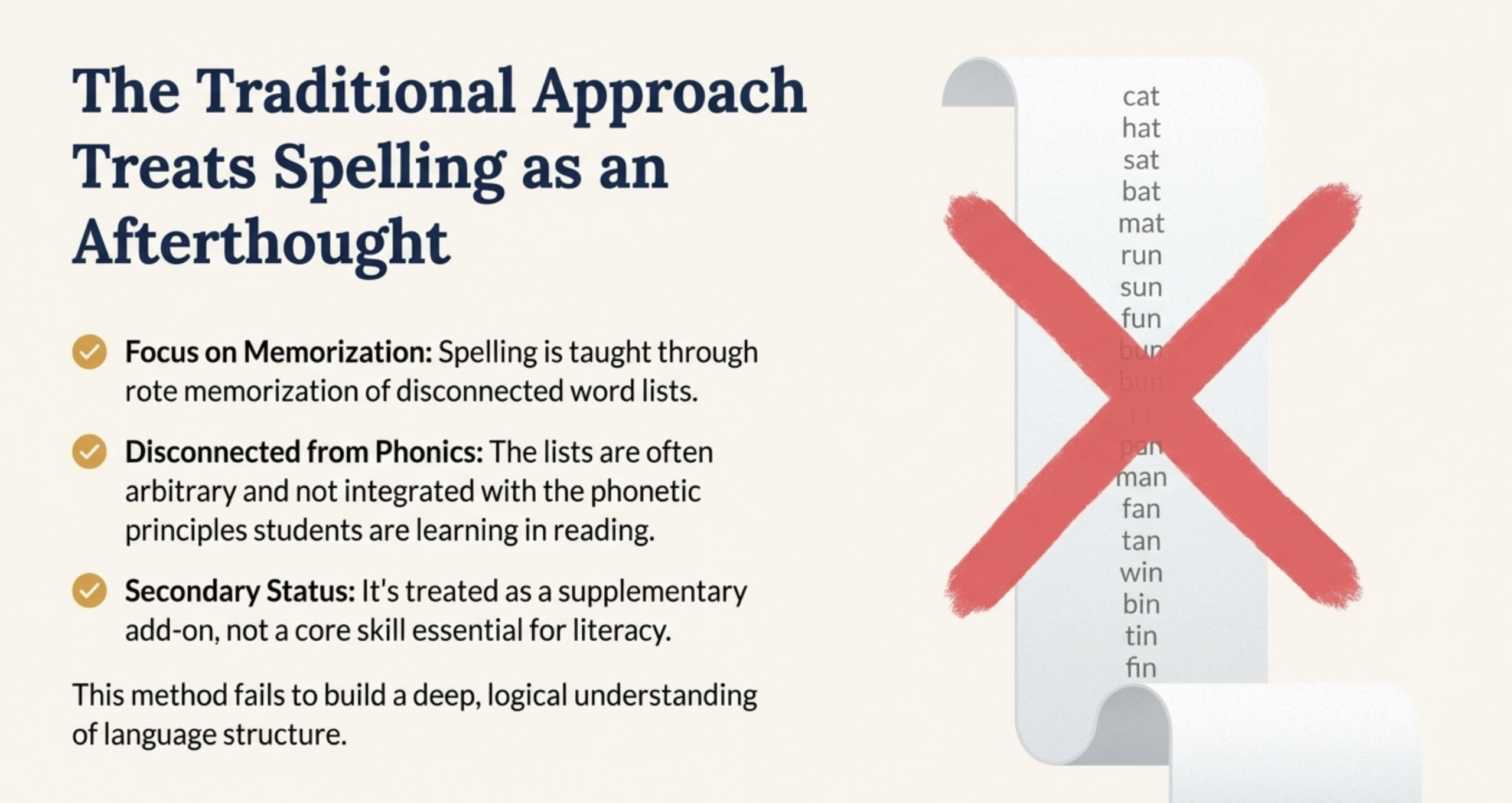
Why Traditional Spelling Instruction Falls Short:
- Focus on Memorization: Students memorize disconnected word lists through rote practice
- Disconnected from Phonics: Lists are often arbitrary and don’t integrate with phonetic principles
- Secondary Status: Treated as a supplementary add-on, not a core literacy skill
Result: This method fails to build deep, logical understanding of language structure.
Spelling Isn’t Separate—It’s the Other Half of Reading
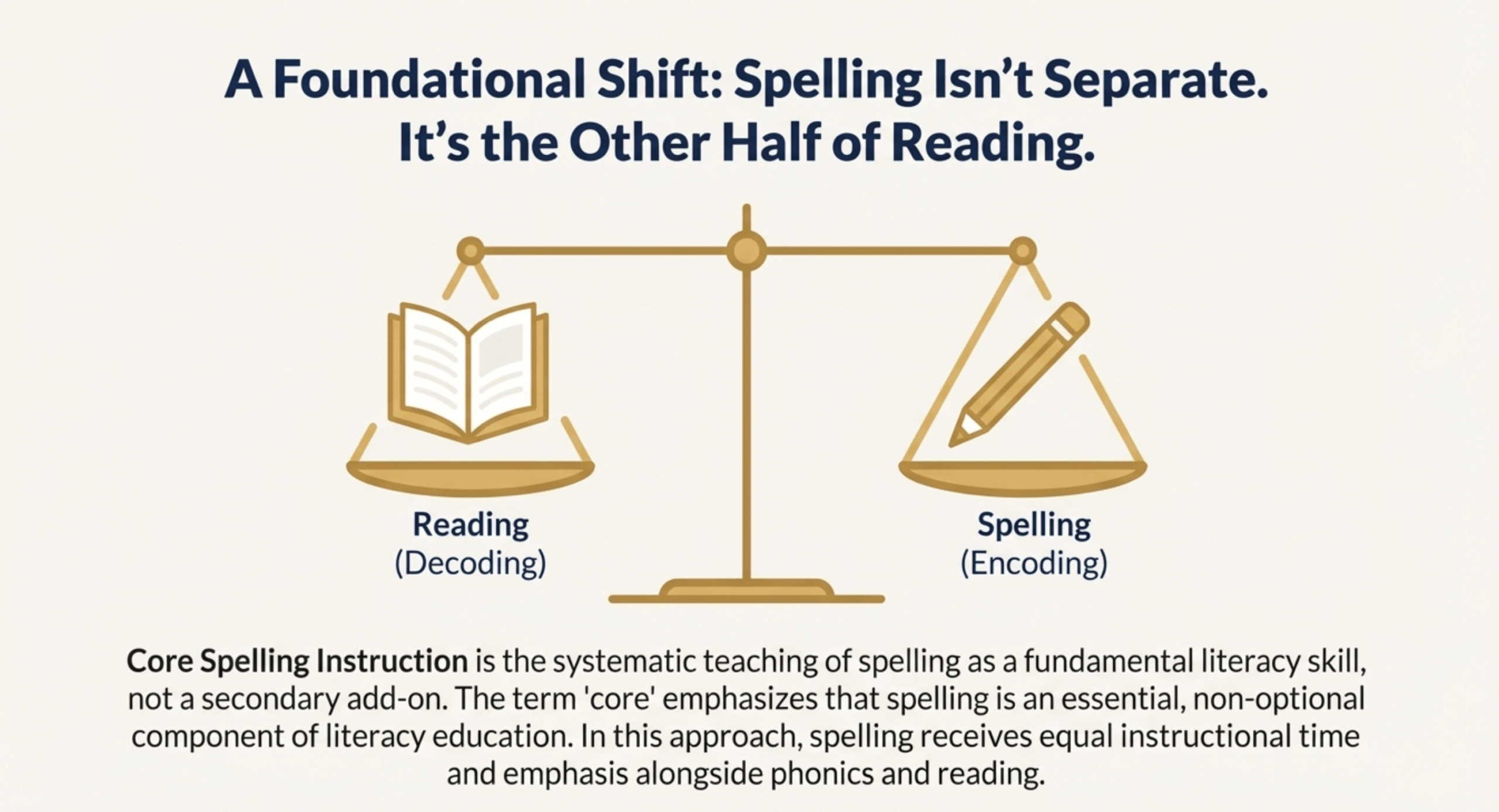
“Core Spelling Instruction is the systematic teaching of spelling as a fundamental literacy skill, not a secondary add-on. Spelling receives equal instructional time and emphasis alongside phonics and reading.”
Experience Integrated Literacy Instruction
See how reading and spelling work together from the very first lesson. Start with 10 free video lessons.
Start Your 10 Free Lessons NowNo credit card required
Literacy Is a Braid of Three Interconnected Skills
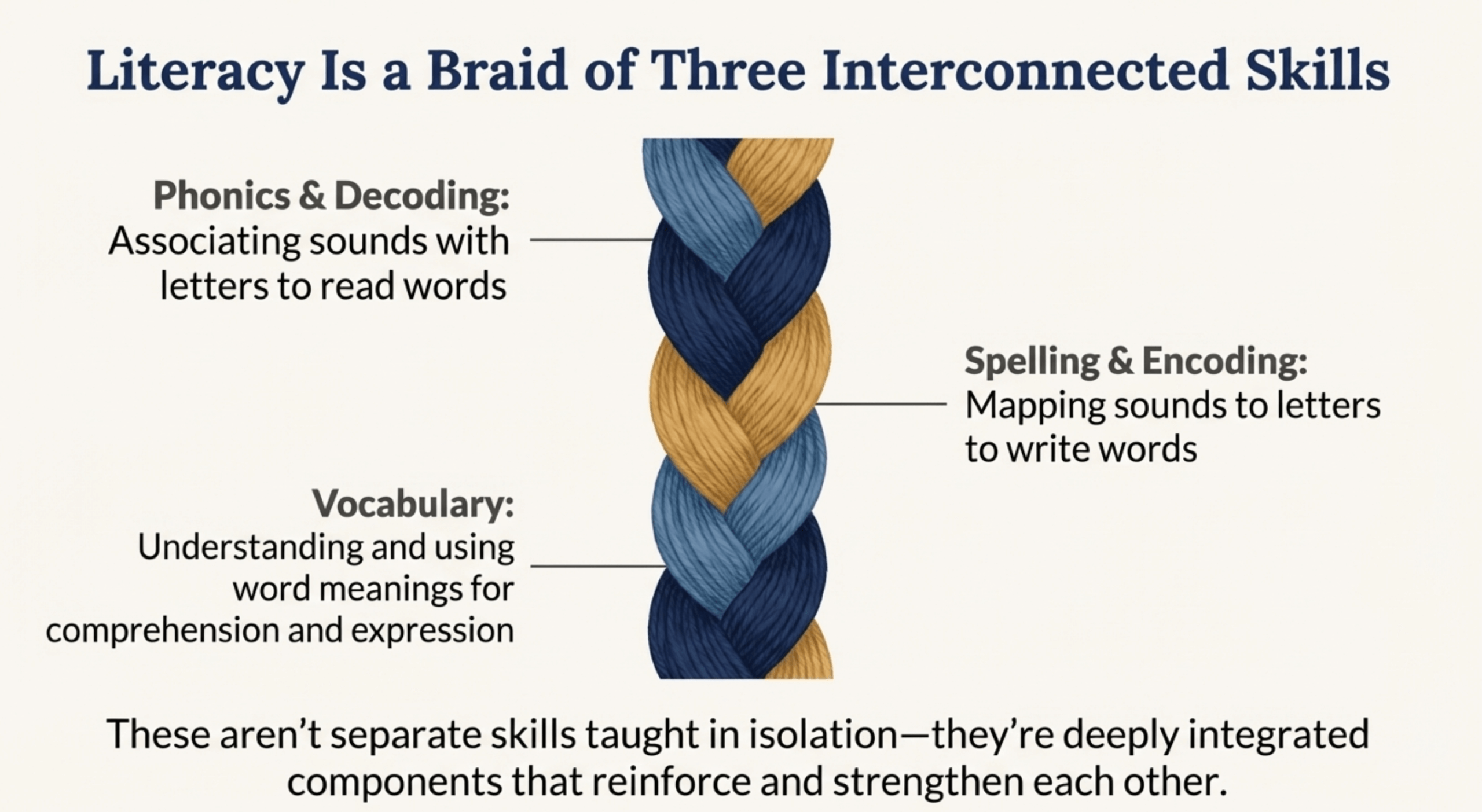
The Three Strands:
Phonics & Decoding: Associating sounds with letters to read words
Spelling & Encoding: Mapping sounds to letters to write words
Vocabulary: Understanding and using word meanings for comprehension and expression
These aren’t separate skills taught in isolation—they’re deeply integrated components that reinforce and strengthen each other.
Decoding and Encoding: Opposite Ends of the Same Process
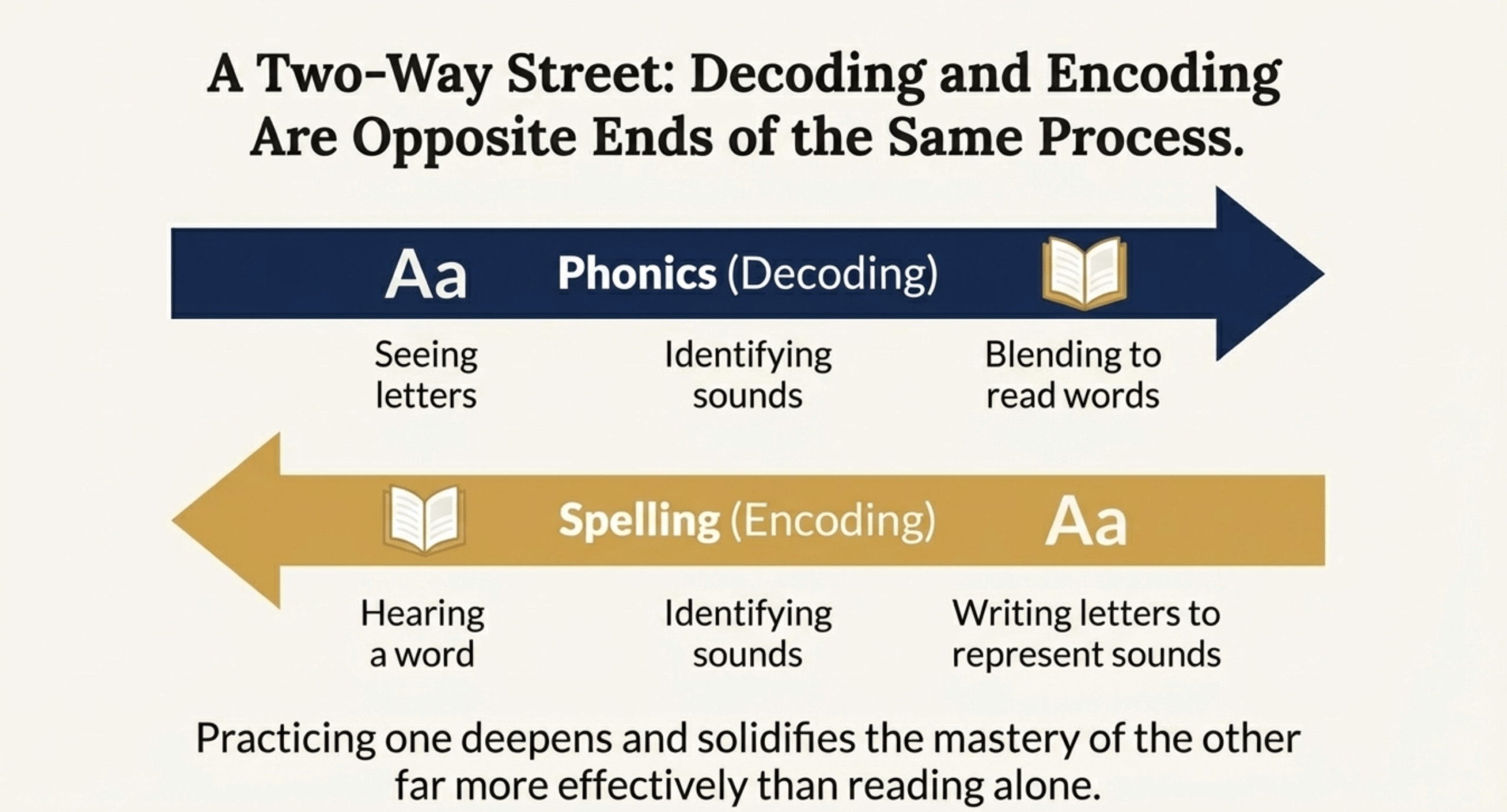
Reading (Decoding): Seeing letters → Identifying sounds → Blending to read words
Spelling (Encoding): Hearing a word → Identifying sounds → Writing letters to represent sounds
The Key Insight: Practicing one deepens and solidifies the mastery of the other far more effectively than reading alone.
Why Spelling Takes Longer to Master
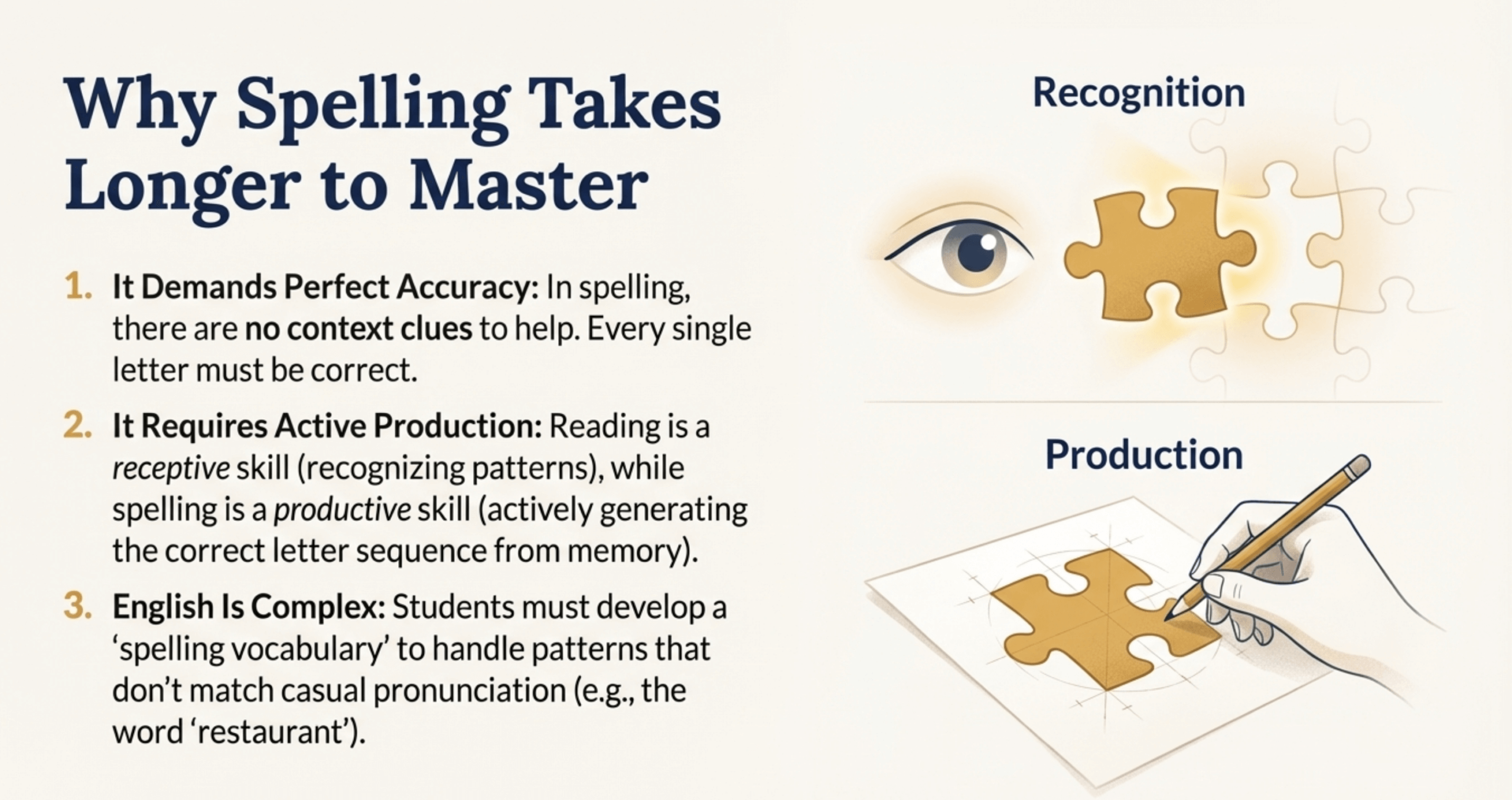
Three Key Reasons:
1. Perfect Accuracy Required: In spelling, there are no context clues to help. Every single letter must be correct.
2. Active Production vs. Recognition: Reading is receptive (recognizing patterns), while spelling is productive (actively generating the correct letter sequence from memory).
3. English Complexity: Students must develop a ‘spelling vocabulary’ to handle patterns that don’t match casual pronunciation (e.g., ‘restaurant’).
Our Approach: Understanding Over Memorization
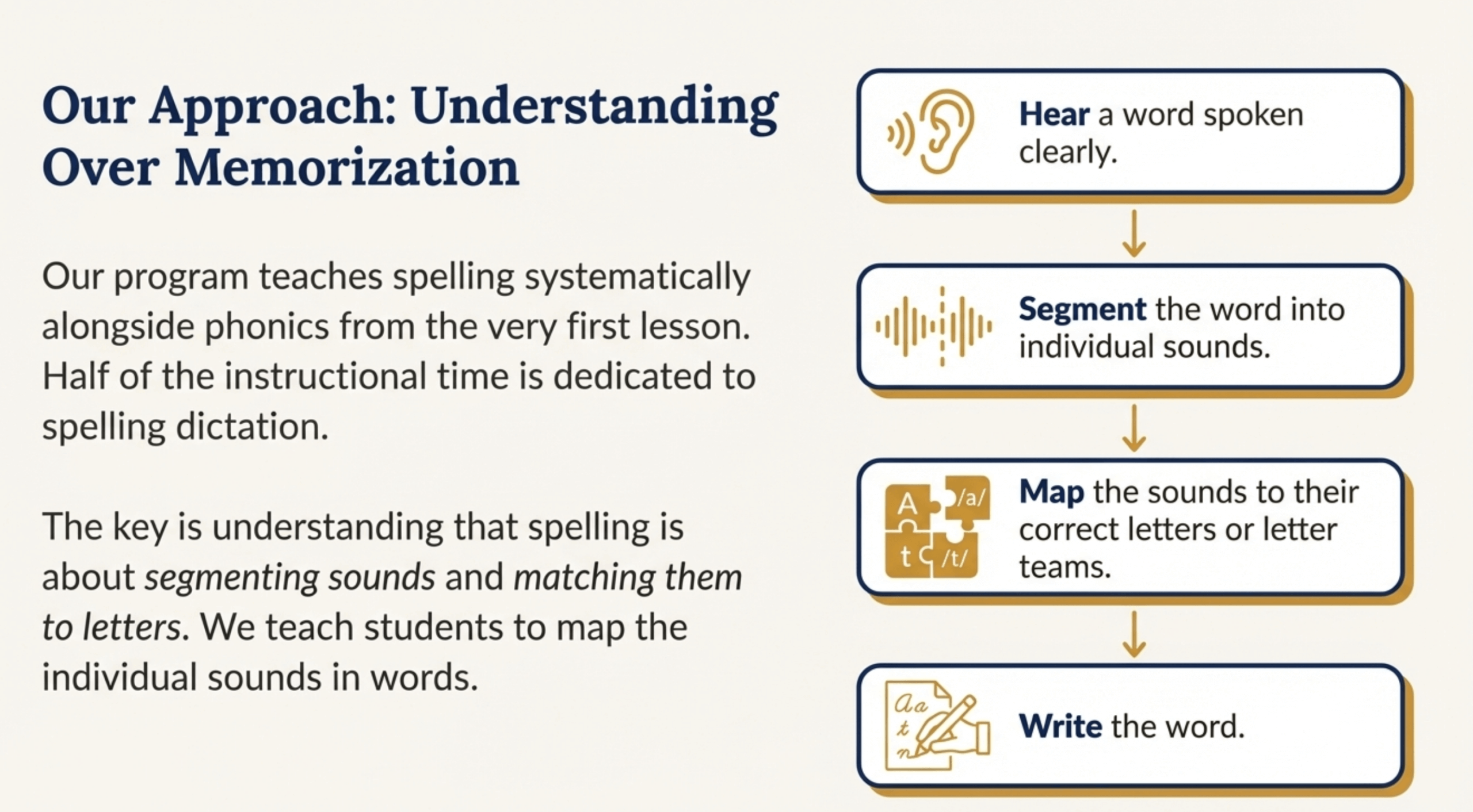
Our program teaches spelling systematically alongside phonics from the very first lesson. Half of the instructional time is dedicated to spelling dictation.
The key: Spelling is about segmenting sounds and matching them to letters. We teach students to map the individual sounds in words.
The Systematic Process:
👂 Hear a word spoken clearly
↓
🎵 Segment the word into individual sounds
↓
🔤 Map the sounds to their correct letters or letter teams
↓
✍️ Write the word
The Results Speak for Themselves
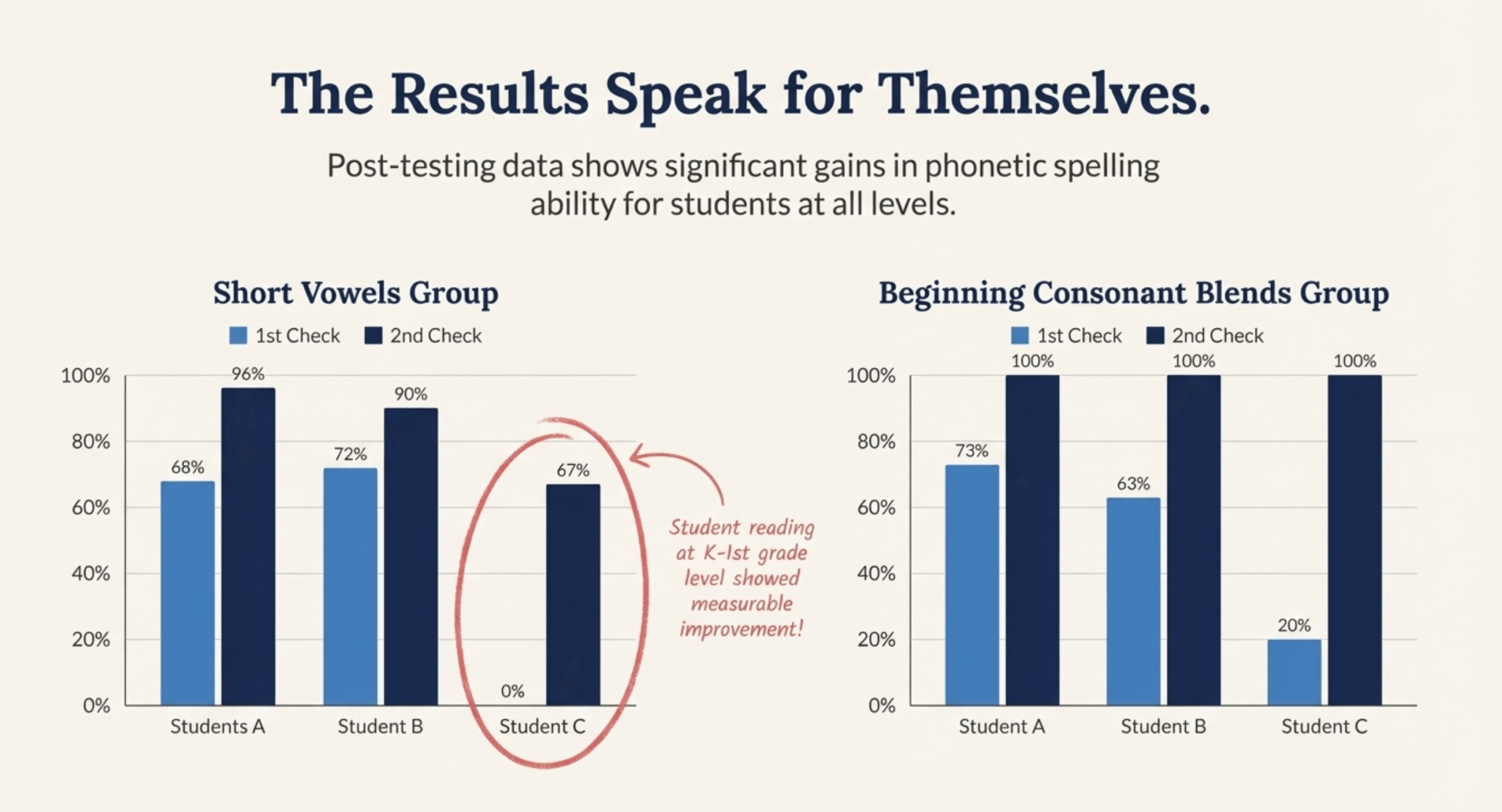
Post-testing data shows significant gains in phonetic spelling ability for students at all levels. When students learn to encode (spell) systematically, their decoding (reading) improves dramatically.
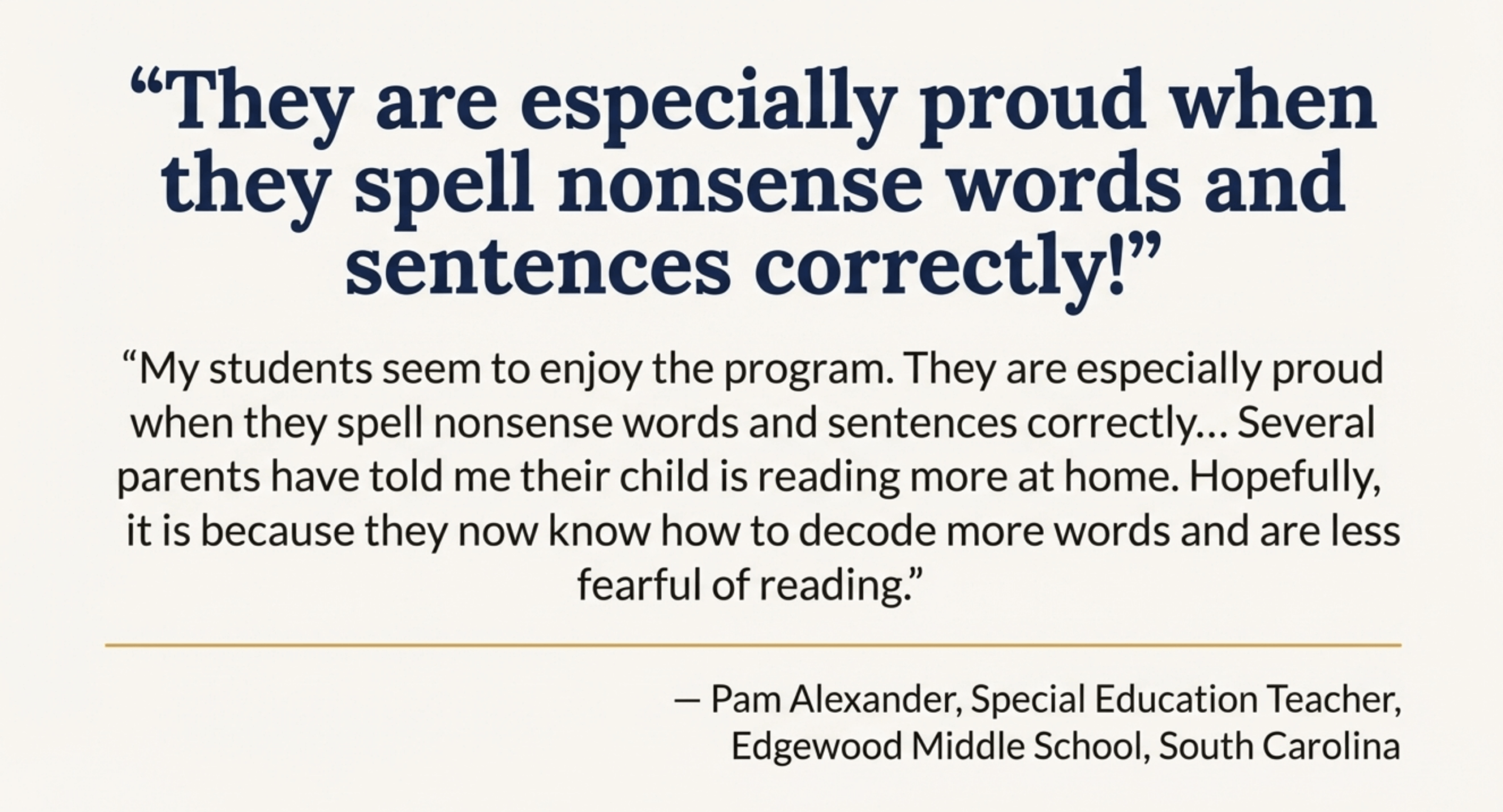
“My students seem to enjoy the program. They are especially proud when they spell nonsense words and sentences correctly… Several parents have told me their child is reading more at home. Hopefully, it is because they now know how to decode more words and are less fearful of reading.”
Strong Spellers Become Fearless Writers
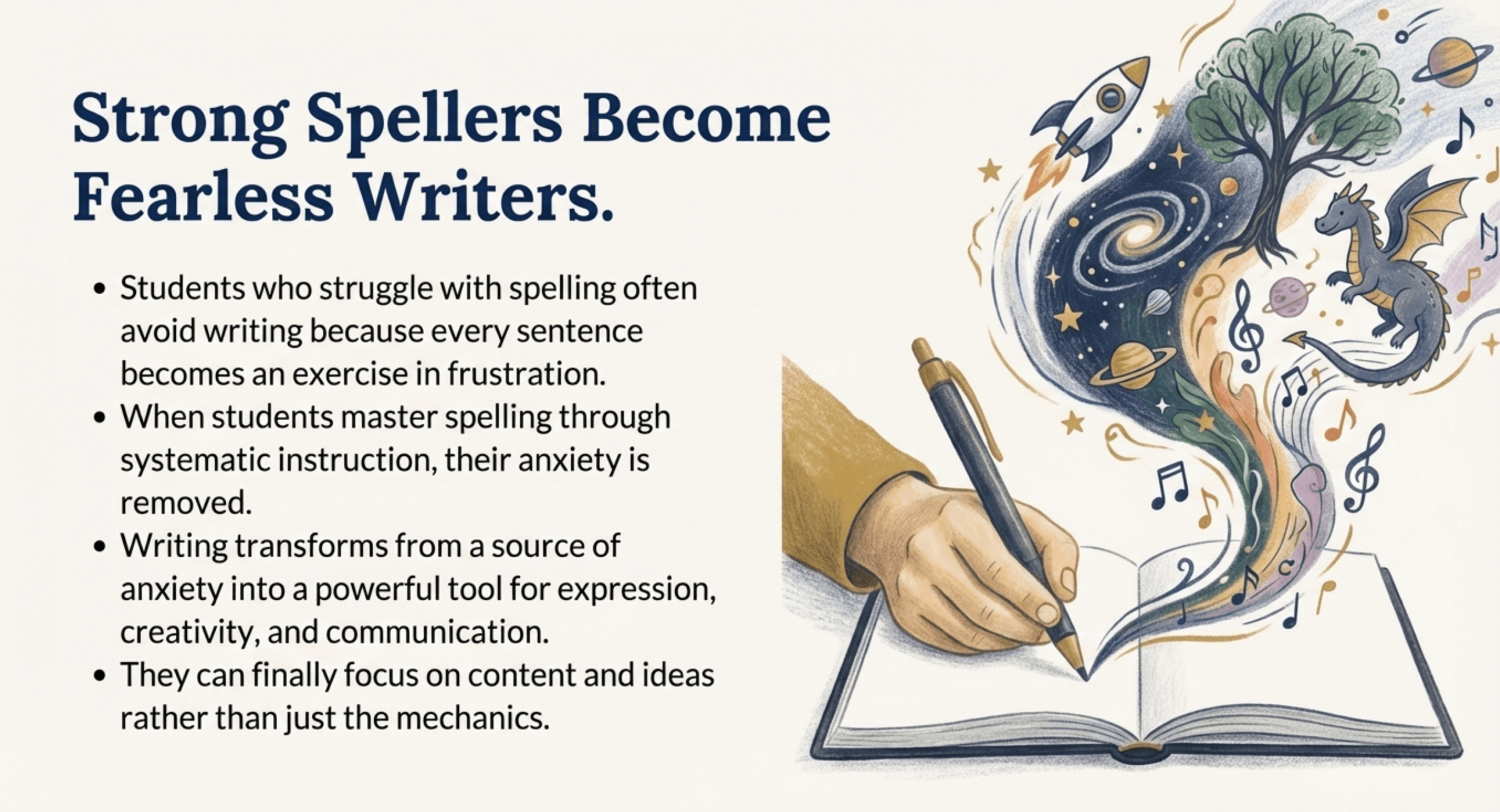
Students who struggle with spelling often avoid writing because every sentence becomes an exercise in frustration.
When students master spelling through systematic instruction, their anxiety is removed. Writing transforms from a source of anxiety into a powerful tool for expression, creativity, and communication.
They can finally focus on content and ideas rather than just the mechanics.
Your Complete Literacy Toolkit
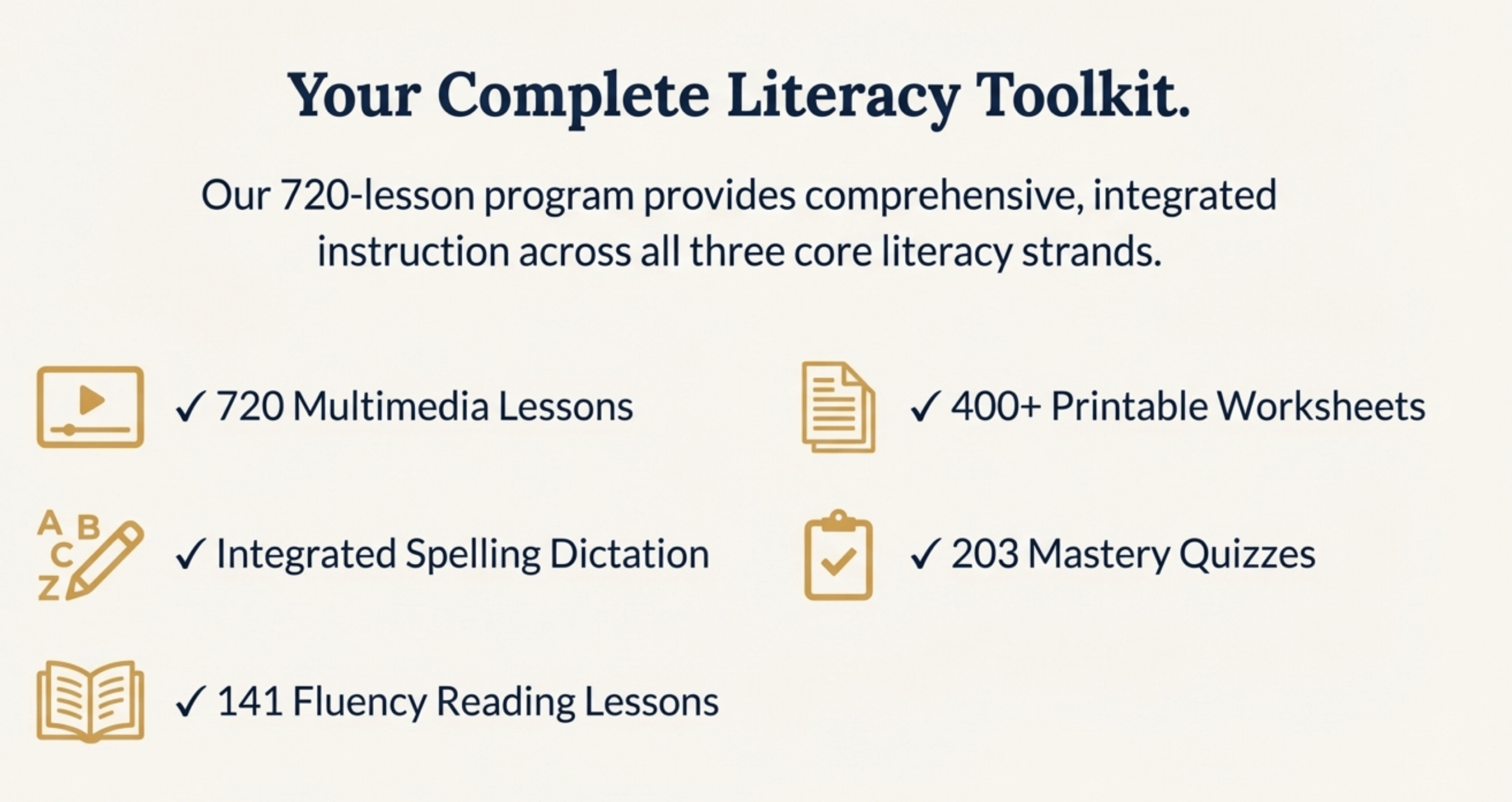
Our 720-lesson program provides comprehensive, integrated instruction across all three core literacy strands.
📹 720 Multimedia Lessons
📄 400+ Printable Worksheets
✍️ Integrated Spelling Dictation
✅ 203 Mastery Quizzes
📖 141 Fluency Reading Lessons
Start Developing Core Literacy Skills Today
Experience our integrated approach to phonics, spelling, and vocabulary. Start with 10 free video lessons.
Start Your 10 Free Lessons Now✓ No registration
✓ No email
✓ No credit card required
Grounded in the Science of Reading
Our program is built on proven, research-based principles. For those who want to dive deeper, explore the foundations of our approach:
About Core Spelling Instruction: This approach is based on 40+ years of teaching systematic, integrated literacy. We All Can Read treats spelling as an essential, non-optional component of literacy education—not an afterthought. Learn more about our Core Spelling Instruction approach.