Reading Horizons Elevate vs We All Can Read Comparison
Which Adult Reading Program Actually Works?
Comparison of Methodology, Cost & Effectiveness
If you’re researching Reading Horizons Elevate, you’ve found a quality program—significantly better than programs like Hooked on Phonics. Reading Horizons uses sound Orton-Gillingham principles and gets results for many learners.
However, there’s a critical question adults who’ve struggled with reading their entire lives need to ask: Does Reading Horizons use the same teaching methodology that failed me as a child?
Understanding Why Traditional Methods Failed You
Before comparing programs, it’s important to understand why so many adults struggle with reading in the first place. The answer isn’t about intelligence—it’s about instruction.
This comprehensive comparison examines both programs honestly, helping you understand which approach will finally work for you.
The Most Important Question an Adult Learner Can Ask
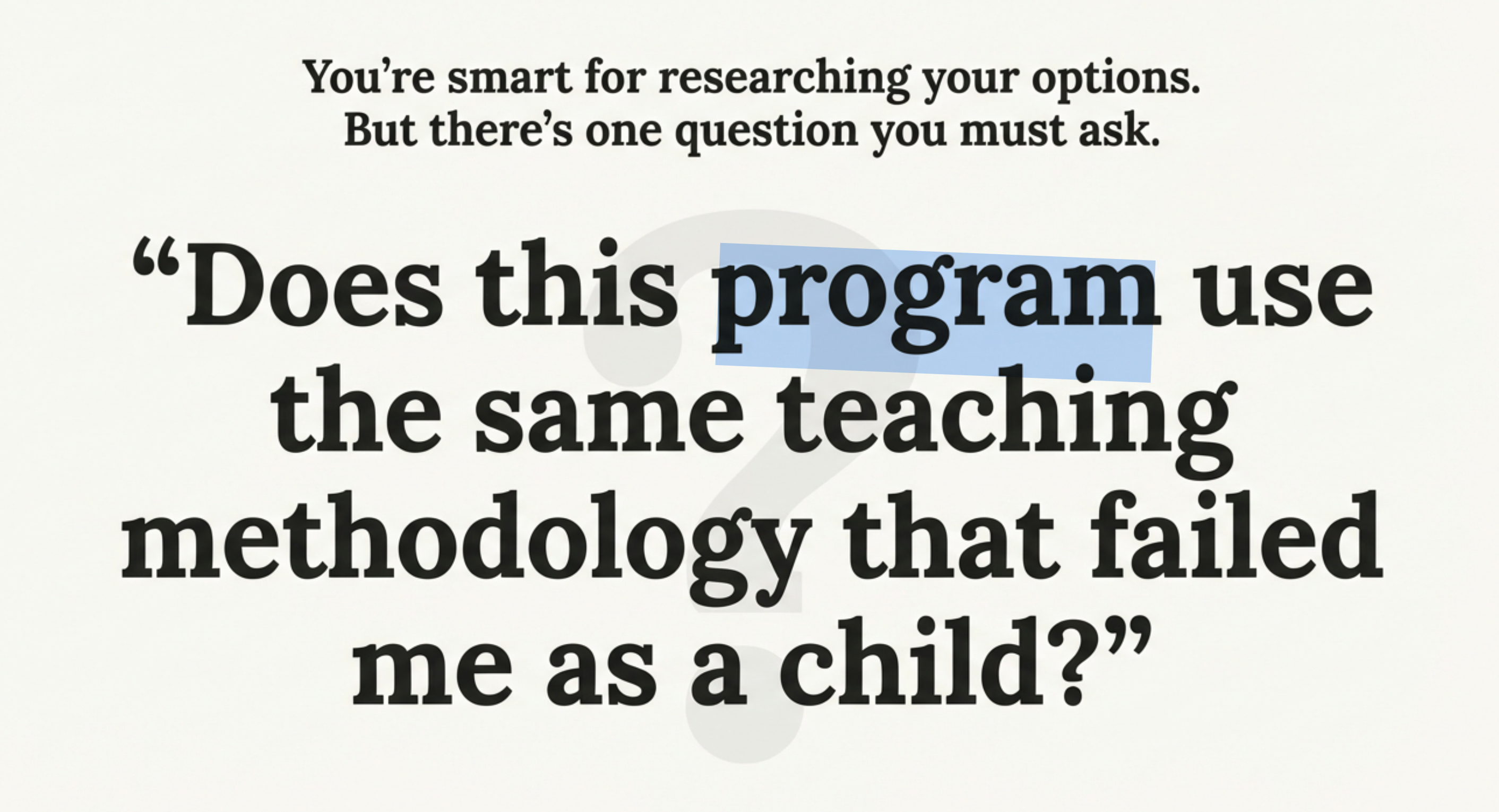
You’re researching Reading Horizons Elevate, and that’s smart. It’s a quality program. But there’s a critical question adults who have been failed by the system must ask:
“Does this program use the same teaching methodology that failed me as a child?”
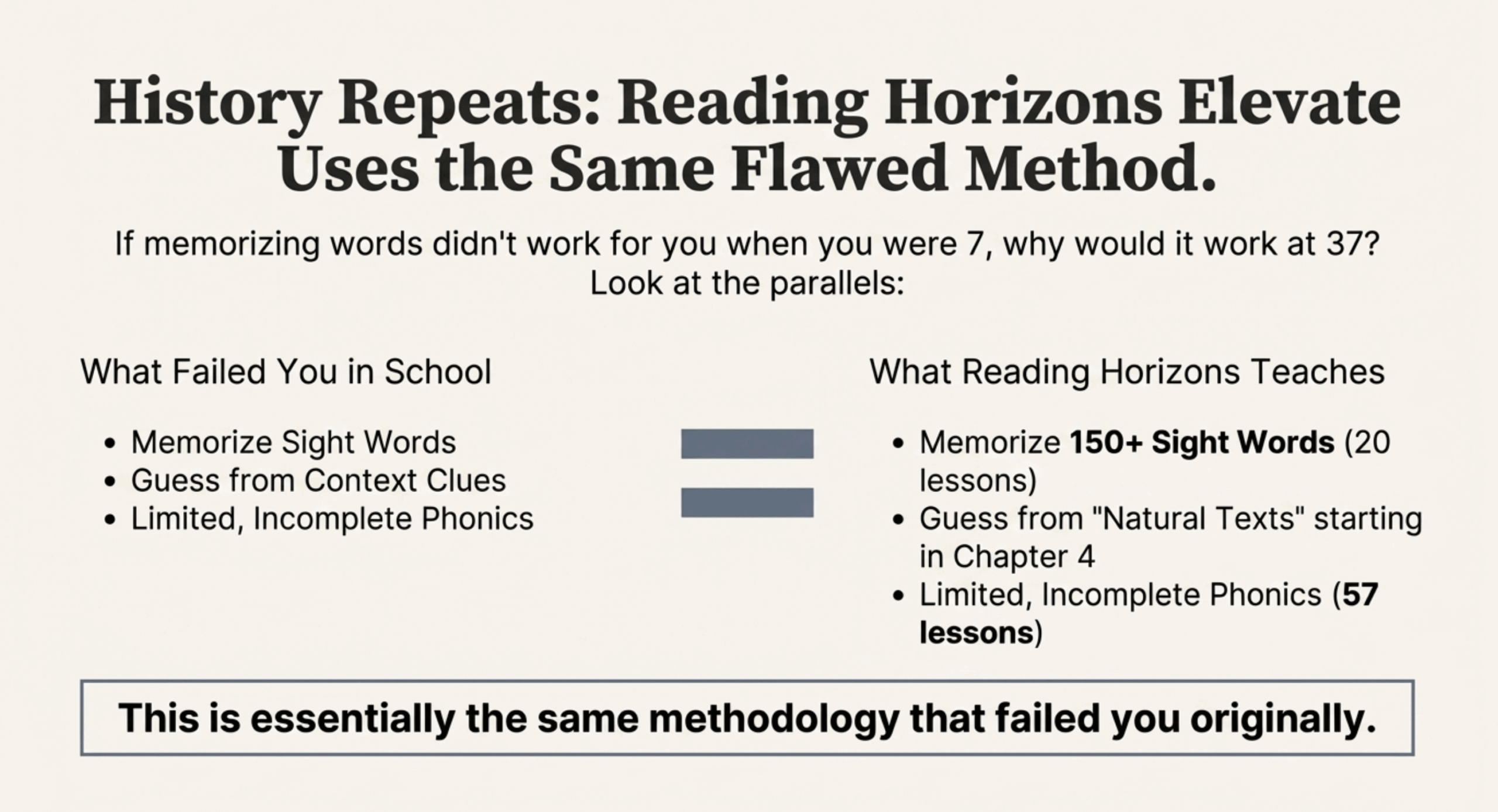
We’ve created an objective visual guide that examines this question directly. It shows the parallels between what didn’t work in school and what Reading Horizons teaches and why a different approach might finally break the cycle.
Quick Comparison Table
| Feature | Reading Horizons Elevate | We All Can Read |
|---|---|---|
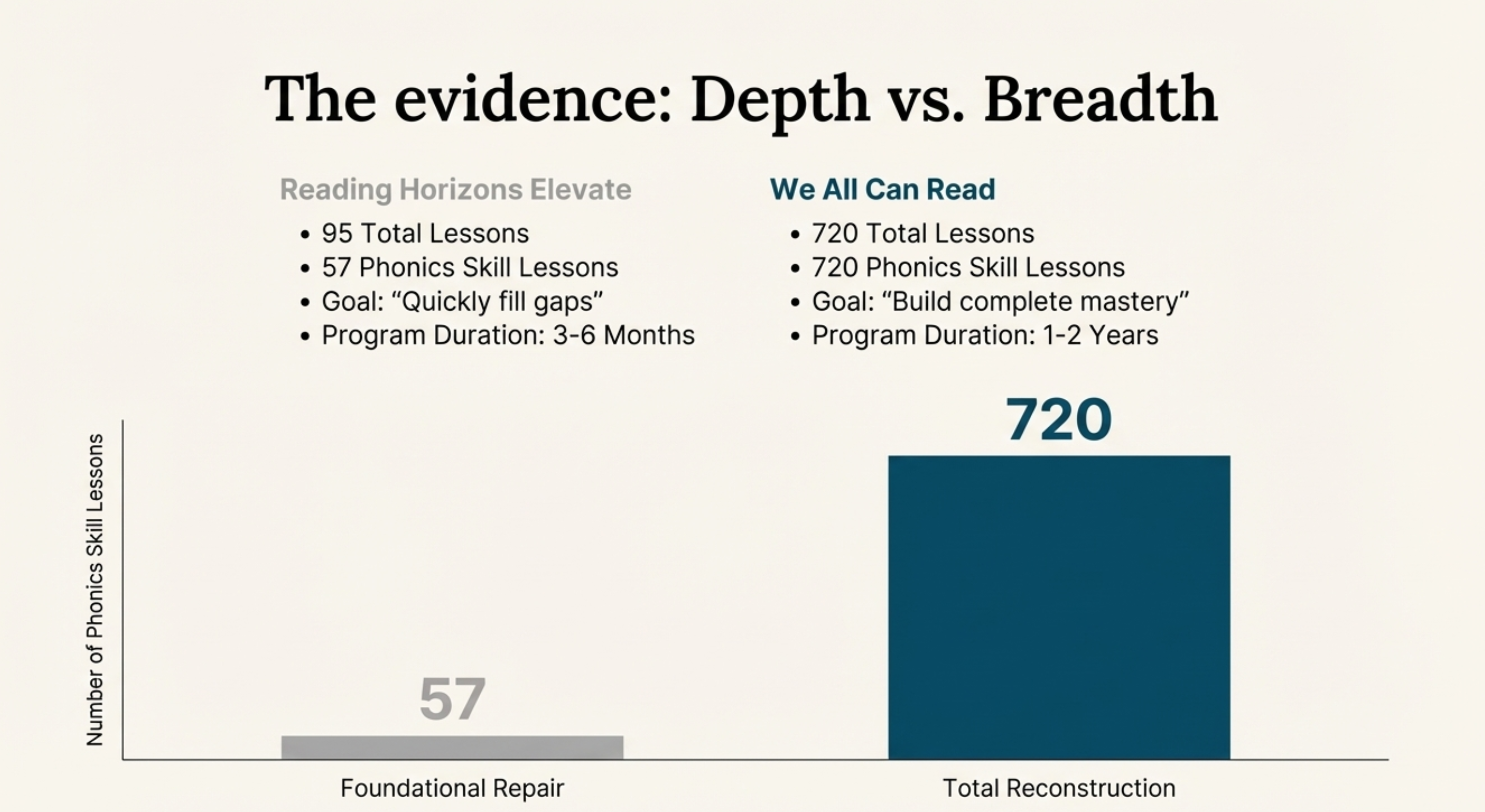
| Total Lessons | 95 lessons | 720 lessons |
| Phonics Skill Lessons | 57 lessons (60%) | 720 lessons (100%) |
| Sight Word Memorization | 20 lessons teaching 150+ sight words | 0 lessons—decode all words |
| Teaching Method | Mixed: phonics + sight words + context clues | Pure systematic phonics only |
| Controlled Text | Chapters 1-3 only, then “natural texts” | All 720 lessons throughout |
| Guessing Strategy | Encouraged in “natural reading” | Never allowed |
| Annual Cost | $199/year | $73/month = $876 total for one entire year |
| Program Duration | 3-6 months | One-to-two years – varies according to a student’s beginning reading level |
| Student License | 2 students included | Unlimited household members |
| Reading Passages | 330 passages (separate library) | 245 passages (integrated + controlled text throughout) |
| Best For | Students with mild difficulties, strong visual memory | Mild to severe reading challenges, dyslexia, learning disabilities |
| Designed For | Ages 10+ (children and adults) | 3rd grade to adult |
The Critical Question: Is This The Same Method That Failed You Before?
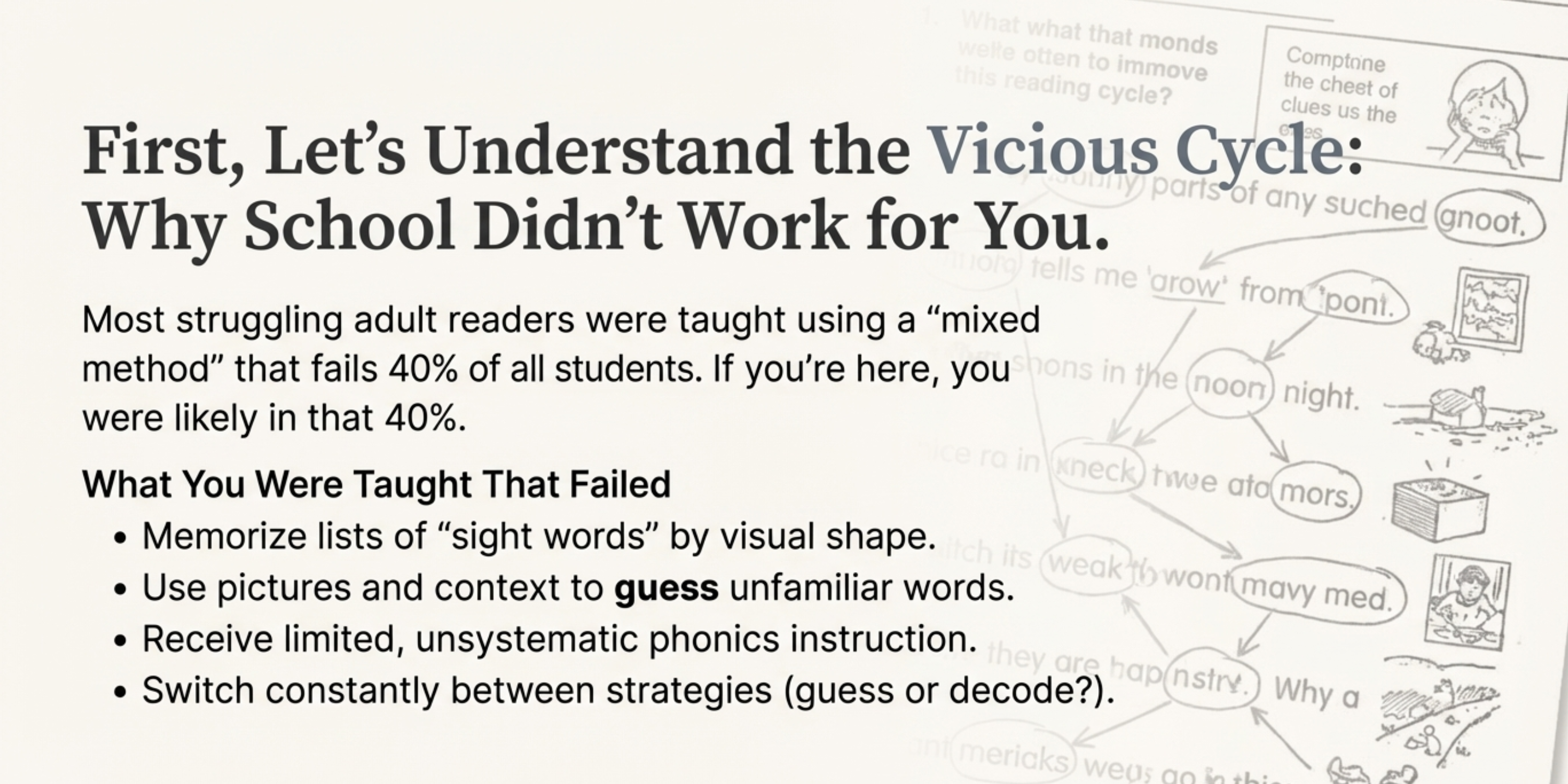
Most adults who struggle with reading were taught using “balanced literacy” or “whole language” methods in school—a mix of sight word memorization, context clues, and limited phonics instruction. This approach works for about 60% of children but fails the other 40%, especially those with dyslexia or learning differences.
If you’re reading this comparison, you were likely in that 40%.
What You Were Taught as a Child (That Didn’t Work)
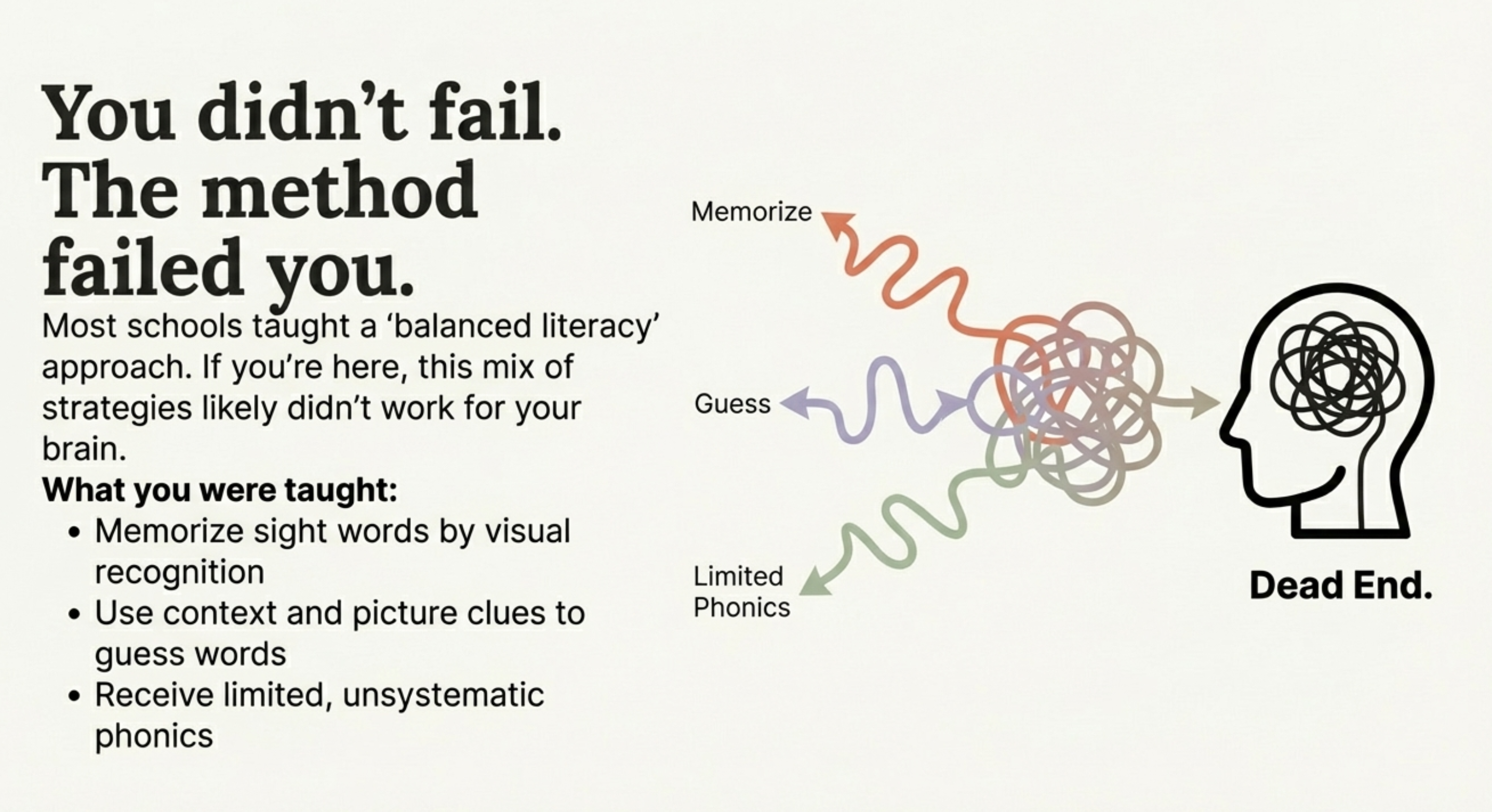
- Memorize sight words by visual recognition
- Use context clues and picture clues to guess words
- Receive limited, unsystematic phonics instruction
- Mix multiple strategies (guess or decode?)
- Read “leveled readers” that weren’t fully decodable
What Reading Horizons Elevate Teaches
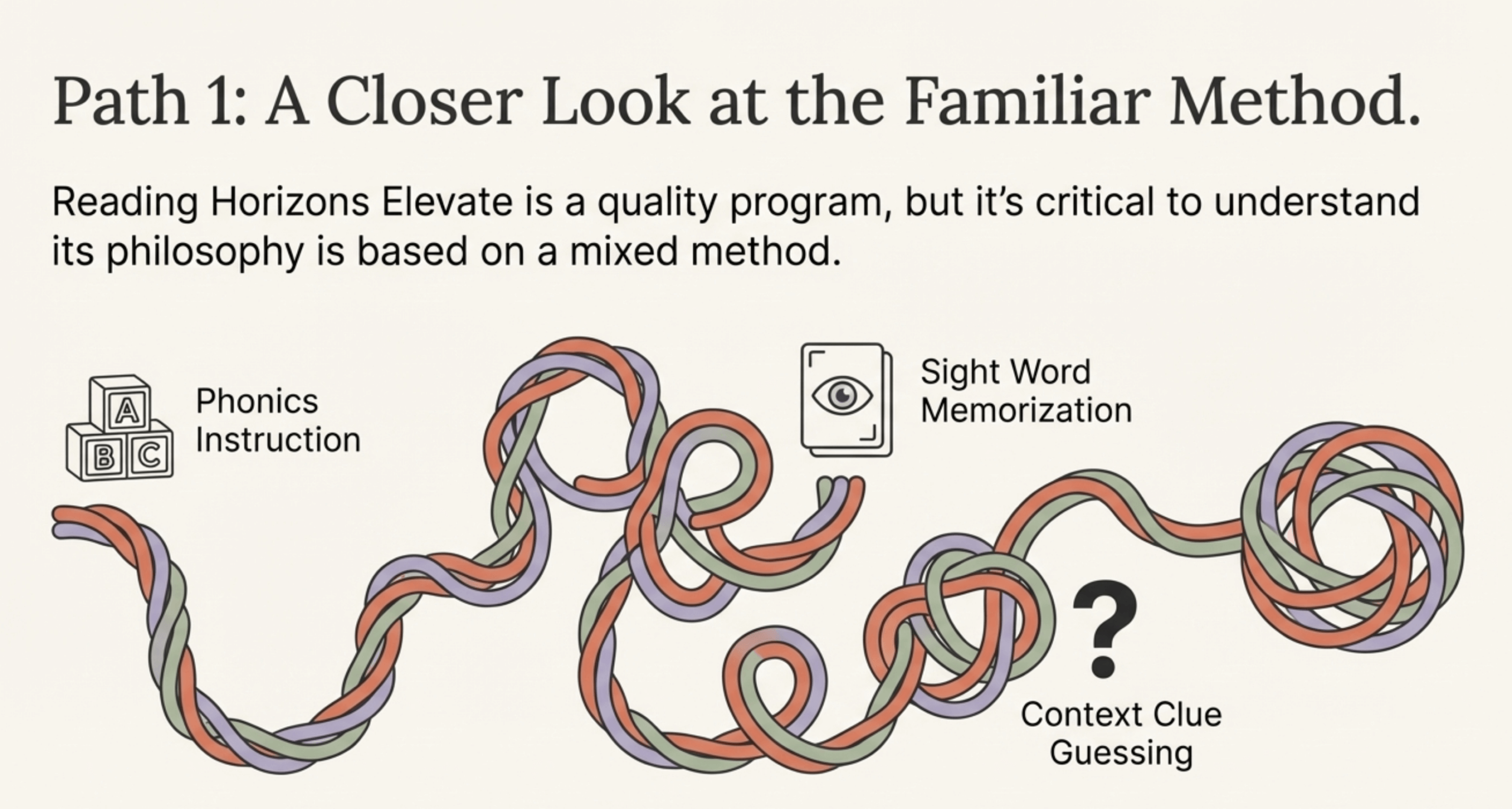
- Memorize 150+ sight words by visual recognition
- Use context clues in “natural texts” starting Chapter 4
- Receive 57 phonics skill lessons (limited coverage)
- Mix multiple strategies (phonics or sight words?)
- Transition to authentic texts before mastering all patterns
This is essentially the same methodology that has failed millions of students for decades.
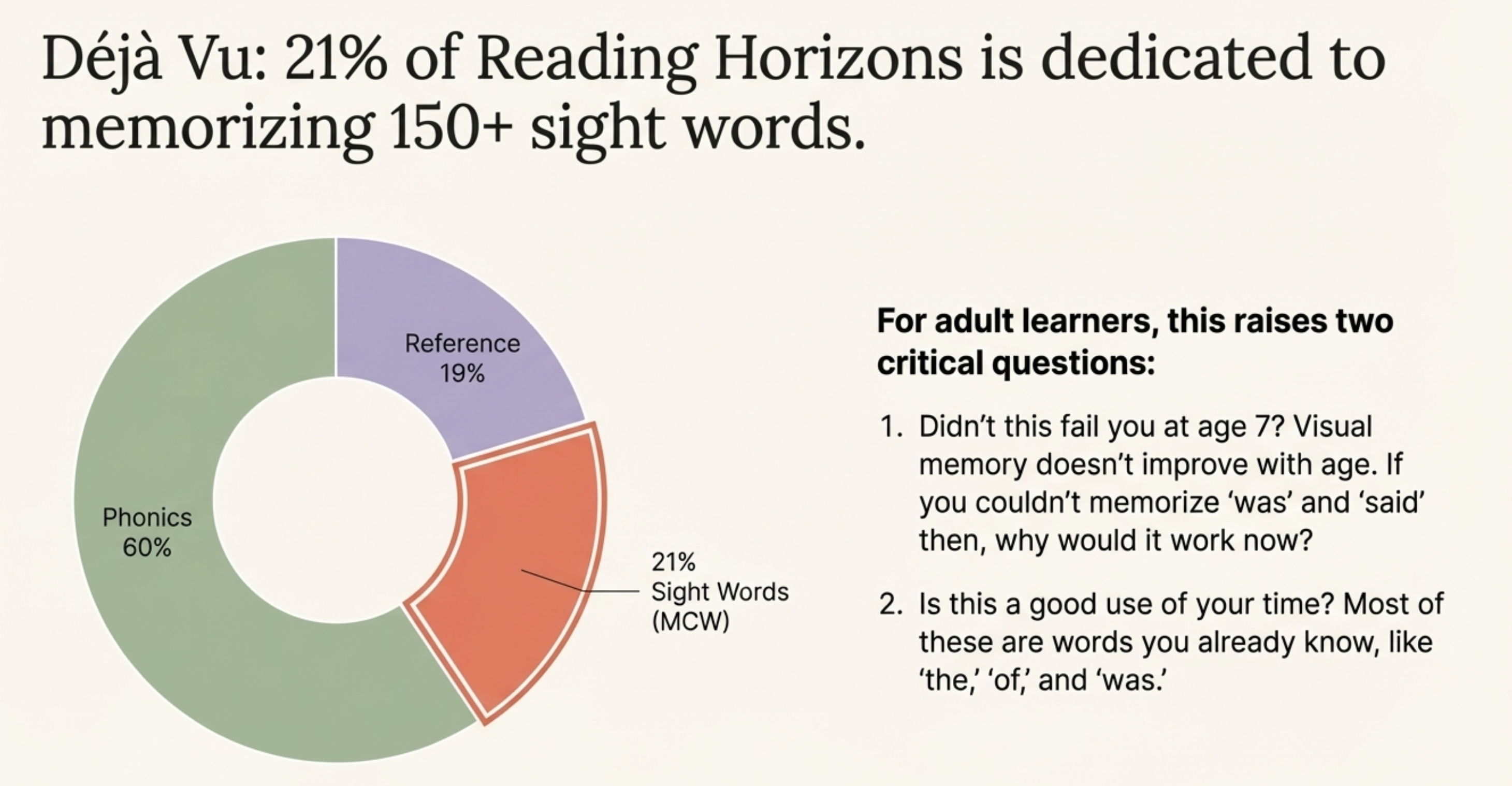
If memorizing sight words didn’t work when a student was 7, why would memorizing 150+ words work with a student at 37, 47, or 57? If incomplete phonics instruction failed students then, why would 57 lessons be enough now?
Program Structure: 95 Lessons vs 720 Lessons
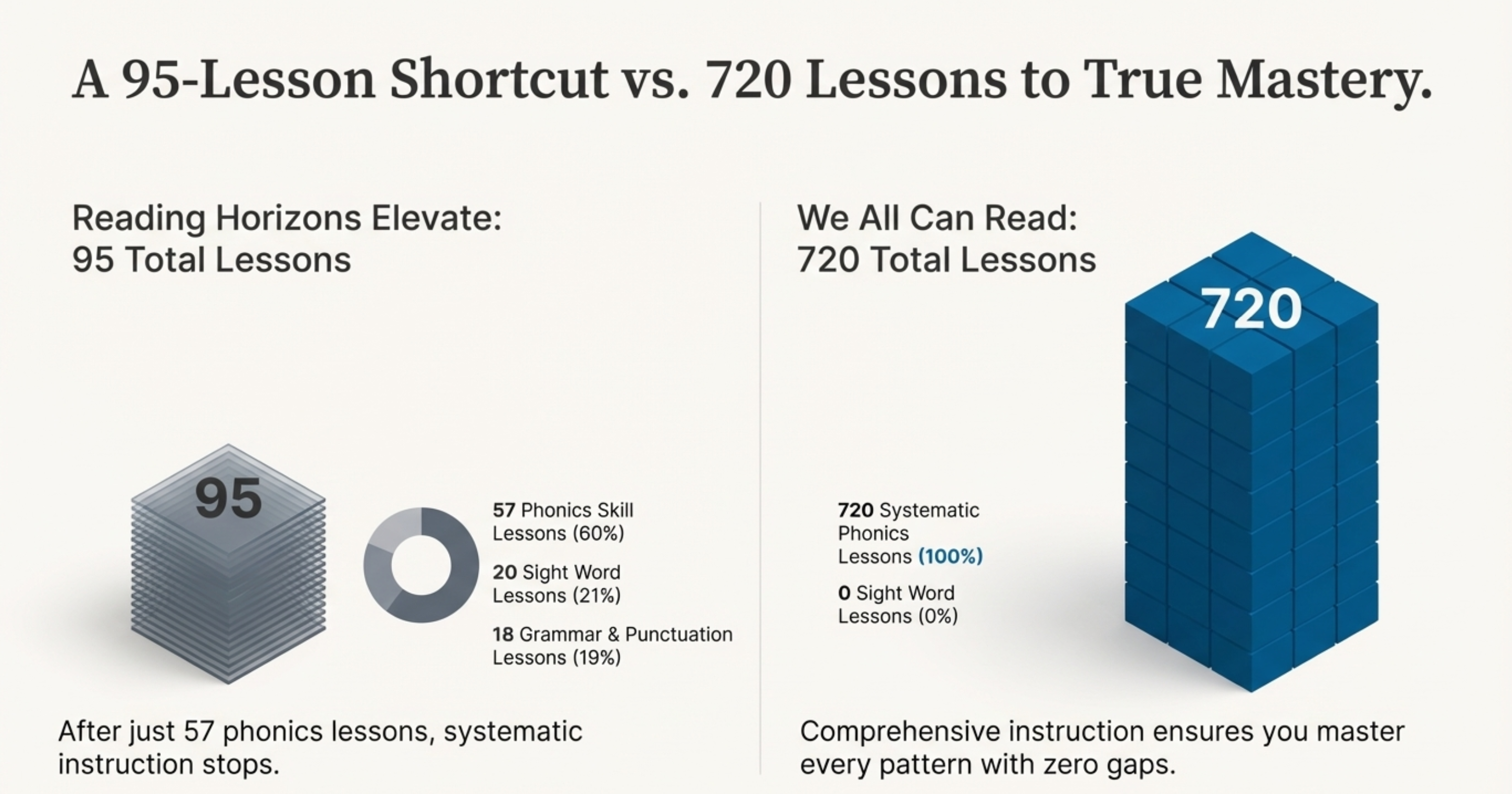
Reading Horizons Elevate: 95 Lessons Over 6 Chapters
Lesson breakdown:
- 57 Skill Lessons (60%): Core phonics and decoding instruction
- 20 MCW Lessons (21%): Most Common Words—sight word memorization
- 18 Reference Lessons (19%): Grammar, punctuation, capitalization
What this means:
- Only 57 lessons actually teach phonics decoding skills
- 20 lessons teach sight words most adults already know (“the,” “of,” “and,” “was”)
- After 57 phonics lessons, systematic phonics instruction stops
- Students transition to “natural texts” before mastering all phonics patterns
Typical completion time: 3-6 months
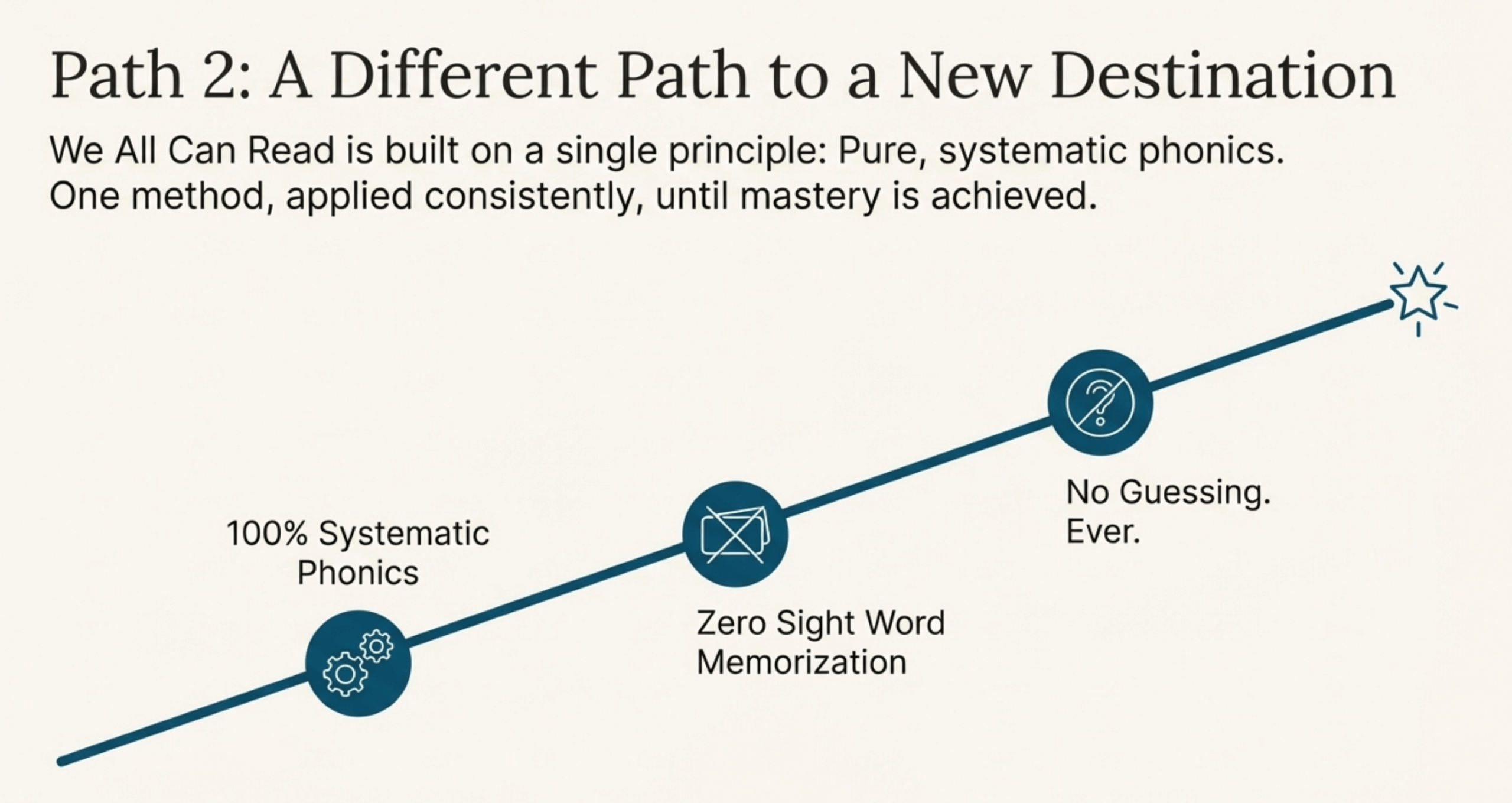
We All Can Read: 720 Systematic Phonics Lessons
Lesson structure:
- 720 Skill Lessons (100%): Comprehensive systematic phonics
- 0 Sight Word Lessons: All words decoded phonetically
- 245 Reading Passages: Integrated throughout the 720 lessons, all controlled text
- 141 Supplemental Fluency Passages: Additional practice correlated to lessons
What this means:
- All 720 lessons teach systematic phonics—no wasted time on words you already know
- Controlled text throughout entire program—never encounter words you can’t decode
- By program completion, students can decode virtually any English word
- Zero reliance on sight word memorization or guessing strategies
Typical completion time: one-to-two years but varies depending on student’s reading level beginning the program
The Sight Word Memorization Problem

Reading Horizons’ MCW (Most Common Words) Lessons
Reading Horizons dedicates 20 of its 95 lessons to teaching “Most Common Words”—high-frequency sight words students must memorize visually.
According to Reading Horizons’ own materials:
- Students learn approximately 200-250 high-frequency words across 20 MCW lessons
- 60-65% of these words are irregular “heart words” that cannot be decoded using phonics
- This means students must memorize 150+ words by sight
Examples from MCW List 1: the, of, and, a, to, in, is, you, that, it, he, was, for, on, are
- Decodable: 6 words (in, is, it, on, he, a)
- Must memorize: 9 words (the, of, and, to, you, that, was, for, are)
- 60% require pure memorization
The Problem for Adult Learners
Two critical issues with this approach:
1. Adults Already Know These Words
Most of the 150+ sight words are common words like “the,” “of,” “and,” “was,” “said,” “have”—words adults already recognize from decades of daily life. For adult learners, 20 lessons spent on words you already know represents 21% of the program wasted on material you don’t need.
What adults actually need: Systematic instruction to decode complex, multisyllabic words like “pharmaceutical,” “organizational,” “simultaneously,” “circumstances”—words requiring phonics mastery, not sight word memorization.
2. Sight Word Memorization Failed You Before
Most adults who struggle with reading have poor visual memory—often due to undiagnosed dyslexia or other learning differences. These adults failed to learn through sight word memorization as children.
Asking them to memorize 150+ words as adults won’t suddenly work.
Visual memory doesn’t improve with age. If you couldn’t memorize “said,” “was,” and “one” at age 7, memorizing them at age 47 using the same method won’t be easier—it will produce the same frustration and failure.
We All Can Read has zero dedicated sight word lessons. When students encounter words with irregular elements (like “said” where “ai” doesn’t follow its typical pattern), we teach them to:
- Decode the phonetic parts systematically
- Acknowledge the irregular element
- Understand that English is overwhelmingly phonetically consistent
The principle: Even “irregular” words are mostly regular. Students use phonics first, note exceptions second. No memorization lists required.
This approach builds confidence in systematic decoding rather than dependence on memorization—critical for adults with poor visual memory or dyslexia.
The Cognitive Confusion Problem
Mixed Methods Create Strategic Uncertainty
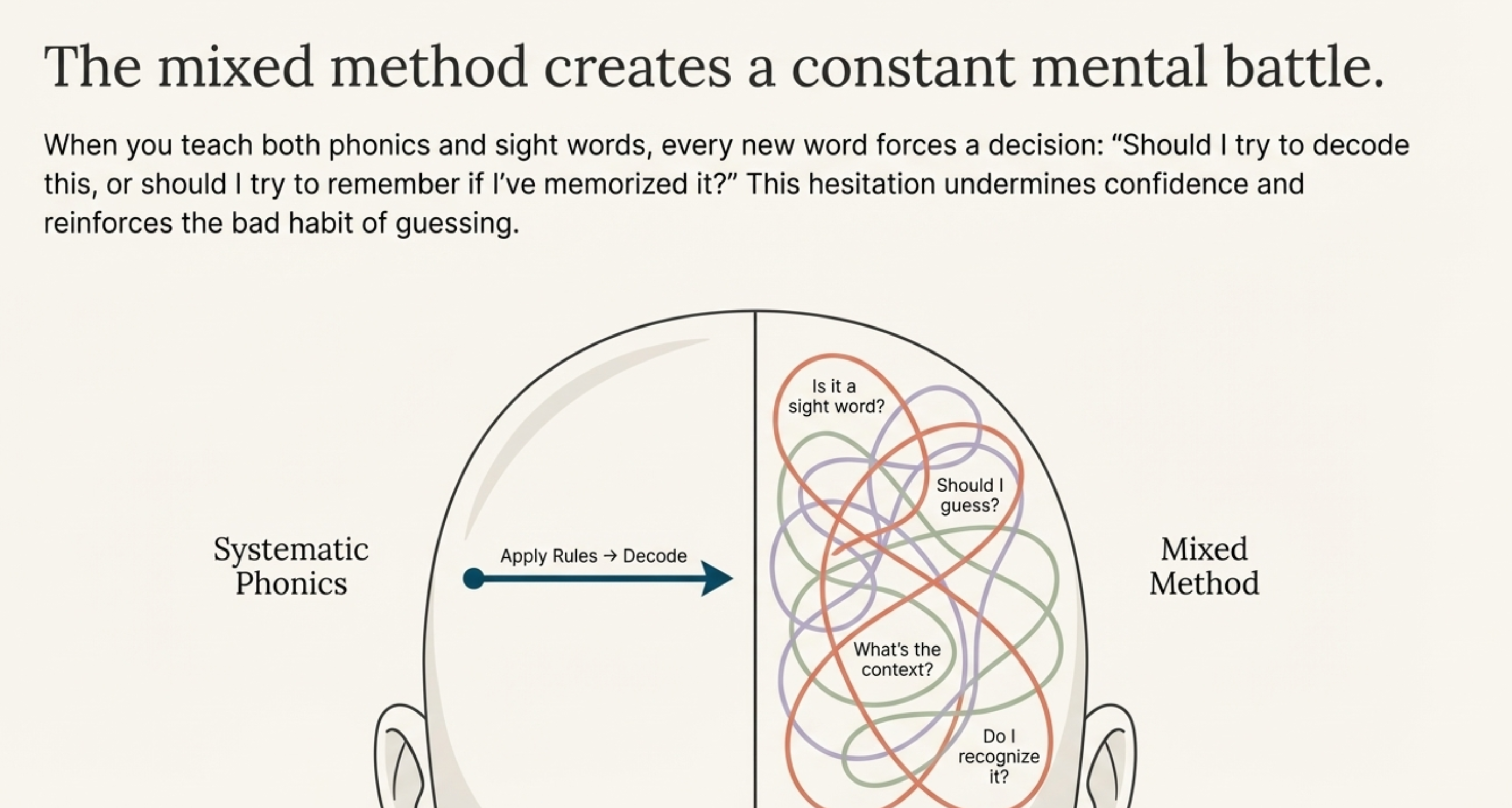
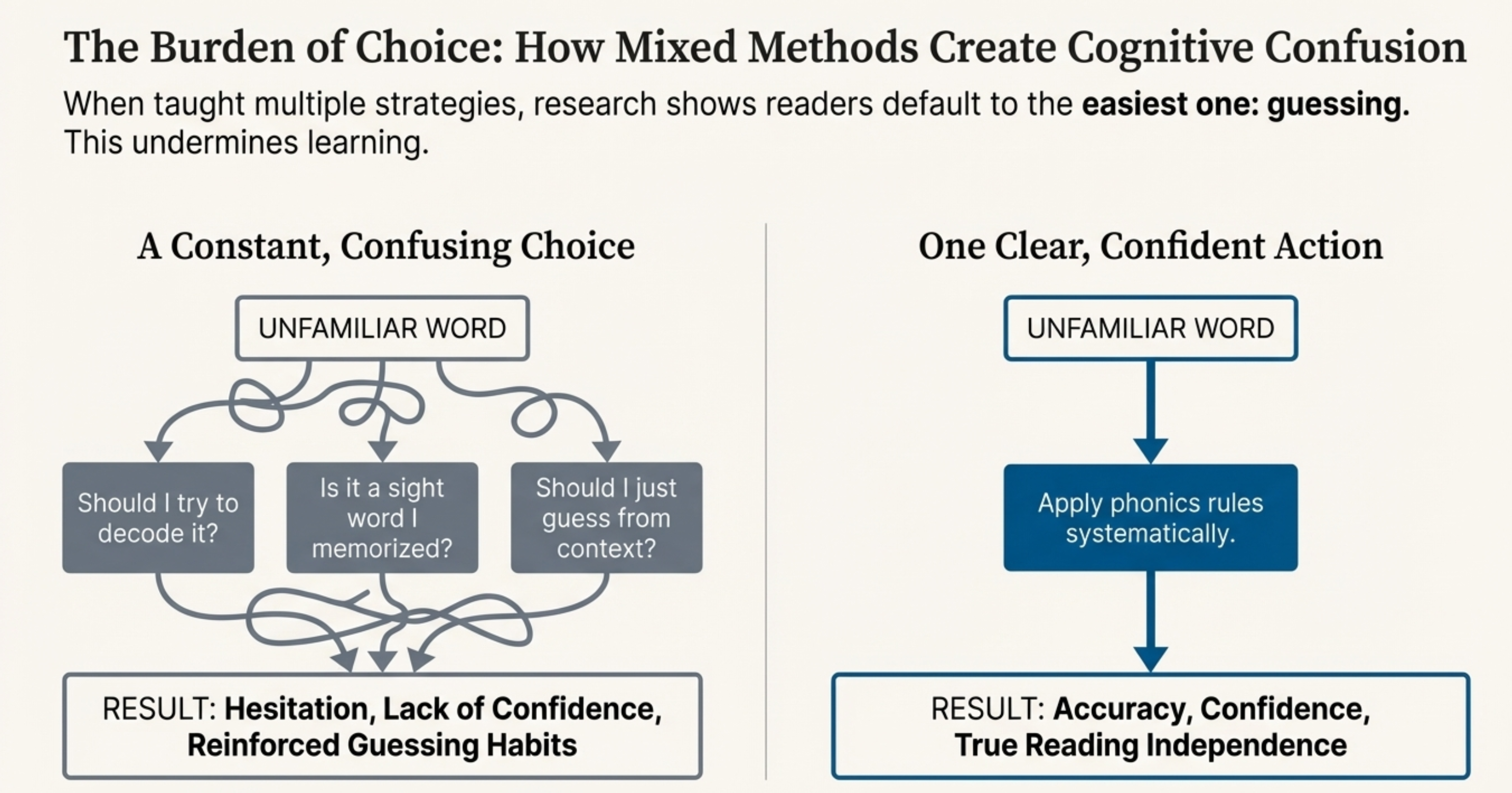
When you teach both systematic phonics AND sight word memorization, students face a fundamental question with every unfamiliar word:
“Do I decode this word or guess it?”
Reading Horizons students must decide:
- Is this one of the 200+ sight words I memorized?
- Should I try to recognize it visually?
- Or should I decode it phonetically?
- Maybe I should guess from context?
This creates:
- Cognitive confusion (competing strategies)
- Hesitation and slower reading
- Default to guessing (easier than decoding)
- Reinforcement of bad reading habits
- Lack of confidence (“Did I guess right?”)
Research Shows the Problem
Science of Reading studies demonstrate that when students are taught multiple word-identification strategies (sight words, context clues, phonics), they default to the easiest strategy—guessing. This undermines systematic phonics instruction and creates lifelong poor reading habits.
The result: Students become dependent on guessing, not skilled decoders.
We All Can Read Eliminates Confusion
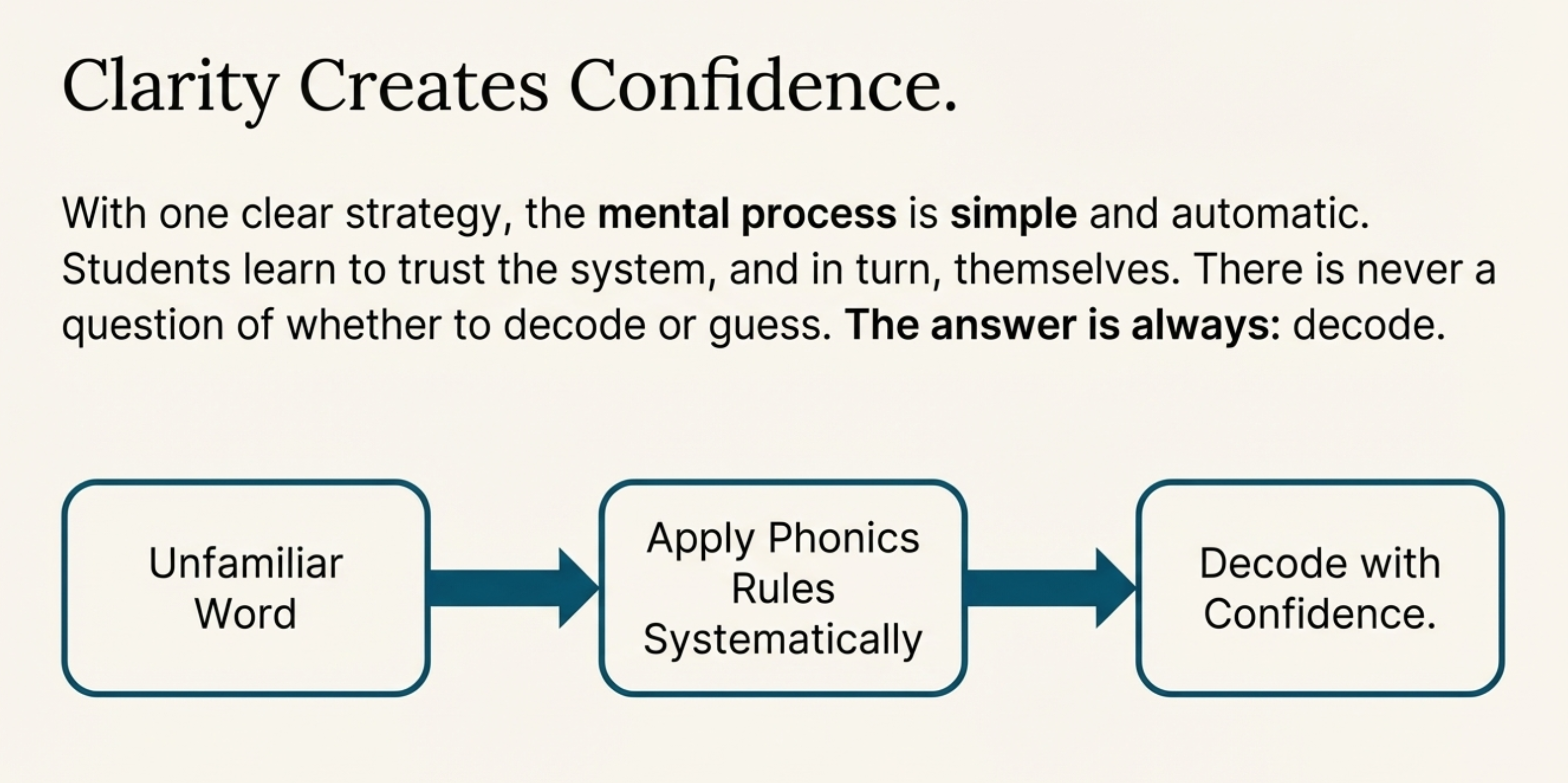
We All Can Read students’ mental process with every word:
- Apply phonics rules systematically
- Decode the word
That’s it. No decision. No confusion.
Students never wonder, “Should I guess this word?” The answer is always: decode it using phonics rules. This cognitive clarity builds confidence, accuracy, and true reading independence.
We All Can Read’s Approach: Zero Sight Word Memorization
For adults who’ve struggled with reading their entire lives, cognitive clarity—not strategic confusion—is essential for success.
Controlled Text: When Do You Stop Using It?
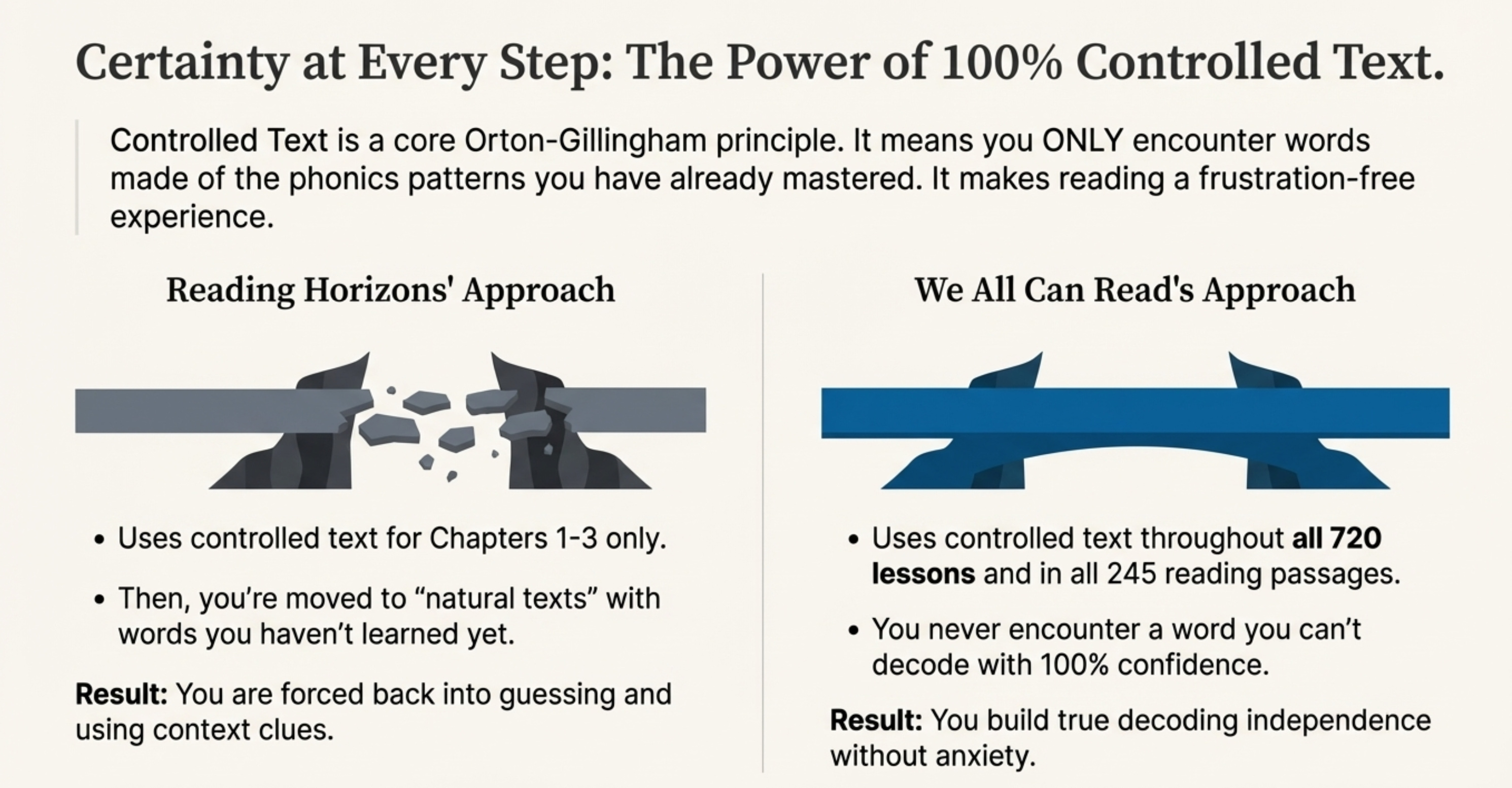
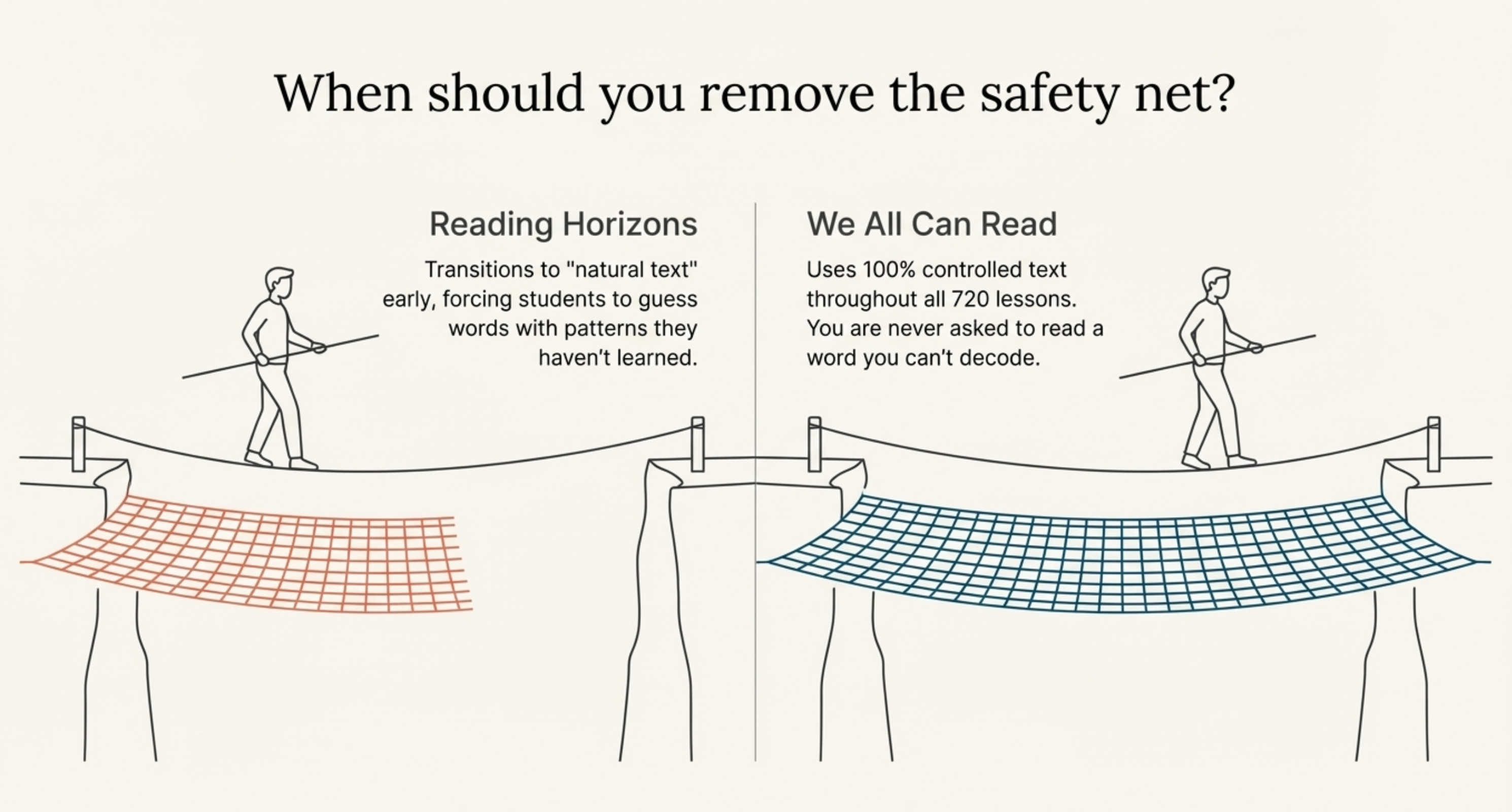
True Orton-Gillingham methodology maintains controlled/decodable text throughout the entire curriculum. Students only encounter words using phonics patterns already mastered. By the END of the program, students have systematically learned every phonics pattern and can decode virtually any word in English.
The Orton-Gillingham Principle
True Orton-Gillingham methodology maintains controlled/decodable text throughout the entire curriculum. Students only encounter words using phonics patterns already mastered. By the END of the program, students have systematically learned every phonics pattern and can decode virtually any word.
Why this works:
- Students master ALL phonics patterns systematically
- No gaps in knowledge
- Never forced to guess or use context clues
- Build TRUE decoding independence
- When finished, can tackle any text confidently
Reading Horizons’ Hybrid Approach
Reading Horizons uses controlled text in Chapters 1-3 (early lessons), then transitions students to “natural” or authentic texts by Chapter 4—before completing all phonics patterns.
What this means:
- Students encounter words using patterns not yet taught
- Must rely on context clues and educated guessing
- May develop gaps in phonics knowledge
- Less confidence when encountering complex words later
The philosophy: Learn basics quickly, then expose students to authentic texts. Trust that foundational skills will transfer.
The problem: This shortcuts the systematic mastery process. Students may still struggle with complex multisyllabic words or unusual patterns they haven’t formally learned.
We All Can Read’s Pure Phonics Approach
We All Can Read maintains controlled text throughout all 720 lessons, following the pure Orton-Gillingham principle. Students only encounter words they can decode with 100% confidence.
We All Can Read contains 245 reading passages:
- 245 passages embedded within core lessons
- 141 supplemental fluency passages correlated to specific lessons
- ALL use controlled/decodable text throughout
- Students never encounter words using patterns not yet mastered
By program completion: Students have mastered every phonics pattern systematically and can decode virtually any English word—no guessing required.
Cost Comparison: What You’re Actually Paying For
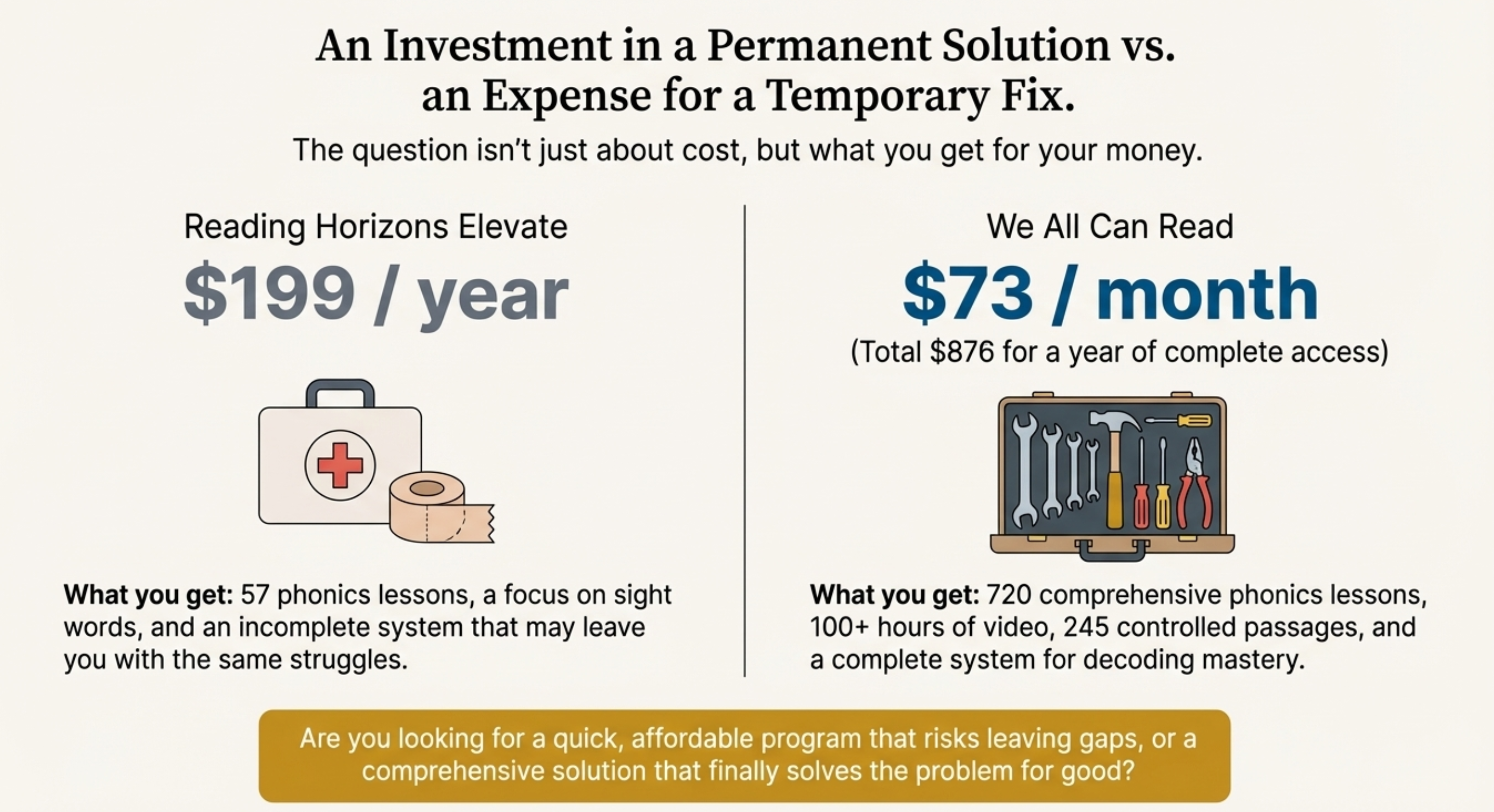
Reading Horizons Elevate costs $6,000-8,000 for their complete program, which includes both online lessons and live instructor support. This represents a significant investment for adult learners. We All Can Read offers a self-paced online alternative at $73/month, allowing you to complete the program for approximately $584-876 total (based on 8-12 months to completion).
The key consideration isn’t just price—it’s methodology. Reading Horizons dedicates 20 of its 95 lessons to memorizing 150+ sight words, the same mixed-method approach that failed many adult learners in childhood. We All Can Read provides 720 lessons of pure systematic phonics with zero sight word memorization, teaching you to decode any word rather than memorizing specific words.
For adult learners on a budget who need true systematic phonics instruction, the choice becomes clear. See our Adult Phonics Cost Comparison Guide for a complete breakdown of program costs, methodologies, and value.
Reading Horizons Elevate Pricing
Online Software (2-student license): $199/year
What’s included:
- 95 total lessons (57 phonics, 20 sight words, 18 reference)
- 330 reading passages in separate library
- 2 student licenses
- Progress monitoring assessments
- Vocabulary tool
Program duration: 3-6 months typically
Total cost: $199 for one year access
We All Can Read Pricing
Monthly Subscription: $73/month
What’s included:
- 720 systematic phonics lessons
- 245 controlled-text reading passages (integrated)
- Supplemental reader – 141 additional controlled-text passages (correlated to lessons in core program)
- 100+ hours of video instruction
- 400+ printable worksheets
- 203 mastery quizzes
- Unlimited household members
- Comprehensive progress tracking
Program duration: Approximately one-to-two years but varies according to the starting reading level of student
Total cost: $876 for complete access to all 720 lessons for one entire year
Cost Analysis: What Are You Getting?
Reading Horizons: $199
- Lower upfront cost
- Faster completion (3-6 months)
- But: Only 57 phonics lessons, heavy sight word focus, incomplete mastery
We All Can Read: $73 per month
- Higher total investment
- Longer commitment of one year or more
- But: 720 comprehensive lessons, zero sight words, complete phonics mastery
The question: Do you want a quick, affordable program that may leave gaps? Or comprehensive mastery that costs more but finally solves the problem?
For adults who’ve struggled for decades and can’t afford to fail again, investing in complete mastery—not shortcuts—makes sense.
Who Should Choose Reading Horizons Elevate?
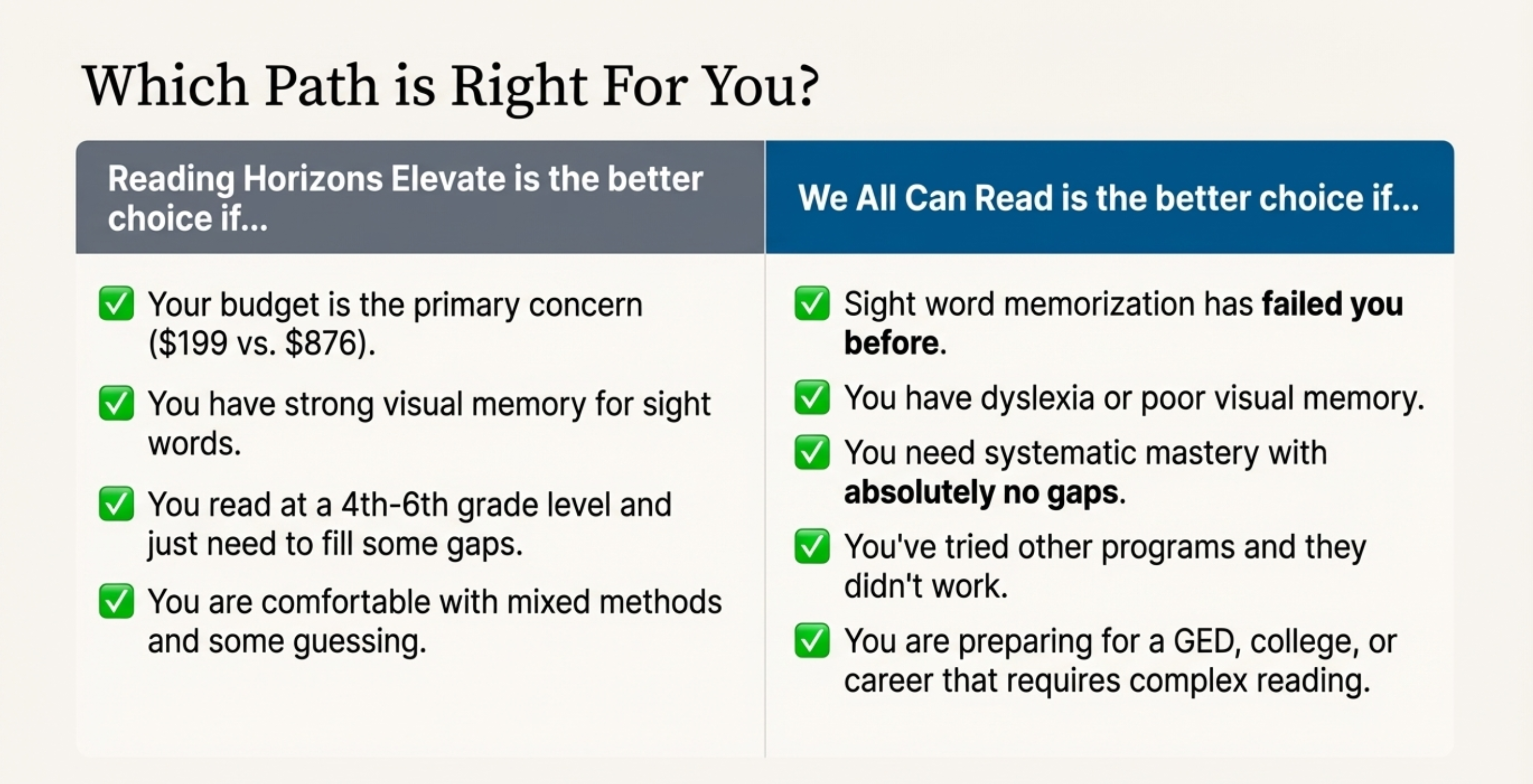
Reading Horizons Elevate is the better choice if:
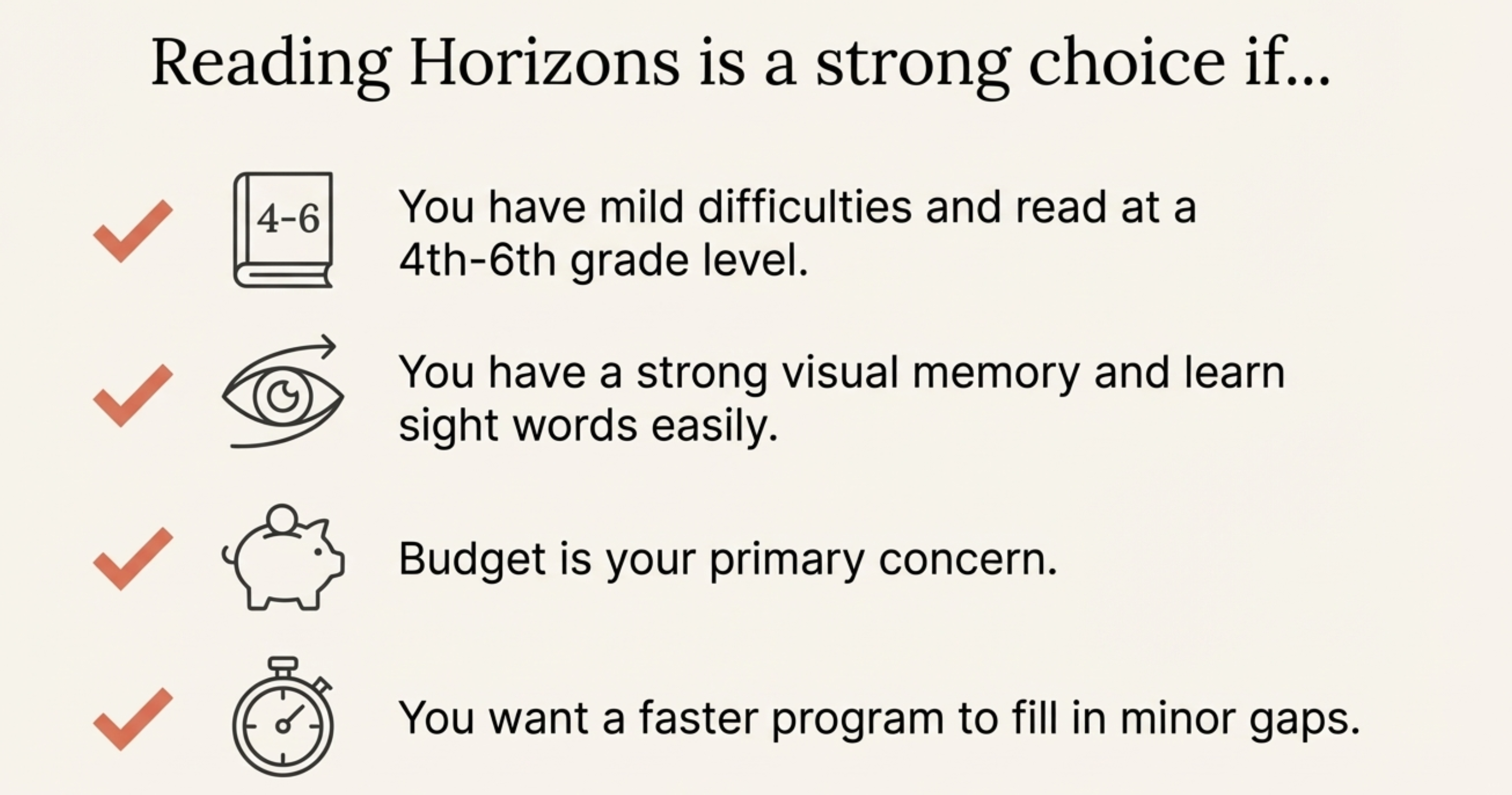
- ✅ You read at 4th-6th grade level and need to fill gaps quickly
- ✅ You have strong visual memory for sight word recognition
- ✅ Budget is your primary concern ($199/year vs $876/year)
- ✅ You want to complete a program faster (3-6 months)
- ✅ You learn quickly and don’t need extensive repetition
- ✅ You need a license for 2 students (included in their price)
- ✅ You’re comfortable with mixed methods (phonics + sight words)
- ✅ You don’t have dyslexia or significant learning differences
Reading Horizons excels at:
- Providing quick foundational repair for mild reading difficulties
- Offering affordable annual pricing
- Getting students reading simple texts quickly
- Serving both older children and adults in one program
Who Should Choose We All Can Read?
We All Can Read is the better choice if:
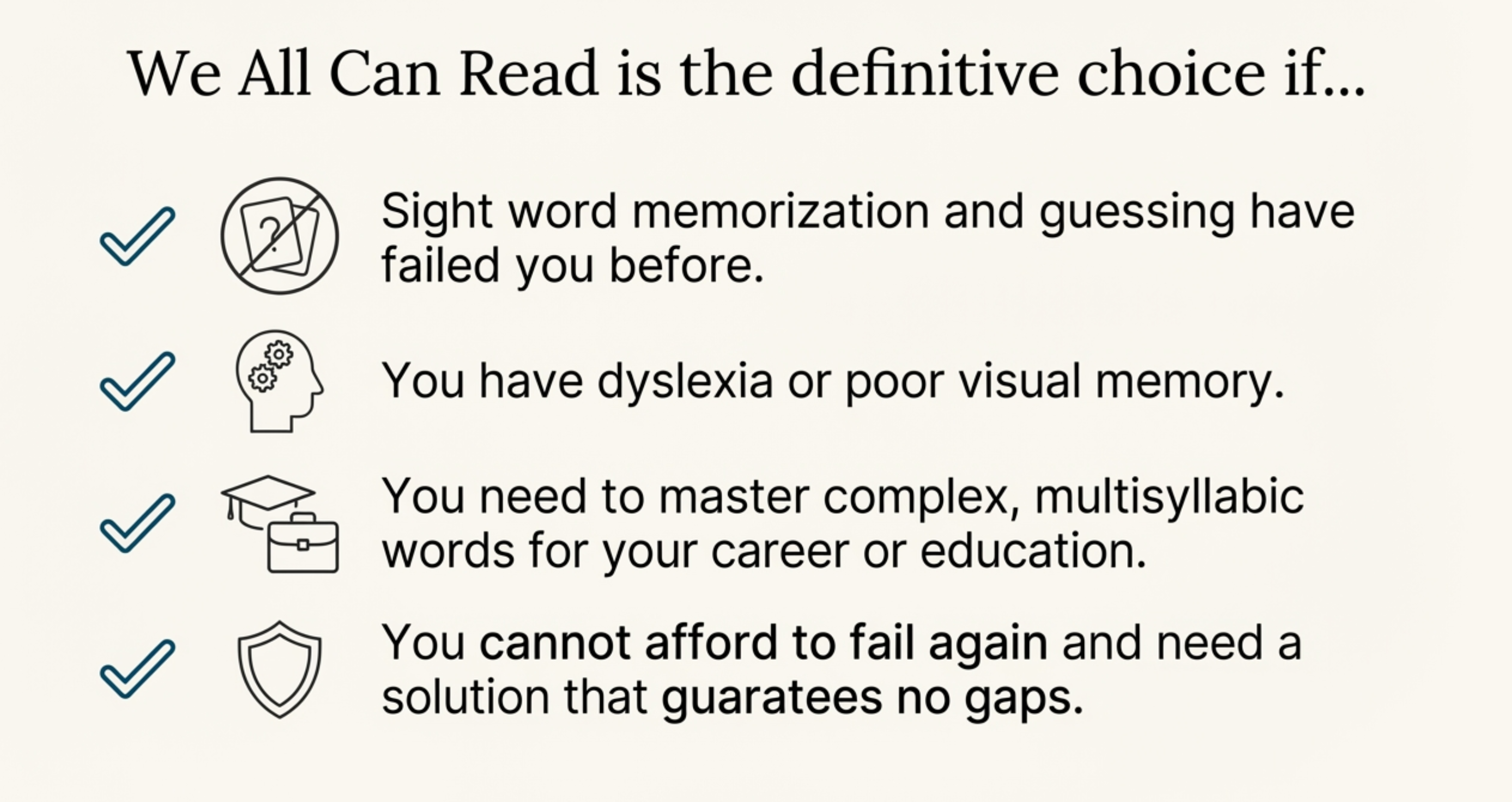
- ✅ You’re a complete non-reader or read below 3rd grade level
- ✅ You have dyslexia or poor visual memory
- ✅ Sight word memorization failed you as a child
- ✅ You need systematic mastery with absolutely no gaps
- ✅ You get frustrated when forced to guess or use context clues
- ✅ You’re preparing for GED, college, or career advancement requiring complex reading
- ✅ You need to read technical, academic, or specialized vocabulary
- ✅ You want comprehensive instruction even if it takes longer
- ✅ You’ve tried other programs and they didn’t work
- ✅ You need controlled text throughout for confidence
We All Can Read excels at:
- Making systematic Orton-Gillingham accessible without a tutor
- Providing comprehensive phonics mastery (720 vs 57 lessons)
- Eliminating sight word memorization entirely
- Building true decoding independence for any word
- Respecting adult learners with age-appropriate, dignified content
- Serving adults with severe reading challenges and dyslexia
The Fundamental Difference: Philosophy and Results
Reading Horizons Elevate Philosophy
“Get foundational skills quickly, then expose students to authentic texts.”
After completing Reading Horizons, students have:
- 57 phonics lessons worth of decoding skills (incomplete coverage)
- 200+ memorized sight words
- Ability to read simple texts containing common words
- Continued struggle with complex, unfamiliar words they haven’t memorized
- Reliance on context clues and guessing for difficult words
We All Can Read Philosophy
“Master every phonics pattern systematically before transitioning to any text.”
After completing We All Can Read, students have:
- 720 phonics lessons of systematic decoding mastery (complete coverage)
- Zero reliance on sight word memorization
- Ability to decode virtually ANY English word systematically
- True reading independence—no guessing, no context clues needed
- Confidence tackling complex academic, technical, and specialized vocabulary
Both Programs Share the Same Goal—But Take Different Paths
Both Reading Horizons Elevate and We All Can Read aim to help struggling readers become confident, independent readers. Both use Orton-Gillingham principles. Both have helped many students.
The critical difference is methodology:
Reading Horizons takes an efficient, streamlined approach: quick phonics foundation + sight word memorization + transition to authentic texts. This gets students reading simple materials quickly but may leave gaps for those with severe challenges.
We All Can Read takes a comprehensive, systematic approach: complete phonics mastery + zero sight word memorization + controlled text throughout. This takes longer but builds true decoding independence for any word.
Neither approach is “wrong”—they serve different needs.
If you struggled with reading as a child because the teaching method failed you, choosing a program that uses essentially the same method (sight words, limited phonics, guessing) is unlikely to produce different results.
If you need what you never got—comprehensive, systematic phonics instruction from beginning to end—that’s what We All Can Read provides.
The Question Only You Can Answer
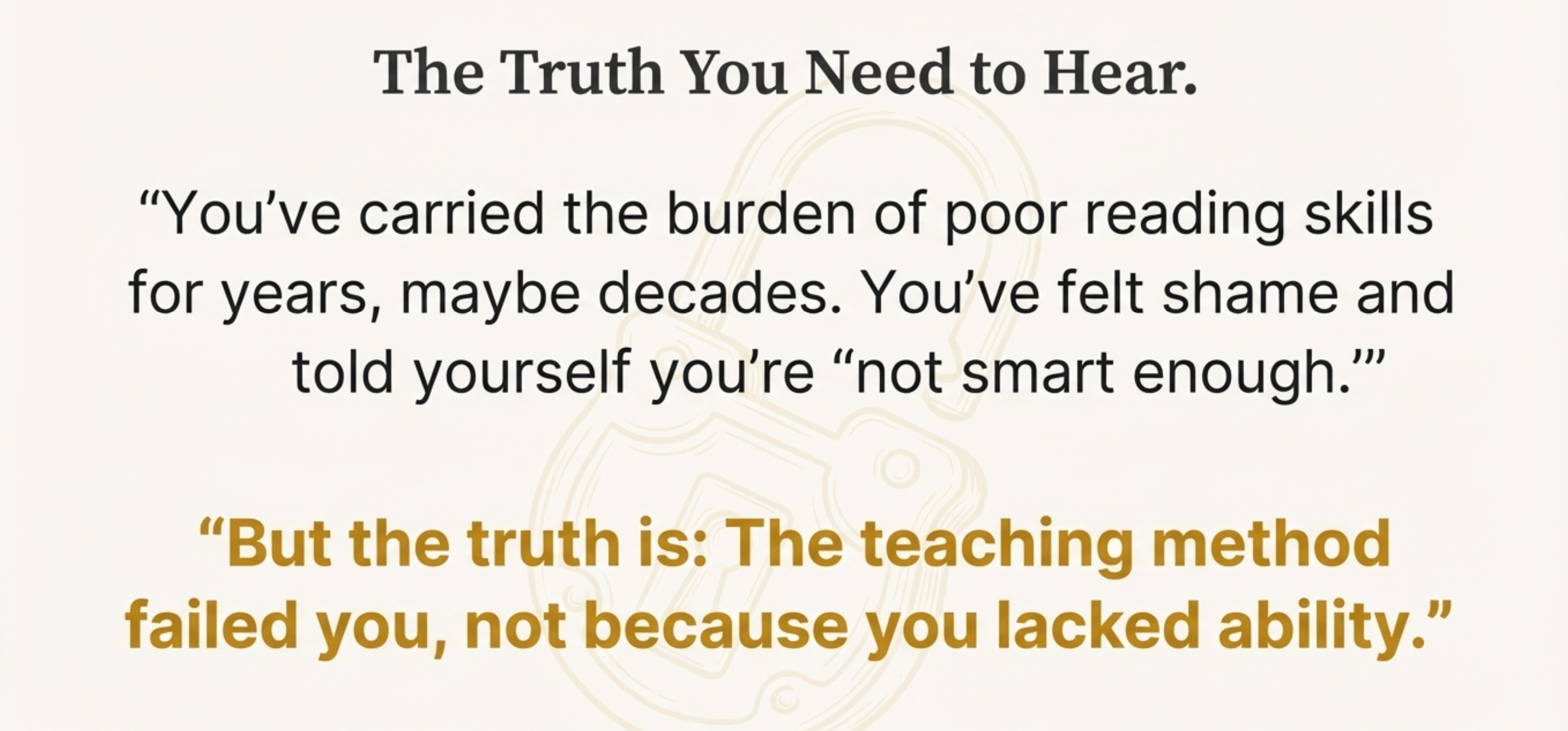
You’ve carried the burden of poor reading skills for years, maybe decades. You’ve avoided opportunities, felt shame, told yourself you’re “not smart enough.”
But the truth is: You failed because the teaching method failed you, not because you lacked ability.
Now you have a choice:
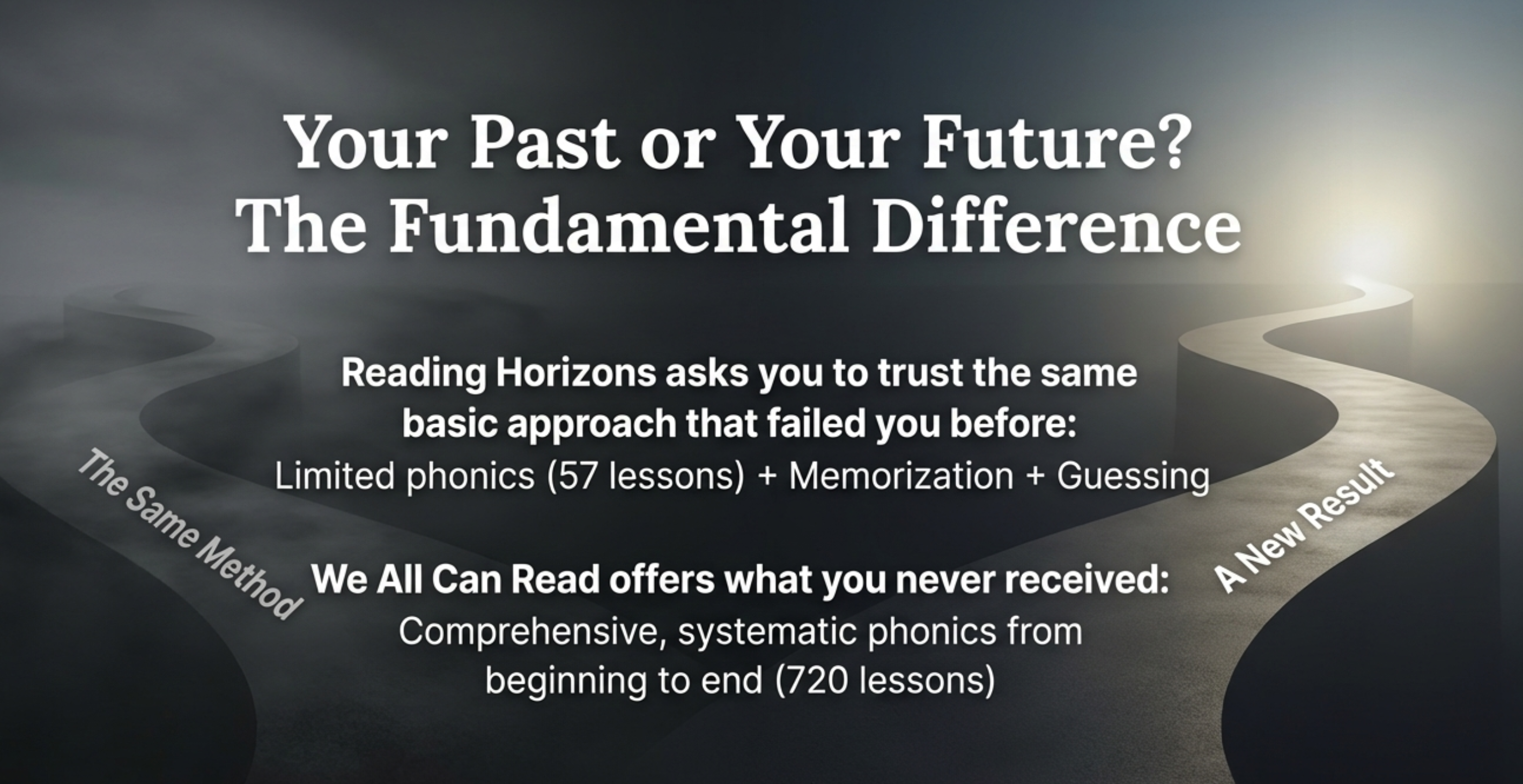
Reading Horizons Elevate asks you to trust the same basic approach that failed you before:
- Memorize sight words (like you tried as a child)
- Use context clues and guessing (like you tried in school)
- Get limited phonics instruction (57 lessons—like the incomplete instruction you received)
- Hope it works this time
We All Can Read offers something completely different:
- The systematic, comprehensive phonics instruction you should have received as a child
- Zero sight word memorization—pure phonics decoding
- 720 lessons ensuring no gaps in knowledge
- True reading independence for virtually any word
Which path makes sense for someone who’s already failed once with mixed methods?
For adults who’ve struggled their entire lives and can’t afford to fail again, choosing the method that actually addresses the root cause—incomplete phonics instruction—is the only path forward.
Ready to Get Started?
Try We All Can Read Free
Experience systematic Orton-Gillingham instruction designed specifically for adult learners. Our first 10 lessons are completely free—no credit card, no email, no obligation.
See the difference between mixed methods and pure systematic phonics. If these first 10 lessons help you improve, the remaining 710 lessons will teach you to decode virtually any word.
See the complete visual analysis
(15 page illustrated guide)
Have Questions?
Contact us – We’re happy to help you decide if our program is right for your situation, or if Reading Horizons might be a better fit.
Compare Other Programs
Still researching your options? Read our other detailed comparisons: