Reading Accuracy vs. Fluency: Why Both Skills Matter
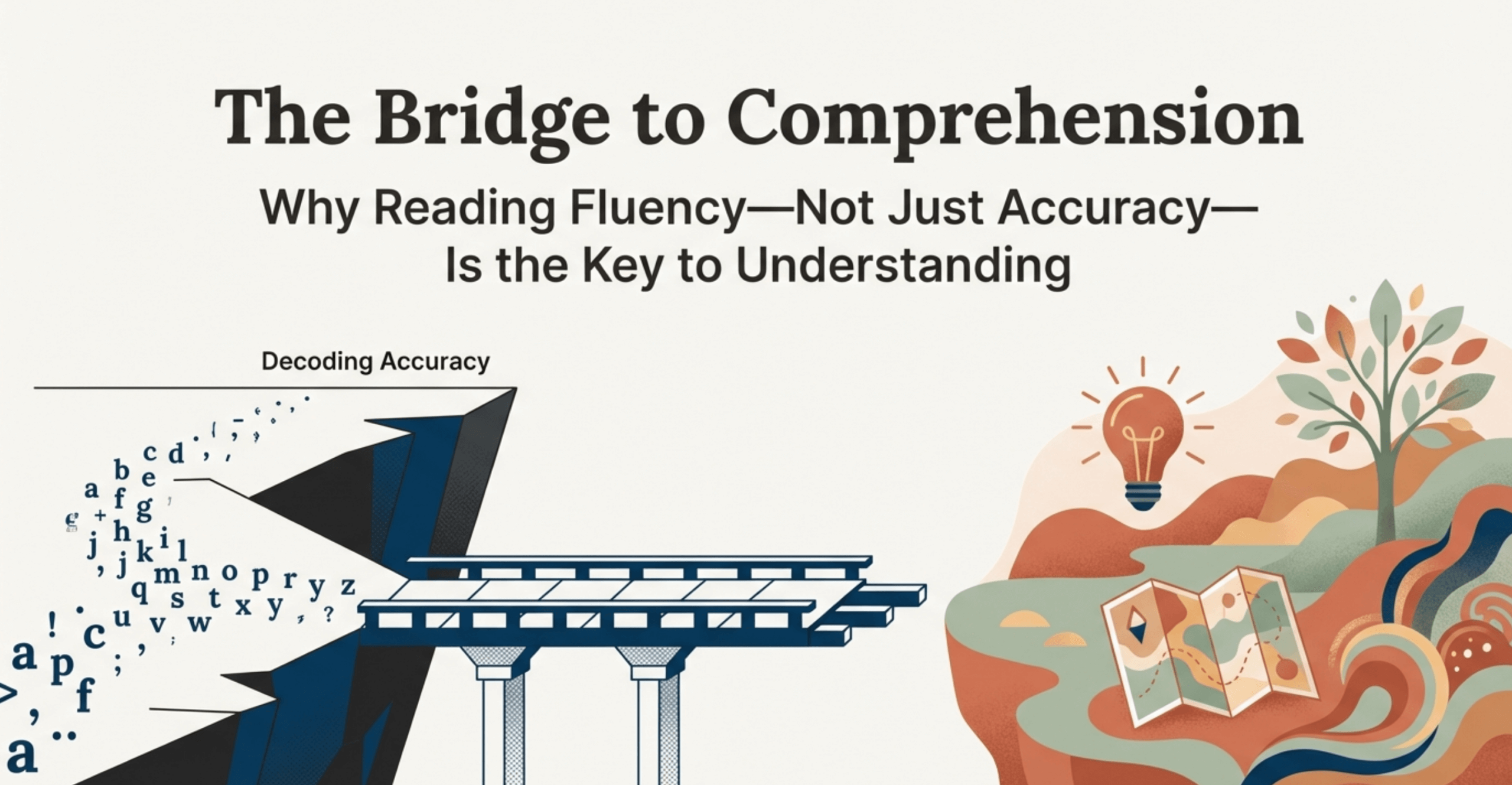
Accuracy Alone Isn’t Enough
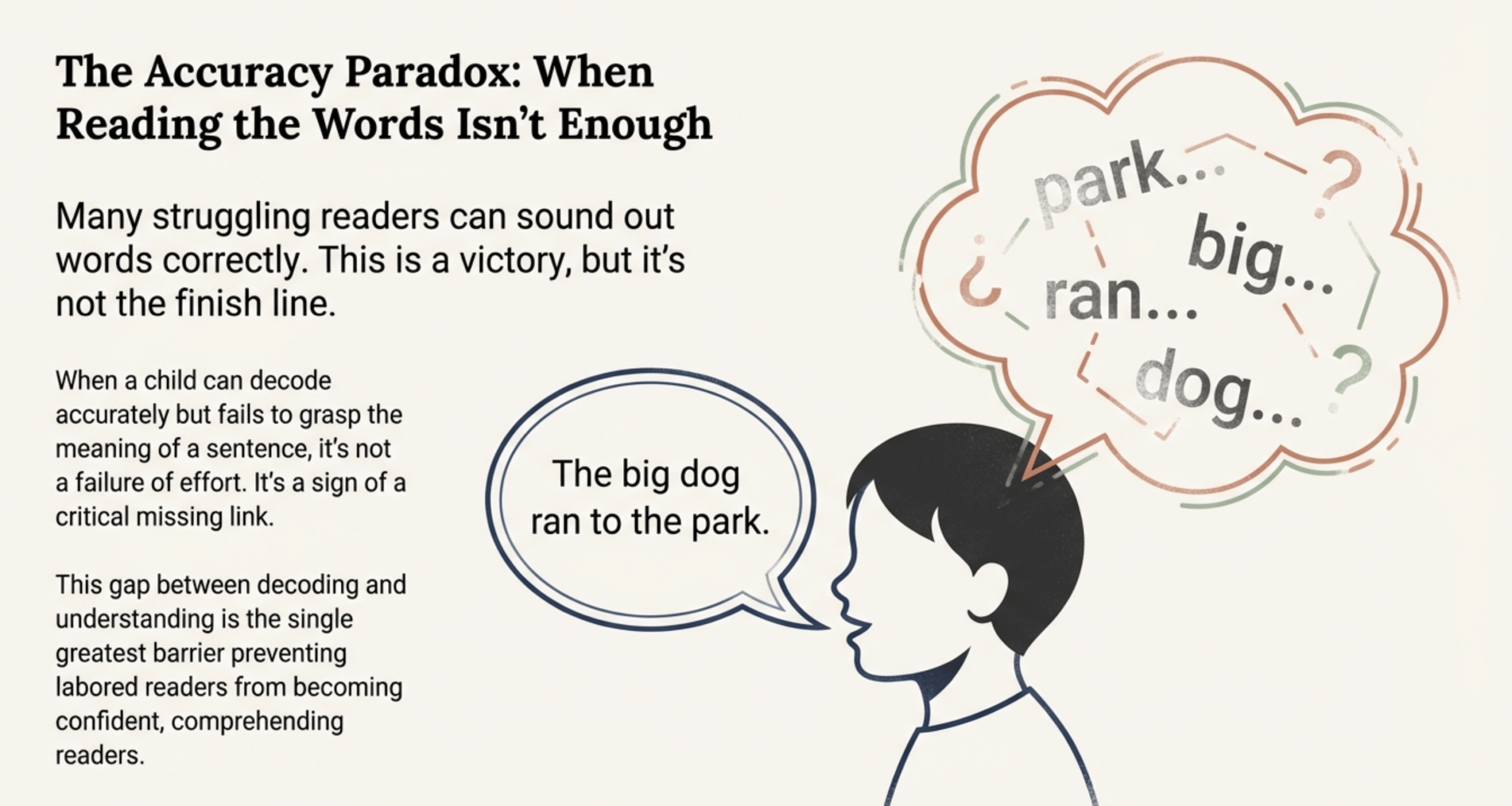
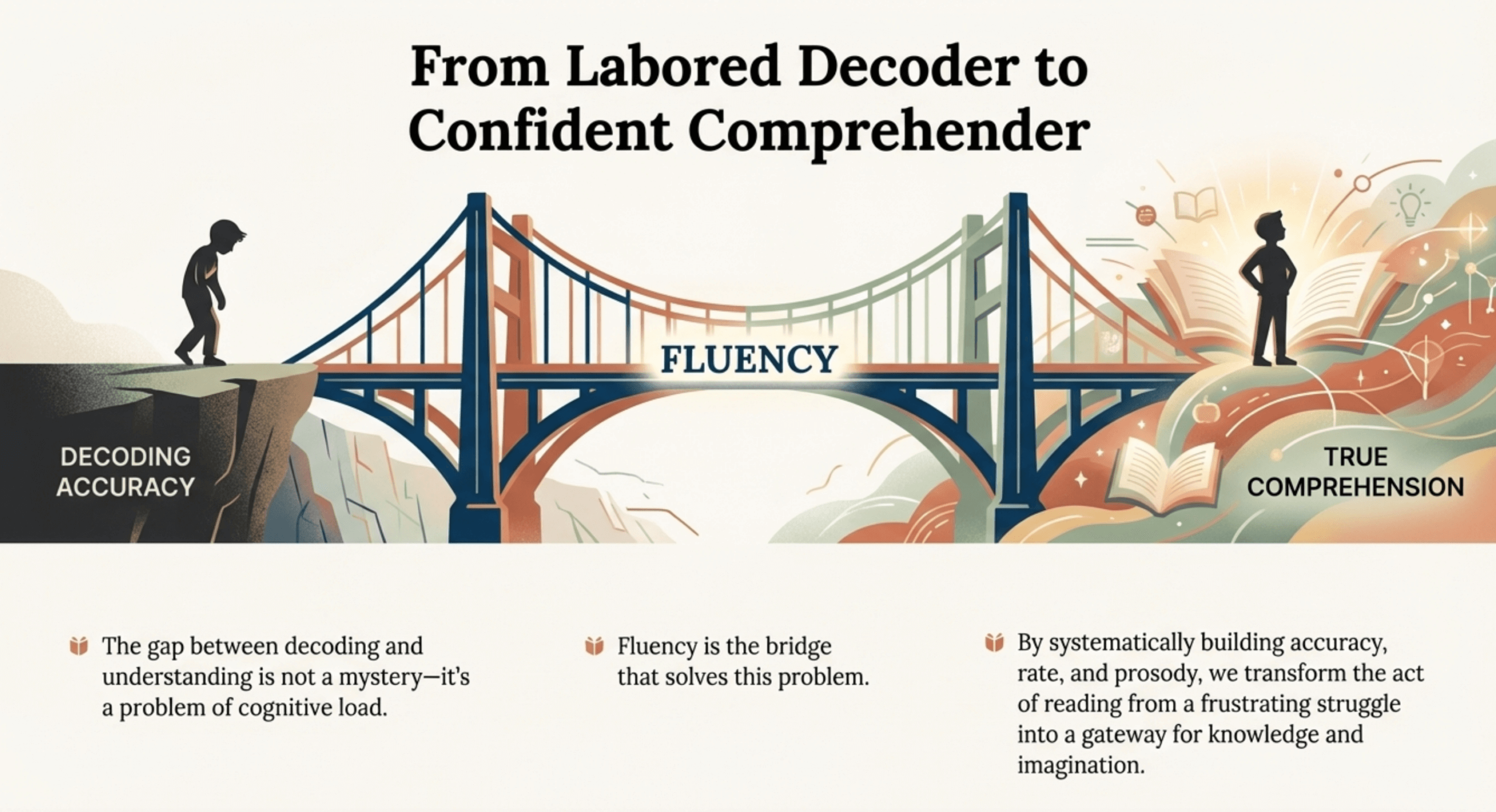
Many parents celebrate when their struggling reader finally starts decoding words correctly. After months or years of difficulty, seeing your child sound out words accurately feels like victory. And it is—but it’s not the finish line.
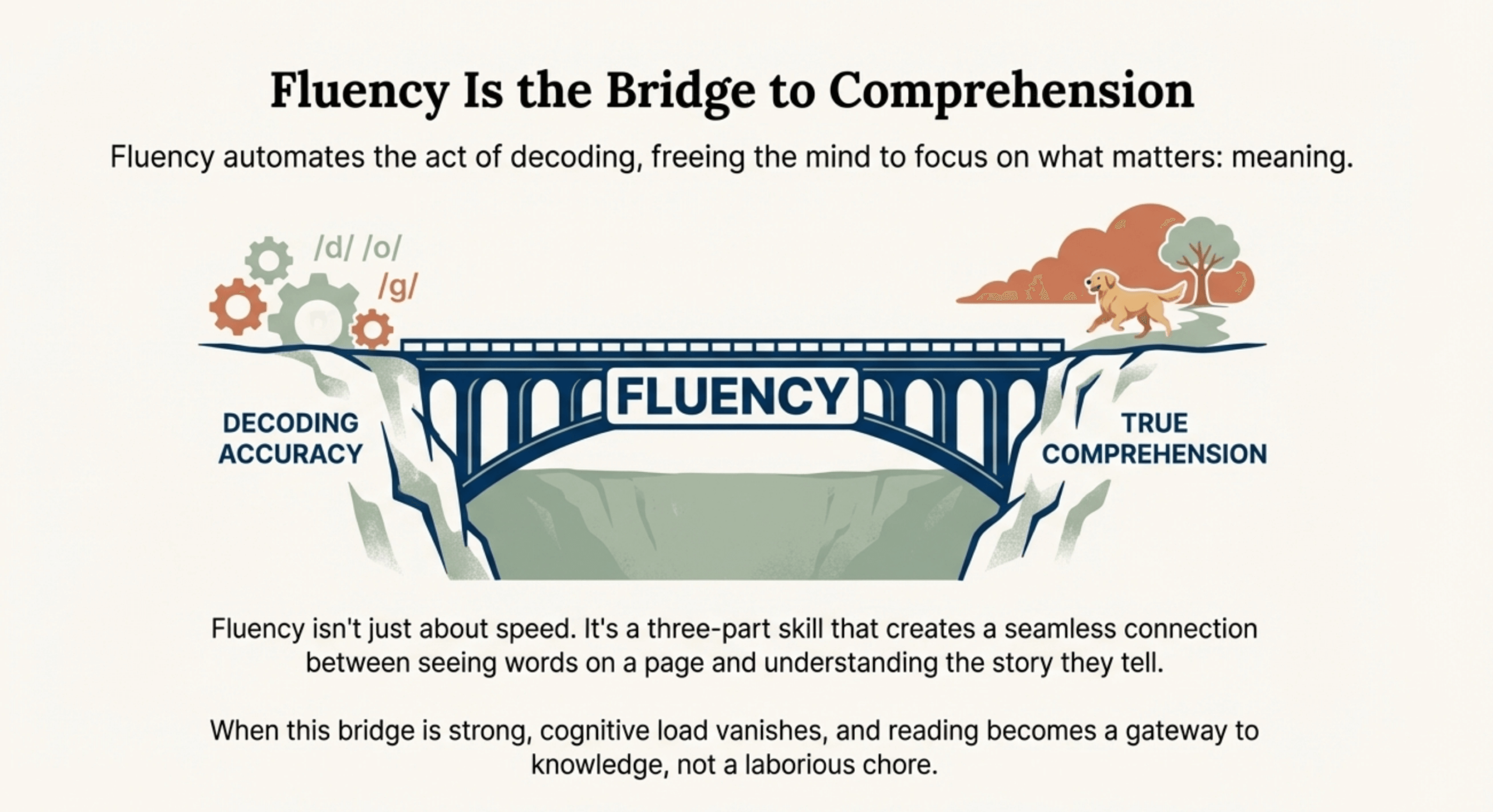
Accurate decoding is essential, but it’s only half of what proficient reading requires. Students must also read fluently—smoothly, at appropriate speed, with proper expression. Without fluency, comprehension suffers dramatically, even when decoding is accurate.
Understanding the relationship between accuracy and fluency—and how to develop both—transforms labored readers into confident, comprehending readers.
What Reading Fluency Actually Means
The Three Components of Fluency
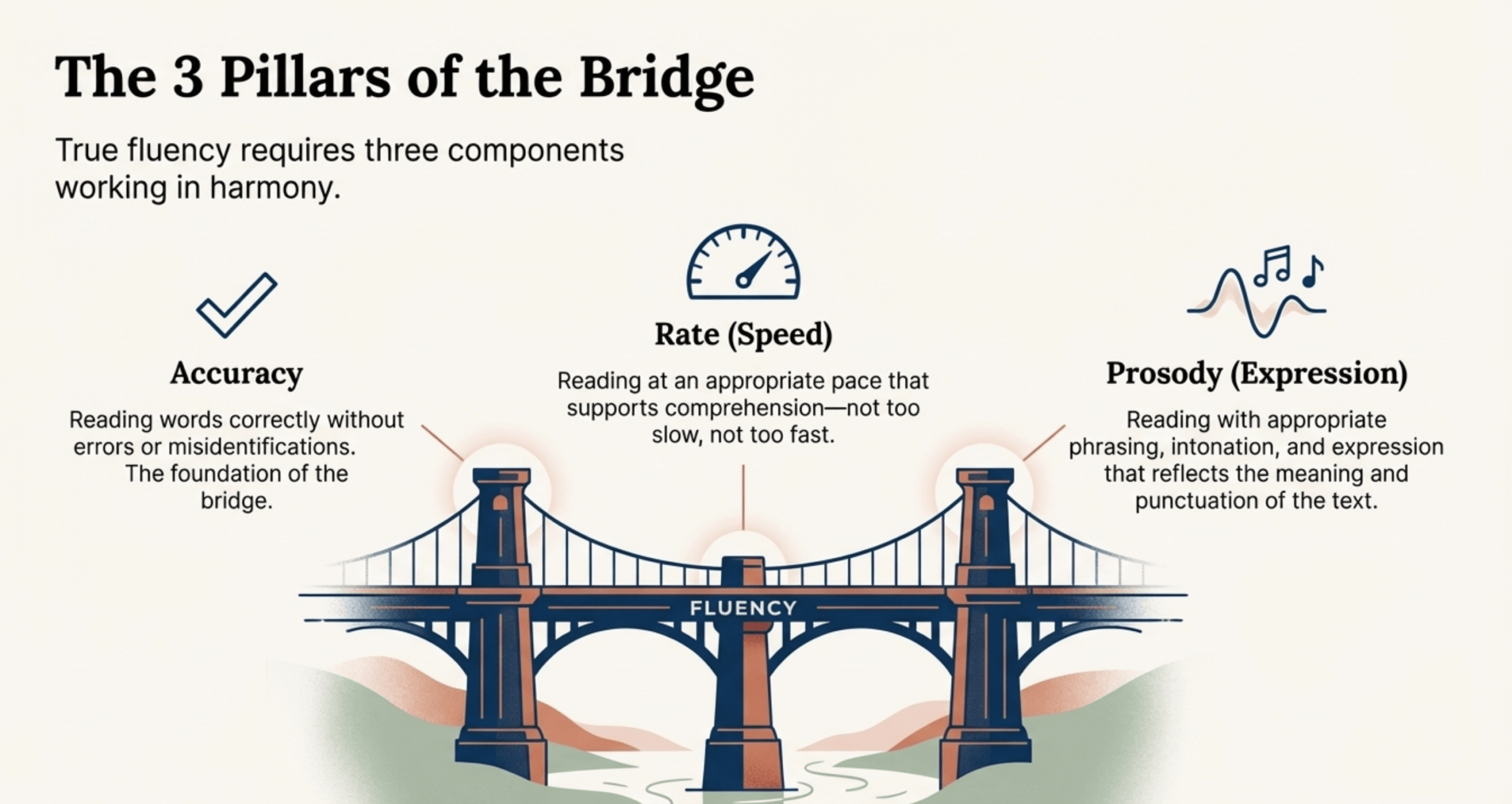
Reading fluency isn’t just speed. It consists of three interconnected elements:
1. Accuracy
Reading words correctly without errors or misidentifications
2. Rate (Speed)
Reading at an appropriate pace that supports comprehension—not too slow (labored), not too fast (rushed)
3. Prosody (Expression)
Reading with appropriate phrasing, intonation, and expression that reflects the meaning of the text
All three elements must develop together. A student who reads accurately but painfully slowly isn’t fluent. A student who reads quickly but with flat, robotic expression isn’t fluent. True fluency requires all three components working in harmony.
What Fluent Reading Looks and Sounds Like
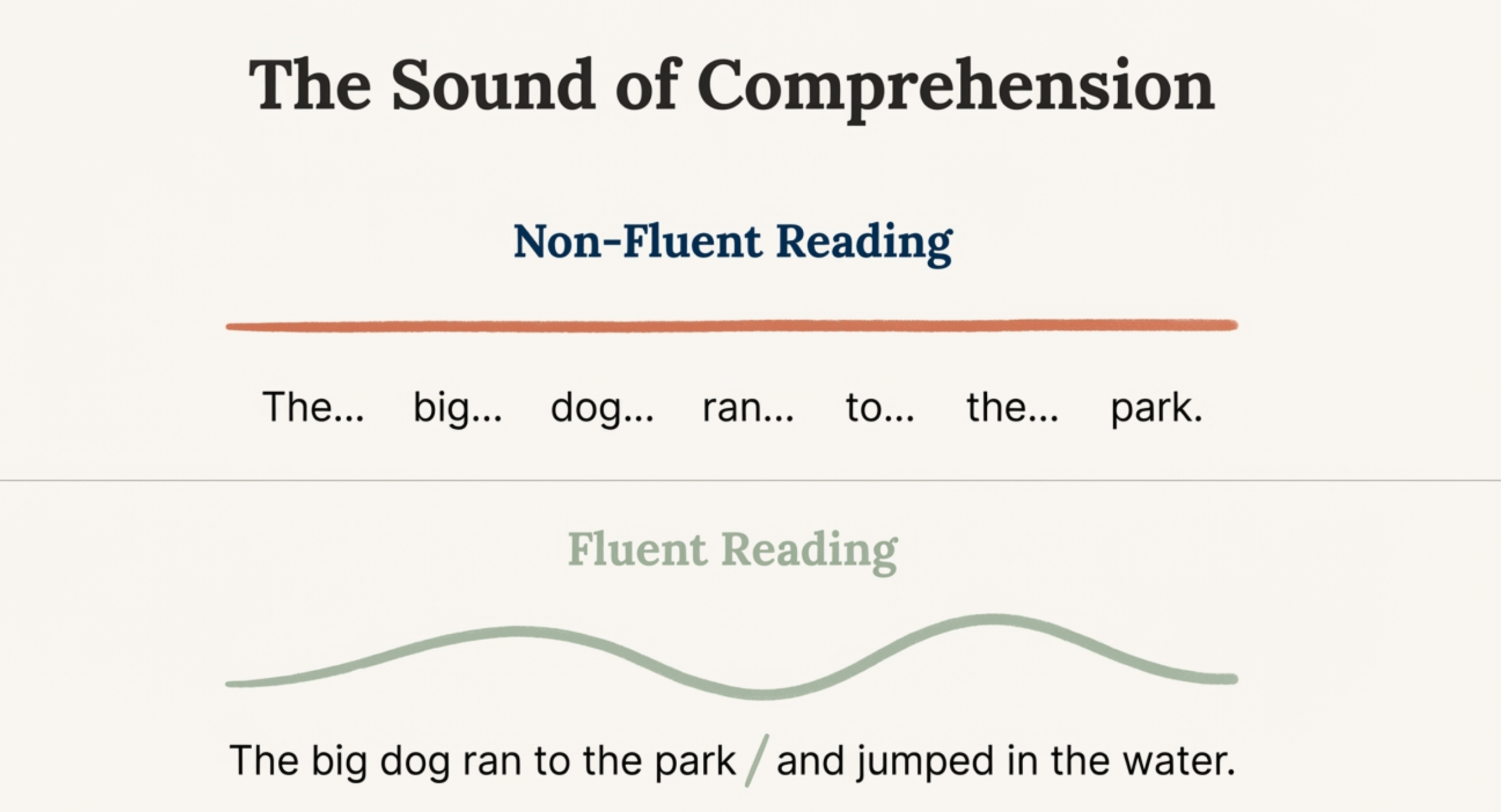
Non-fluent reading:
“The… big… dog… ran… to… the… park… and… jumped… in… the… water.”
(Each word pronounced separately, equal emphasis, no natural phrasing, very slow)
Fluent reading:
“The big dog ran to the park / and jumped in the water.”
(Natural phrasing, appropriate pauses, expression that reflects meaning, smooth flow)
The fluent reader groups words into meaningful phrases, pauses naturally at phrase boundaries, adjusts intonation to reflect punctuation, and reads at a pace that sounds like natural speech.
Why Fluency Is Critical for Comprehension
The Cognitive Load Problem
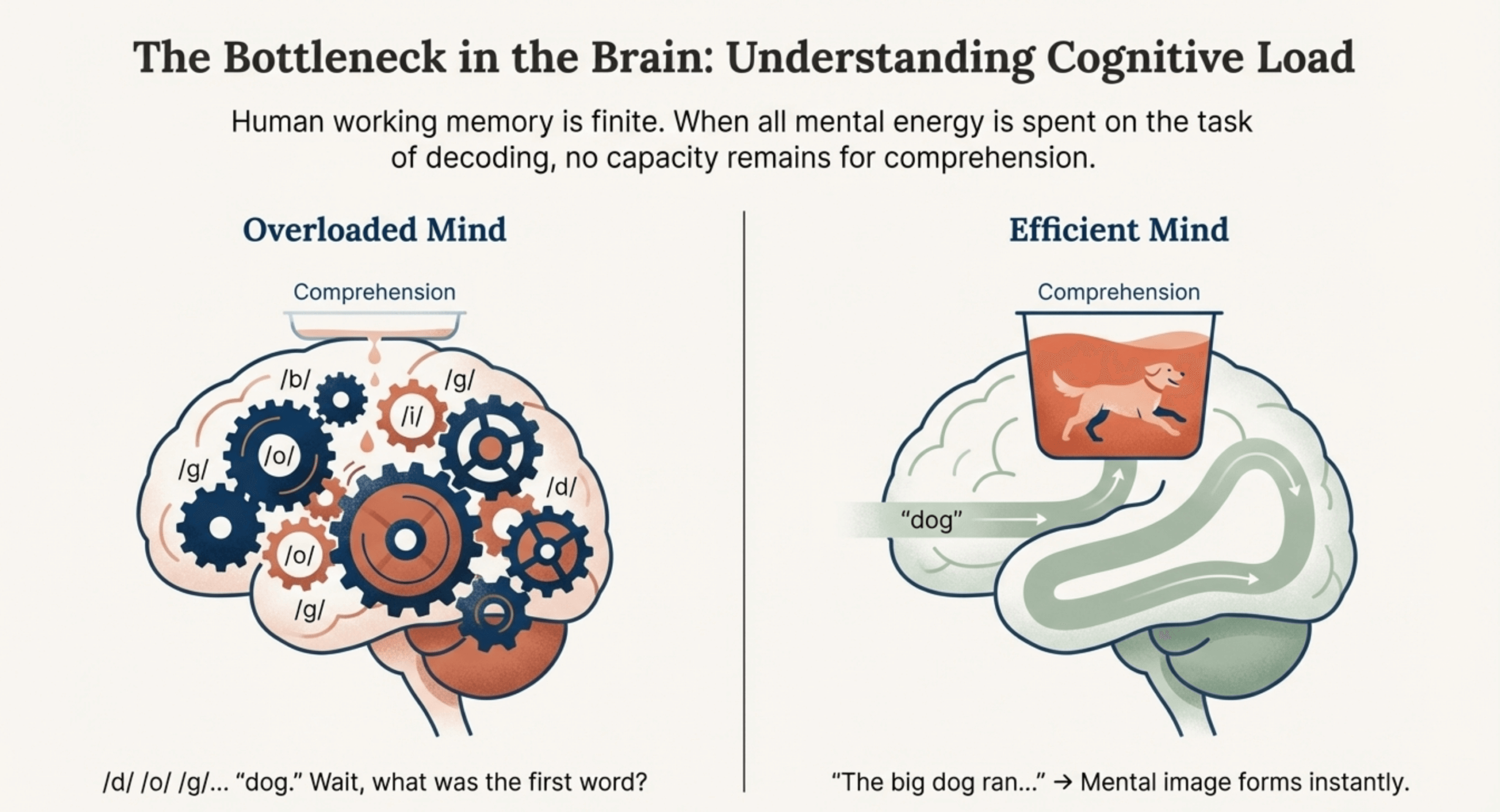
Human working memory—the mental space where we think and process information—has limited capacity. When struggling readers spend all their mental energy decoding individual words, no capacity remains for comprehension.
Non-fluent reader’s mental process:
- /Th/ /e/ → “the”
- /b/ /i/ /g/ → “big”
- /d/ /o/ /g/ → “dog”
- /r/ /a/ /n/ → “ran”
- Wait, what was the sentence about? I forgot the beginning…
By the time the student finishes decoding “ran,” they’ve forgotten “the big dog.” They must reread the sentence, spending mental energy on decoding rather than meaning.
Fluent reader’s mental process:
- “The big dog ran” → Instant recognition, mental energy available for meaning
- Creates mental image: large dog running
- “to the park” → Updates mental image: dog heading to park
- “and jumped in the water” → Dog playing in park water
- Full comprehension achieved while reading smoothly
Research: Fluency Predicts Comprehension
Oral reading fluency is the single best predictor of reading comprehension for students by the end of third grade. Students who read fluently comprehend significantly better than students who decode accurately but slowly.
This isn’t surprising: comprehension requires holding phrases and sentences in mind while extracting meaning. Slow, labored reading prevents this mental synthesis. By the time students finish a sentence, they’ve forgotten how it started.
The Automaticity Principle
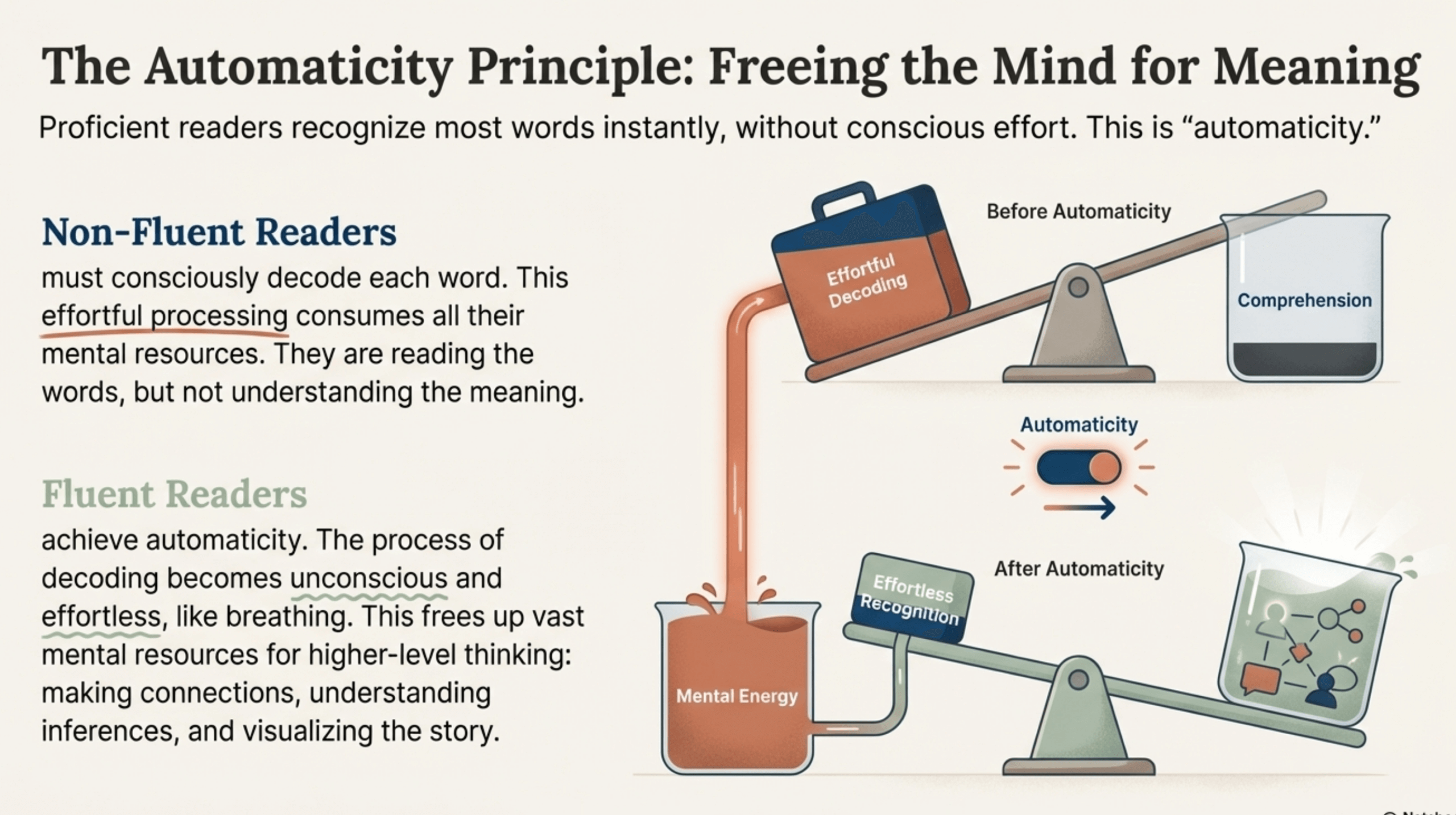
Proficient readers recognize most words automatically—instantly, without conscious effort. This automaticity frees mental resources for higher-level thinking: understanding, analyzing, making inferences, connecting ideas.
Non-fluent readers must consciously decode each word. This effortful processing leaves no mental capacity for comprehension. They can read the words but can’t understand the meaning.
The Relationship Between Accuracy and Fluency
Accuracy Must Come First
Students cannot become fluent readers until they first achieve accurate decoding. Fluency built on inaccurate reading is false fluency—students reading quickly but incorrectly, often guessing at words rather than decoding them.
The correct progression:
Stage 1: Accurate Decoding (Slow but Correct)
Student sounds out words carefully, often aloud or subvocally. Reading is labored and slow but accurate. This stage is necessary and shouldn’t be rushed.
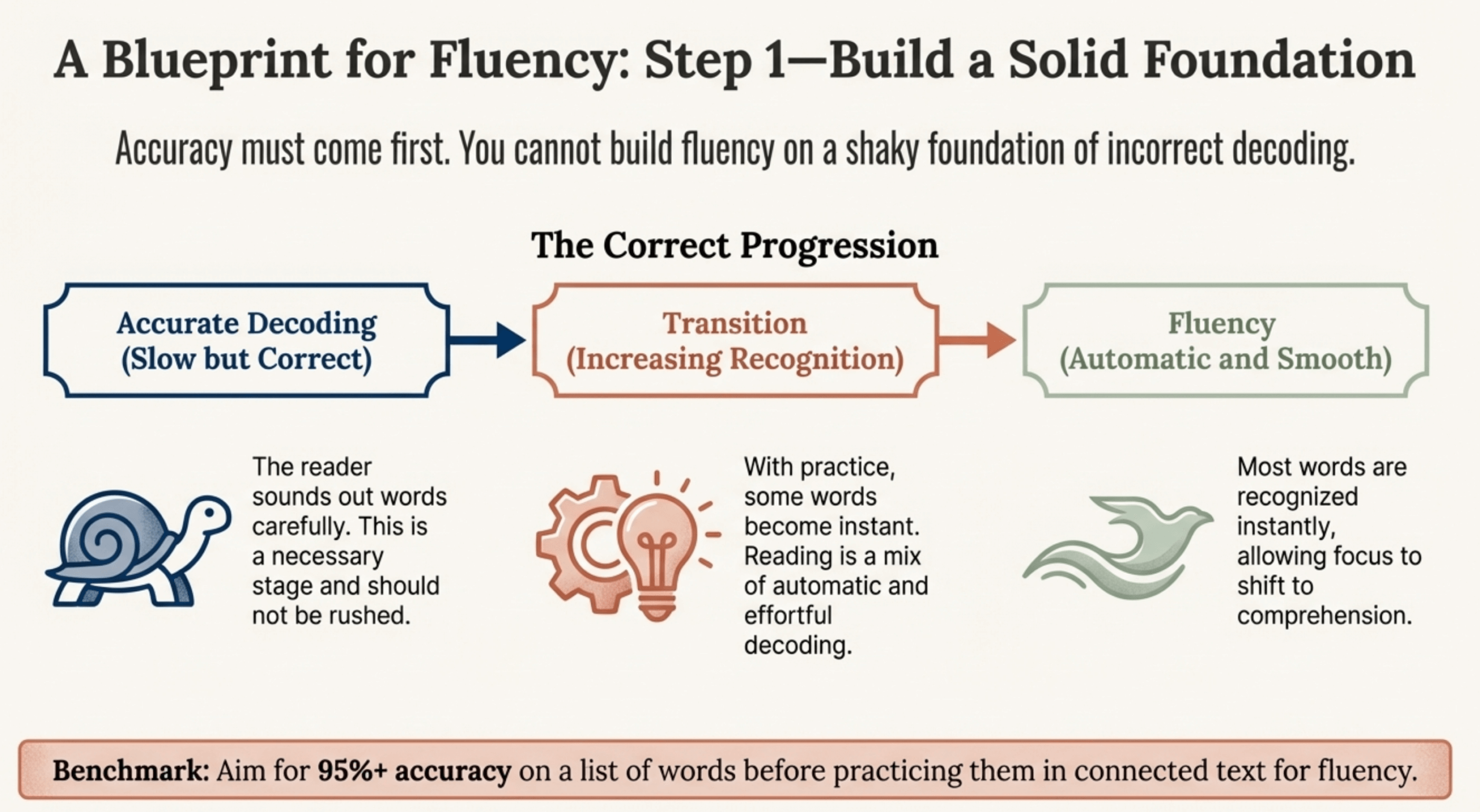
Stage 2: Transition (Increasing Recognition)
With repeated exposure, student begins recognizing some words instantly while still sounding out unfamiliar ones. Reading speed increases gradually. Mix of automatic and effortful reading.
Stage 3: Fluency (Automatic and Smooth)
Most words are recognized instantly. Student reads smoothly at appropriate speed with natural expression. Decoding happens automatically, allowing mental focus on comprehension.

Accuracy Without Fluency: The Common Problem
Many struggling readers get stuck in Stage 1. They can decode words accurately but never develop automaticity. They continue laboriously sounding out the same words they’ve encountered dozens of times.
Why this happens:
- Insufficient practice with controlled text
- Moving to new material too quickly
- No explicit fluency instruction or practice
- Underlying processing or working memory challenges
The solution: explicit fluency instruction and extensive guided practice with repeated reading.
How to Build Fluency
The Foundation: Sufficient Decoding Practice
Before focusing on fluency, ensure your child has achieved solid decoding accuracy with the phonics patterns in the text. Students cannot read fluently what they cannot decode accurately.
Accuracy benchmark: Student should read word lists with 95%+ accuracy before attempting fluency practice with those words in connected text.
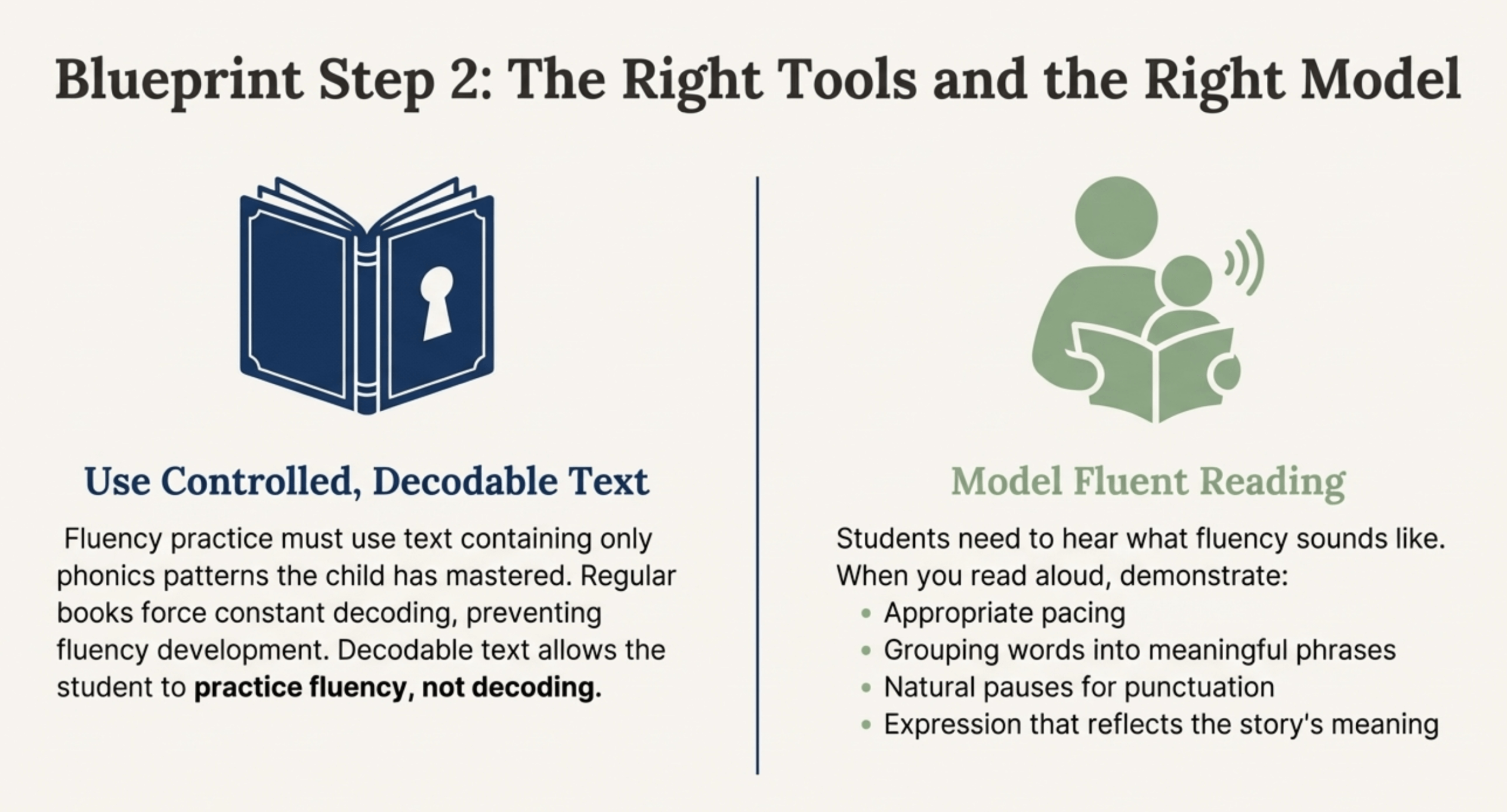
Use Controlled, Decodable Text
Fluency practice must use text containing only phonics patterns your child has mastered. Regular books contain too many unknown patterns, forcing constant decoding effort that prevents fluency development.
Decodable text allows students to practice fluency rather than decoding. When students encounter only words they can decode automatically, they can focus mental energy on reading smoothly and expressively.
Model Fluent Reading
Students need to hear what fluent reading sounds like before they can produce it themselves.
Read aloud to your child:
- Use appropriate pacing—not too fast, not too slow
- Group words into meaningful phrases
- Pause naturally at commas and periods
- Use expression that reflects the meaning
- Raise voice for questions, lower for statements
This modeling demonstrates the target. Students understand what they’re working toward.
Practice Repeated Reading
The single most effective technique for building fluency is repeated reading of the same text.
Research consistently shows that students who reread passages multiple times develop significantly better fluency than students who read different passages once.
Why repeated reading works:
- First reading: Student focuses on decoding individual words
- Second reading: Recognition improves, some automaticity develops
- Third reading: Most words automatic, student focuses on expression
- Fourth+ reading: Smooth, fluent reading with good comprehension
Each repetition moves the student closer to automaticity with that specific text and those specific words.
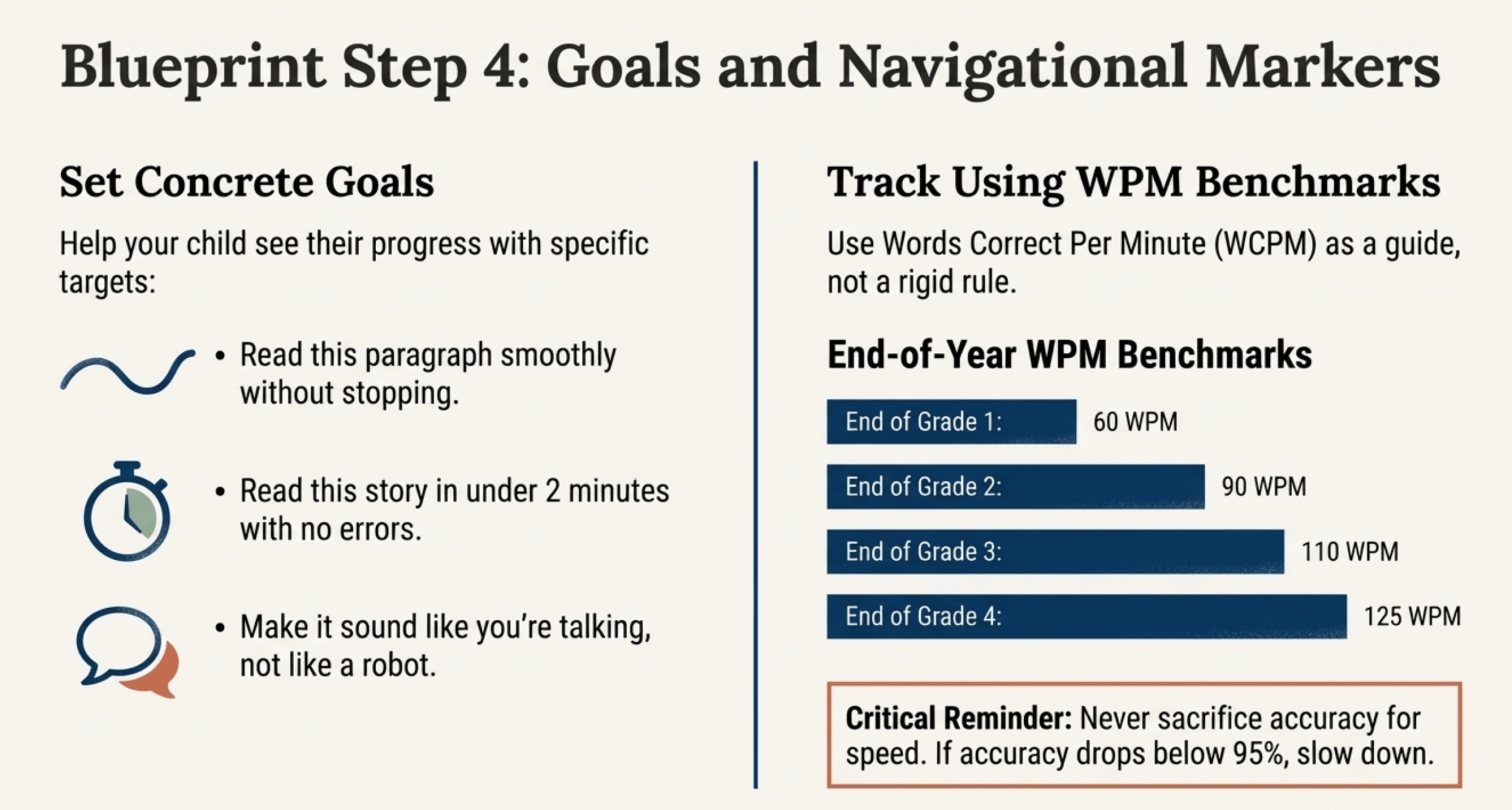
Set Fluency Goals
Help your child understand what they’re working toward by setting specific, measurable fluency goals:
Goal examples:
- “Read this paragraph smoothly without stopping”
- “Read this story in under 2 minutes with no errors”
- “Read with expression—make it sound like you’re talking”
Concrete goals give students targets to aim for and allow them to measure their progress.
Tracking Fluency Development
Words Per Minute (WPM) Benchmarks
Reading rate is measured in words per minute. While rates vary by individual, research has established general benchmarks:
End of Grade 1: 60 WPM
End of Grade 2: 90 WPM
End of Grade 3: 110 WPM
End of Grade 4: 125 WPM
End of Grade 5: 135 WPM
Adult fluent readers: 200-250 WPM
Note: These are averages for grade-level material. Struggling readers reading below grade level may have lower rates with complex text but higher rates with decodable text at their instructional level.
How to Measure Reading Rate
Step 1: Select a passage of 100-200 words at your child’s instructional level
Step 2: Have your child read aloud for exactly 1 minute
Step 3: Count the number of words read correctly (don’t count errors or self-corrections)
Step 4: The result is words correct per minute (WCPM)
Step 5: Track progress over time—fluency should gradually increase
Don’t Sacrifice Accuracy for Speed
Some students, eager to read faster, begin rushing through text and making errors. This defeats the purpose—fluency without accuracy isn’t true fluency.
Maintain the 95% accuracy standard: If reading rate is increasing but accuracy is dropping below 95%, slow down. Fluency built on inaccurate reading creates bad habits that are difficult to break.
Common Fluency Development Mistakes

Mistake 1: Focusing Only on Speed
Pushing students to read faster without ensuring accuracy and expression creates rushed, meaningless reading. Speed is only one component of fluency.
Better approach: Emphasize smooth, accurate reading with natural expression. Speed will develop naturally as automaticity increases.
Mistake 2: Using Text That’s Too Difficult
Students cannot develop fluency with text they can barely decode. If your child is stopping frequently to sound out words, the material is too hard for fluency practice.
Better approach: Use decodable text matching your child’s current phonics knowledge. Students should recognize 95%+ of words automatically.
Mistake 3: Never Rereading Text
Always moving to new material prevents the repetition necessary for automaticity development. Students need multiple exposures to the same words in the same context.
Better approach: Have students reread passages 3-5 times before moving to new material. Track improvement from first reading to final reading.
Mistake 4: Neglecting Prosody (Expression)
Some programs measure only reading rate, ignoring whether students read with appropriate expression. But prosody is essential for both fluency and comprehension.
Better approach: Model expressive reading. Ask your child to “read it like you’re telling me a story, not like a robot.”
How Our Program Develops Both Accuracy and Fluency
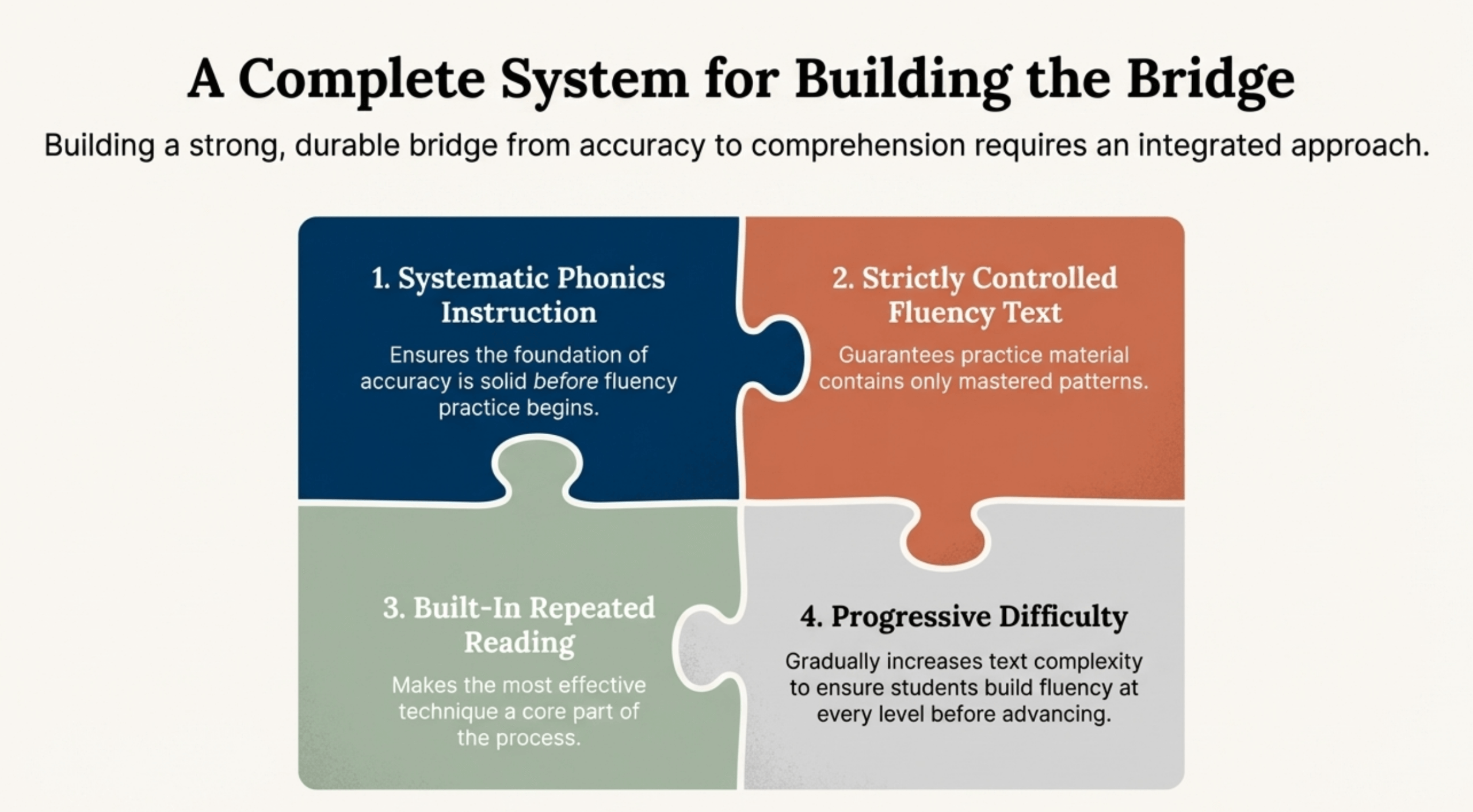
Accuracy First: Systematic Phonics Instruction
Our 720 lessons build complete decoding accuracy through systematic phonics instruction. Students master each phonetic pattern before encountering it in text. This ensures the foundation for fluency is solid.
141 Lessons in our Supplemental Fluency Reader
Our supplemental fluency reader uses strictly controlled vocabulary. Every lesson contains only patterns students have already mastered, allowing them to practice fluency rather than decoding.
Built-In Repeated Reading Practice
Each fluency lesson is designed for multiple readings. Students read the same passage 3-4 times, building automaticity and expression through repetition.
Progressive Difficulty
Fluency readers start with simple CVC words and short sentences, gradually increasing to complex multisyllabic words and longer passages. This progressive structure ensures students build fluency at each level before advancing.
Comprehensive Skill Development
Our program assesses both accuracy and fluency throughout. Students must demonstrate they can decode accurately AND read fluently before advancing. This prevents the common problem of accuracy without fluency.
Build Both Accuracy and Fluency
Continue Reading: The 9 Essential Strategies
← Previous: Teach to Mastery: Preventing Learning Gaps
Next → Proven Techniques for Developing Reading Fluency
Questions about developing reading fluency? Contact us.