Can Adults with Dyslexia Learn to Read?
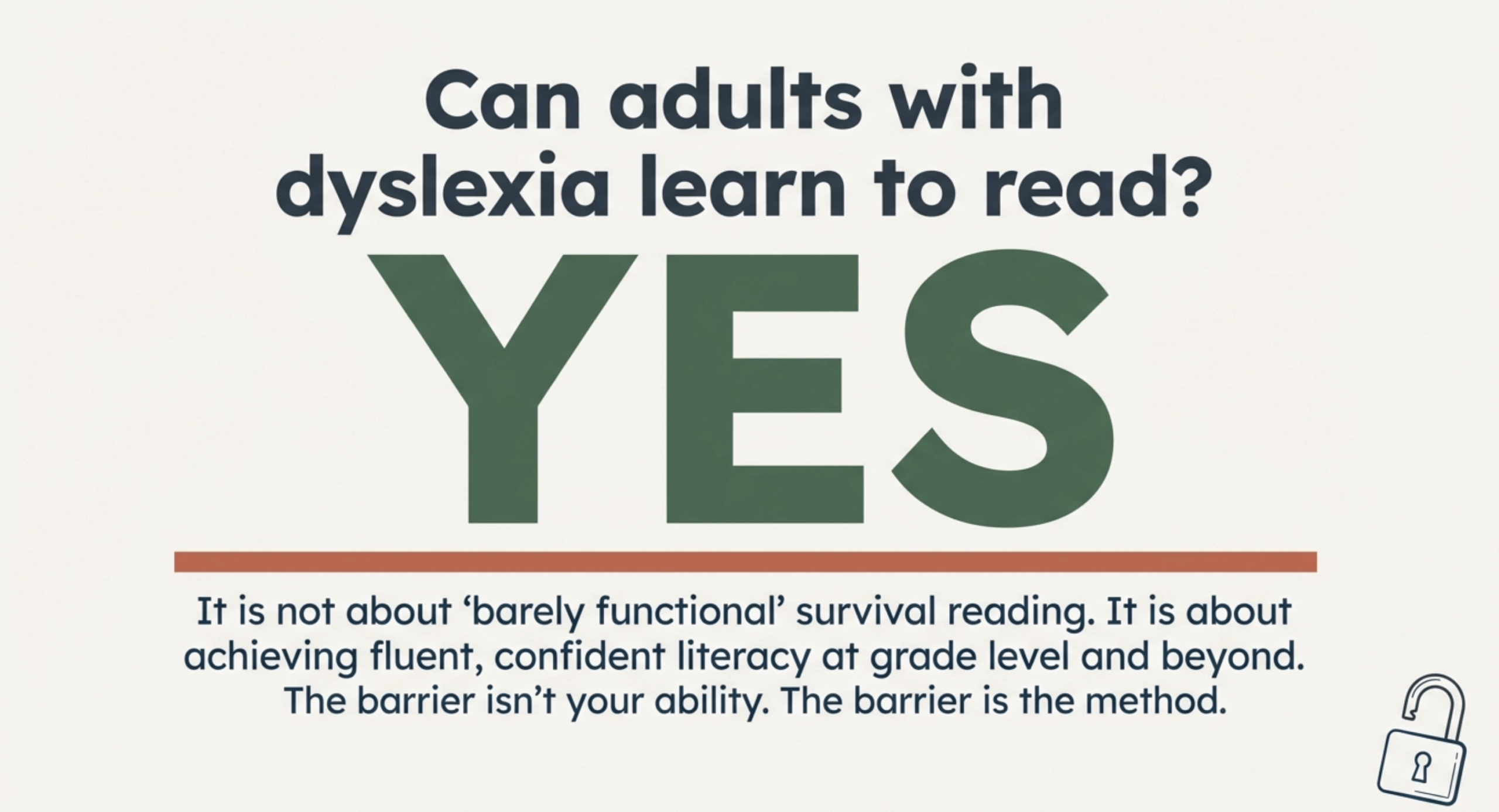
The Direct Answer: Yes, Absolutely
Adults with dyslexia can absolutely learn to read—and not just barely functional reading, but fluent, confident reading at grade level and beyond. While dyslexia makes learning to read more challenging than for neurotypical learners, proper instruction using proven methods overcomes these challenges at any age.
The key is using instruction specifically designed for how dyslexic brains process language. The Orton-Gillingham approach—developed specifically for dyslexic learners over 80 years ago—provides systematic, multisensory, explicit instruction that works with (not against) the dyslexic brain’s learning style.
Thousands of dyslexic adults have learned to read using these methods. The question isn’t whether you can learn to read with dyslexia, but rather: are you using the right instructional approach?
Why Dyslexia Makes Traditional Reading Instruction Fail
Understanding Dyslexia

Dyslexia is a neurological difference in how the brain processes written language. It’s not related to intelligence—many highly intelligent, successful people have dyslexia. The challenge stems from specific difficulties in:
- Phonological processing: Recognizing and manipulating the individual sounds in spoken words
- Rapid automatic naming: Quickly retrieving familiar information like letters and numbers
- Working memory: Holding information temporarily while processing other information
- Processing speed: The rate at which the brain can process written symbols
These neurological differences make the “typical” way most children learn to read—whole word recognition, context clues, minimal phonics—completely ineffective for dyslexic learners.
Why Traditional Methods Fail Dyslexic Learners
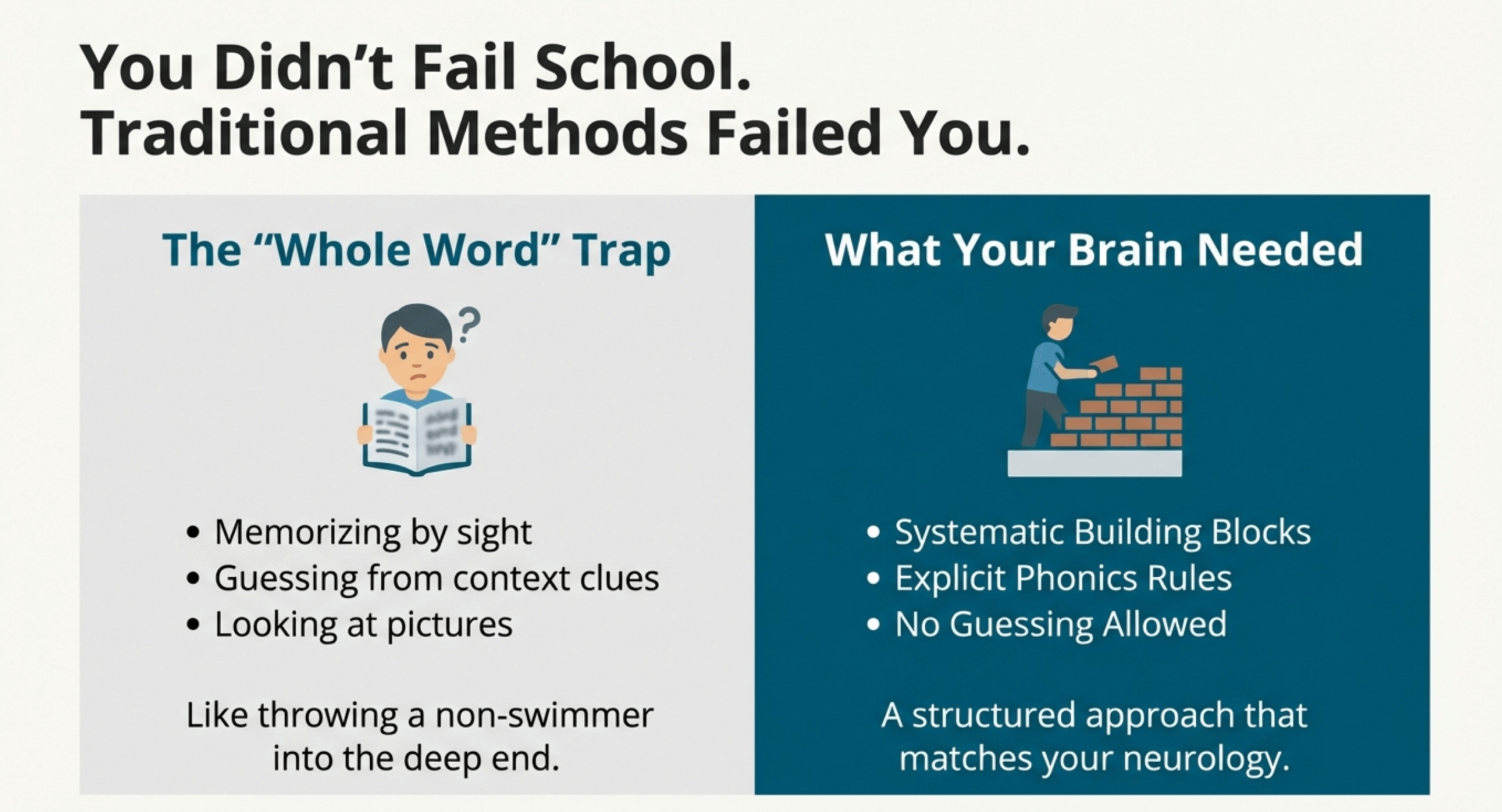
Most reading instruction in schools relies heavily on:
- Memorizing whole words by sight
- Guessing words from context or pictures
- Minimal, unsystematic phonics instruction
- Expectations of rapid, natural learning
For dyslexic brains, this approach is like trying to teach someone to swim by throwing them in the deep end. It doesn’t work, and worse, it creates shame, anxiety, and the false belief that “I just can’t learn to read.”
Why Orton-Gillingham Works for Dyslexic Adults
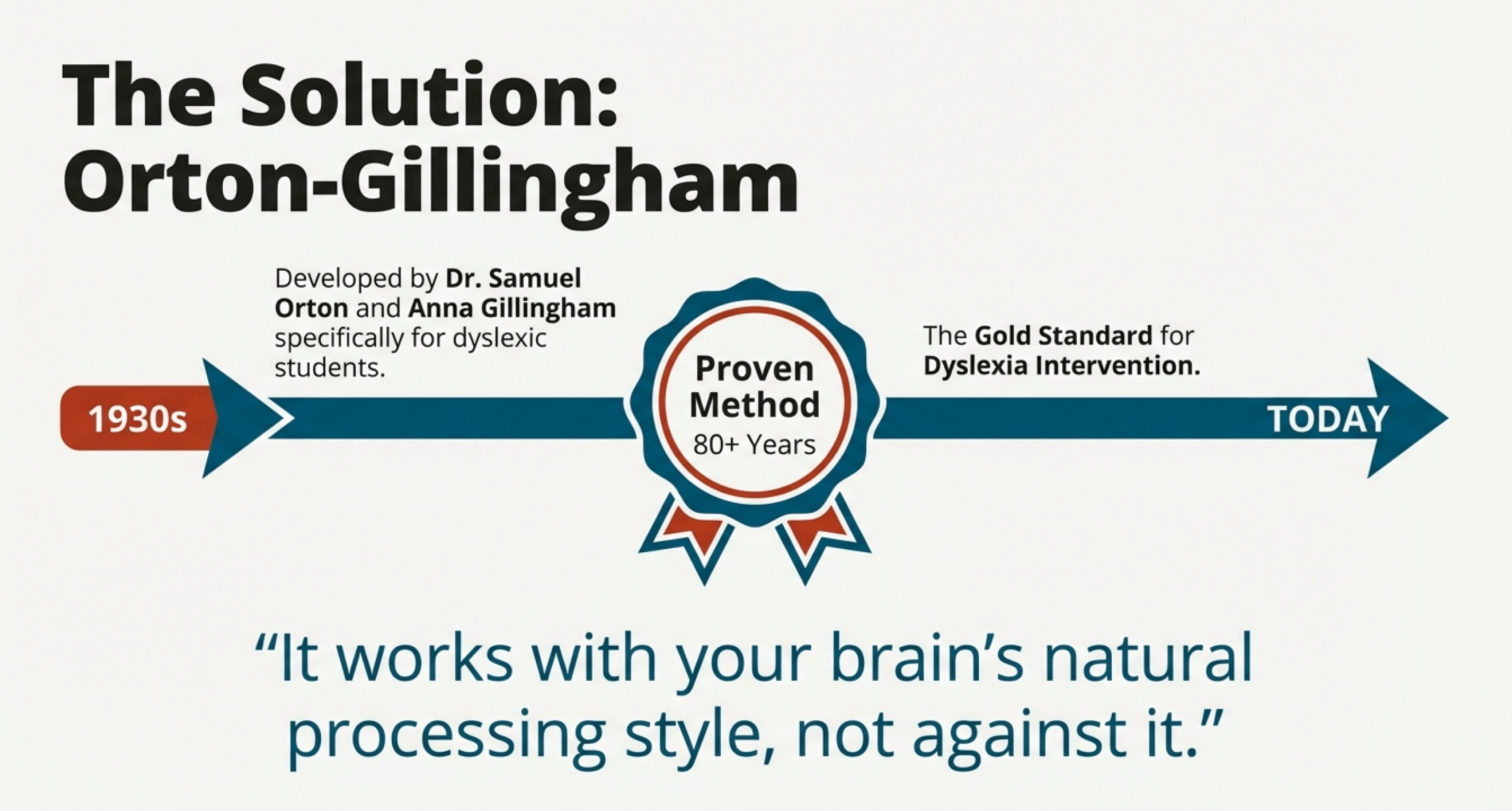
Designed Specifically for Dyslexia
Dr. Samuel Orton and educator Anna Gillingham developed their approach in the 1930s specifically to help dyslexic students. Unlike general reading methods adapted for struggling readers, Orton-Gillingham was purpose-built for how dyslexic brains learn.
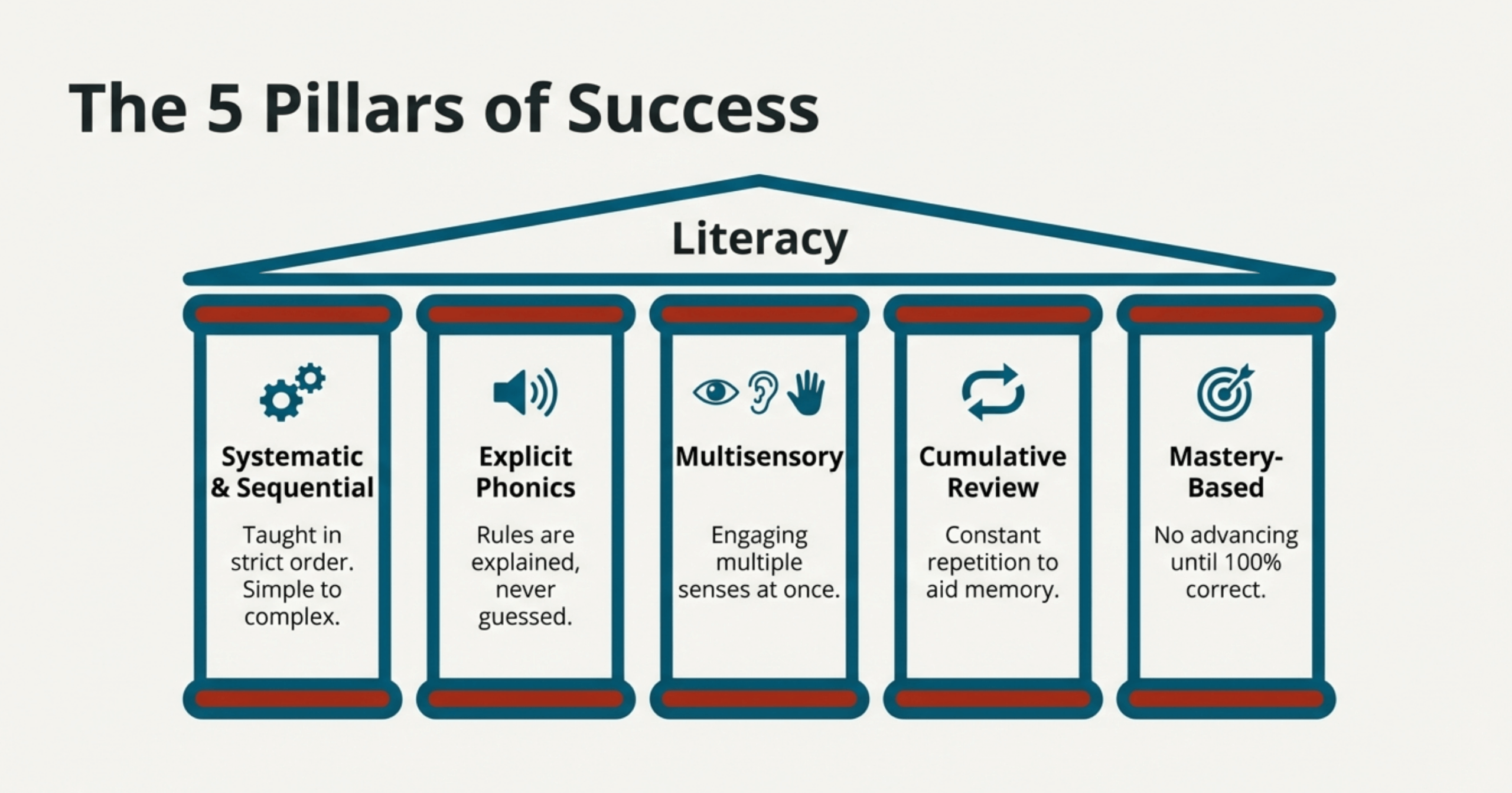
Our Orton-Gillingham principles address each dyslexia-related challenge directly:
1. Systematic and Sequential Instruction
Instead of assuming students will “figure things out,” Orton-Gillingham teaches every concept in a carefully planned sequence, building from simplest to most complex. Nothing is skipped; nothing is left to chance.
Why this helps dyslexic learners: Dyslexic brains don’t make automatic connections between letters and sounds. Systematic instruction explicitly teaches these connections step-by-step.
2. Explicit Phonics Teaching
Every sound-symbol relationship is taught explicitly and directly. Rules are explained, not discovered. Patterns are shown clearly, not inferred from examples.
Why this helps dyslexic learners: Weak phonological processing means dyslexic learners can’t intuitively understand sound-letter relationships. Explicit instruction removes the guesswork.
3. Multisensory Learning
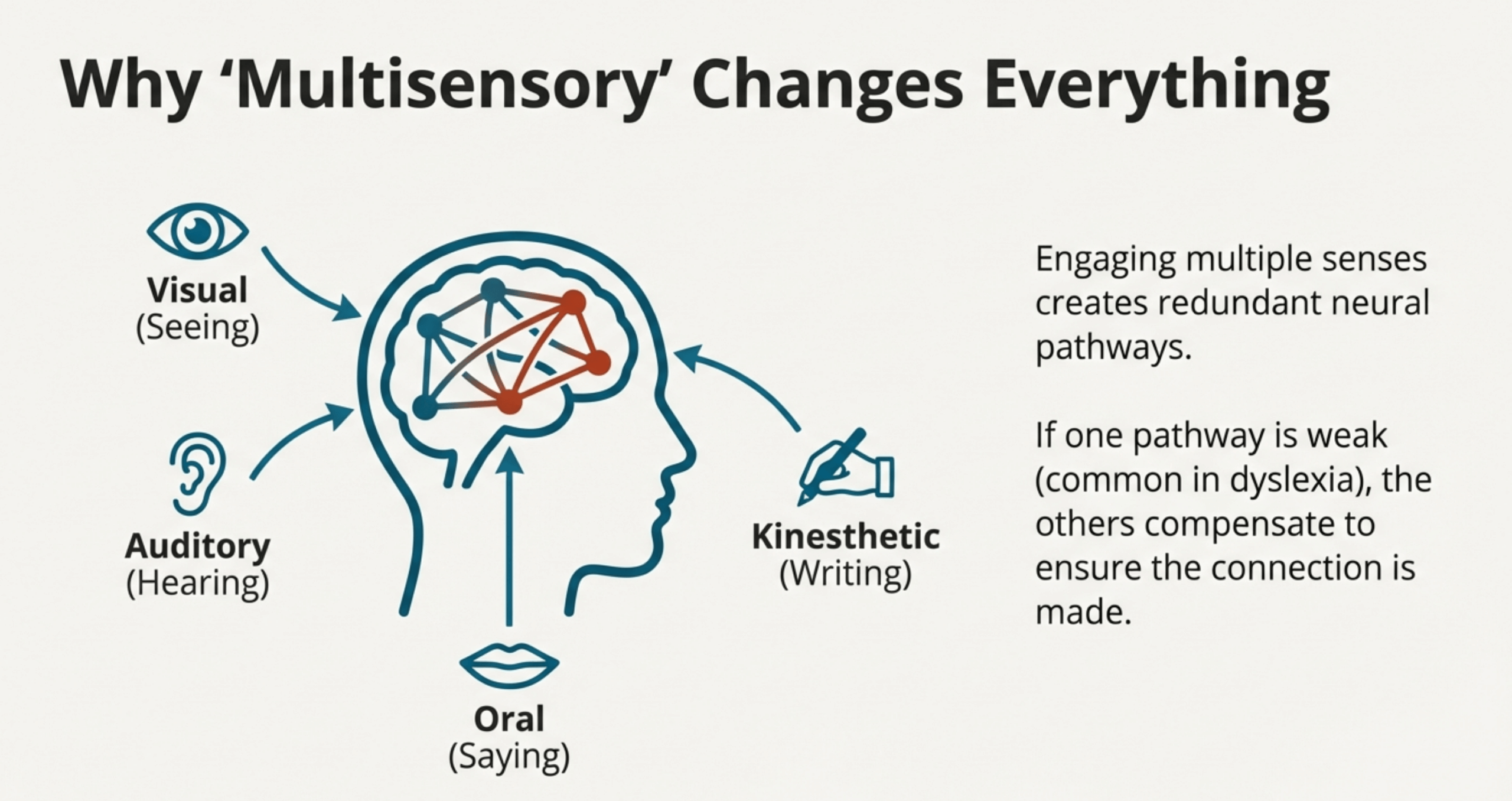
Students simultaneously see, hear, say, and write each concept. This engages multiple brain pathways, creating stronger neural connections.
Why this helps dyslexic learners: Multiple sensory inputs create redundant pathways in the brain. If one pathway is weaker (common in dyslexia), others compensate.
4. Cumulative Review and Practice
Continuous review of previously taught material prevents forgetting. New concepts build on thoroughly mastered old ones.
Why this helps dyslexic learners: Working memory challenges mean dyslexic learners need more repetition and review than typical learners. Regular review compensates for this.
5. Mastery-Based Progression
Students don’t advance until demonstrating true mastery of each concept. Regular assessment ensures no learning gaps.
Why this helps dyslexic learners: Gaps in foundational skills compound into major problems later. Mastery-based progression prevents this cascade of failure.
Realistic Timelines for Dyslexic Adults
General Timeline Expectations
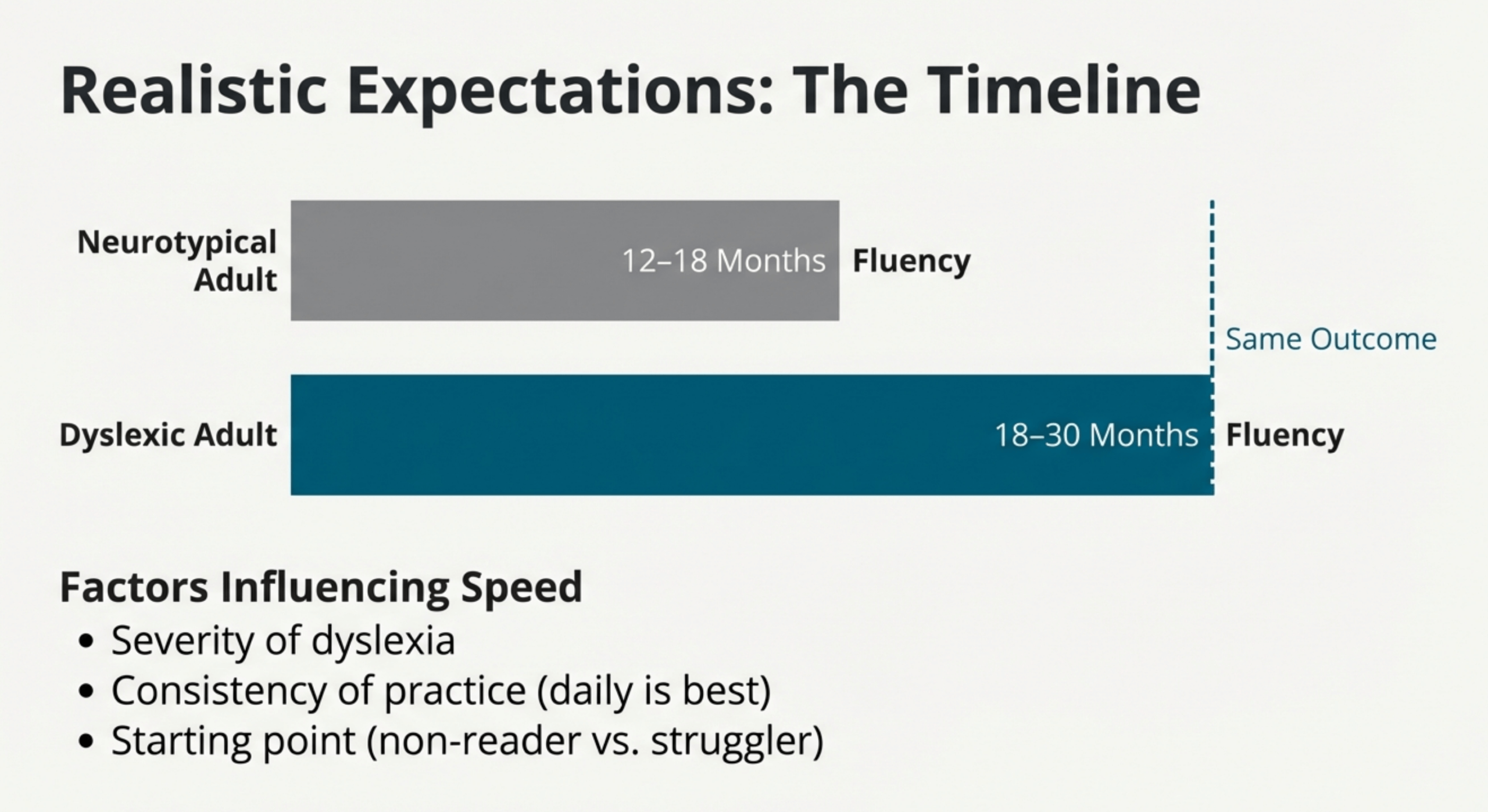
Dyslexic adults typically need 18-30 months to achieve fluent, confident reading with consistent daily practice (30-60 minutes). This is longer than the 12-18 months typical for non-dyslexic adults, but absolutely achievable.
The timeline depends on:
- Starting point: Complete non-reader vs. struggling reader
- Severity of dyslexia: Mild vs. moderate vs. severe
- Practice consistency: Daily practice produces faster results
- Quality of instruction: Proper Orton-Gillingham methods matter enormously
What “Success” Looks Like at Different Stages
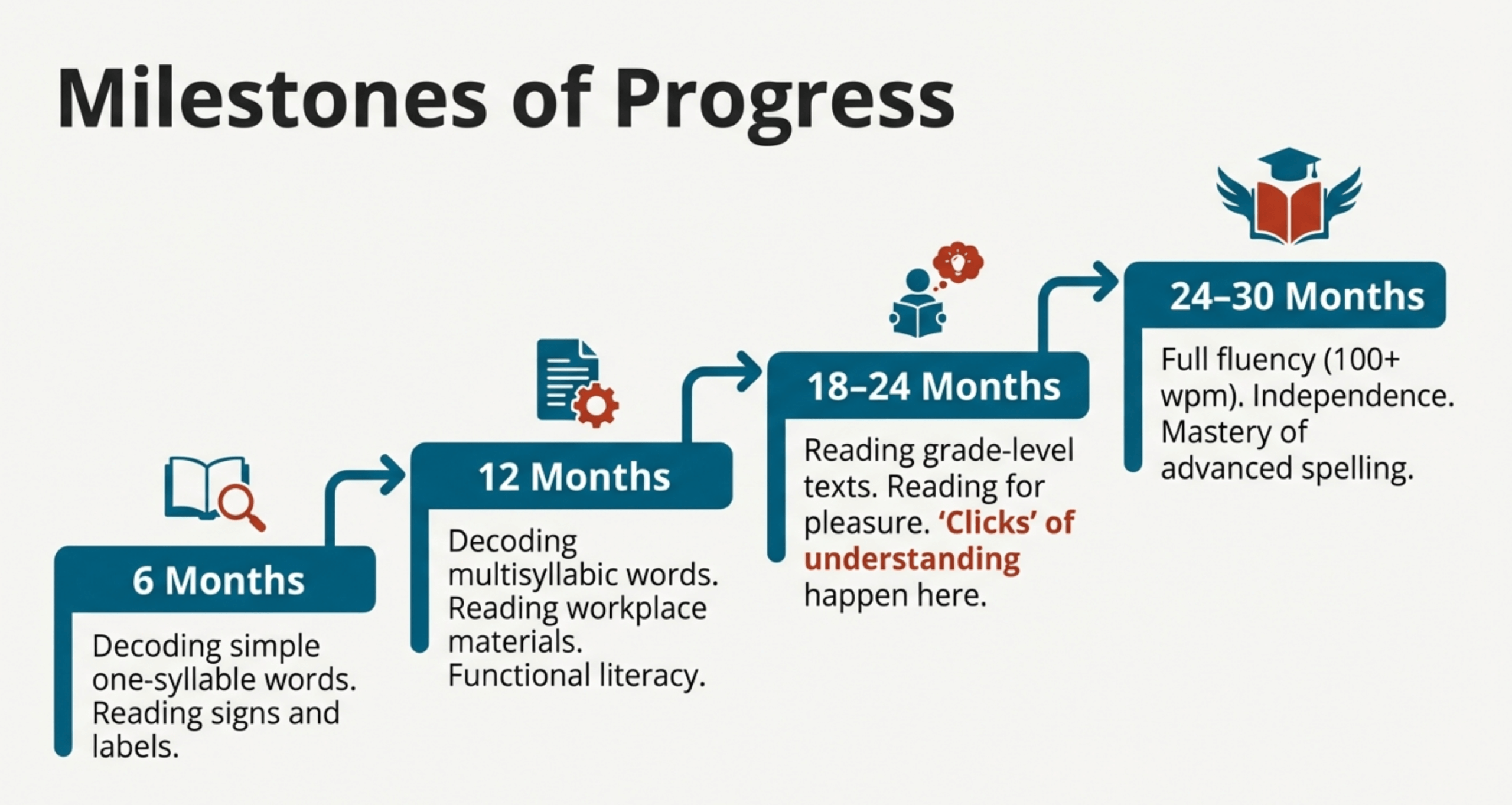
After 6 Months of Consistent Practice
- Understanding basic letter-sound relationships
- Decoding simple one-syllable words accurately (though slowly)
- Spelling simple phonetic words correctly
- Reading simple signs, labels, and very basic texts
- Significantly increased confidence and reduced anxiety
After 12 Months
- Decoding multisyllabic words with increasing accuracy
- Reading simple books and workplace materials
- Spelling with noticeably improved accuracy
- Understanding and applying phonics rules independently
- Functional literacy for daily life tasks
After 18-24 Months
- Reading grade-level texts with reasonable fluency
- Decoding unfamiliar words independently
- Spelling most words correctly
- Reading for pleasure or work without significant struggle
- Complete transformation in literacy confidence
After 24-30 Months
- Fluent reading at 100+ words per minute
- Confident reading of complex texts
- Mastery of advanced spelling patterns
- Independence from reading assistance or accommodations
- Full literacy competence for career and education
For detailed timeline information across all adult learners, see our complete guide: How Long Does It Take Adults to Learn Phonics?
Success Stories: Dyslexic Adults Who Learned to Read
The Challenge of Undiagnosed Dyslexia
Many adults with dyslexia were never formally diagnosed. They grew up hearing they were “lazy,” “not trying hard enough,” or “just not good at reading.” They developed coping strategies—avoidance, memorization, relying on others—without understanding why reading felt impossibly difficult.
The adults featured in our success stories likely include many with undiagnosed dyslexia. Their struggles—years of failure despite intelligence and effort, specific difficulties with decoding, spelling challenges despite adequate reading—are classic dyslexia indicators.
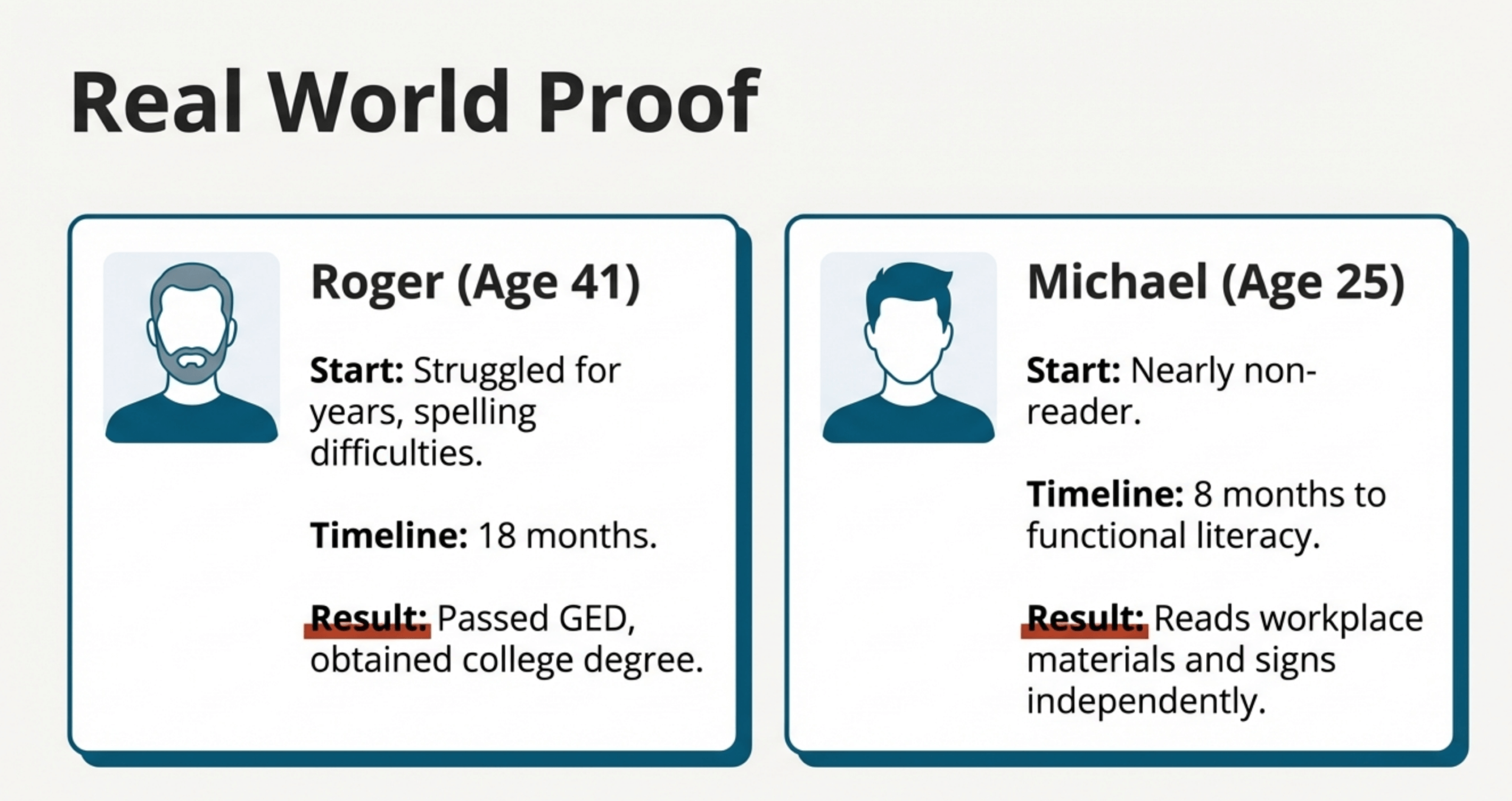
Roger’s Journey: From Struggle to College Success
Age: 41
Likely dyslexia indicators: Years of reading struggle despite completing high school; significant spelling difficulties
Time in program: 18 months
Outcome: Passed GED, obtained college degree, now helping other struggling readers
His journey from first passing the GED and then eventually receiving a college degree—demonstrate that even with probable dyslexia, adults can achieve grade-level reading proficiency with proper instruction.
Michael’s Progress: Functional Literacy Despite Severe Struggles
Age: 25
Likely dyslexia indicators: Nearly non-reader as adult despite normal intelligence
Time in program: 8 months to functional literacy (ongoing for complete mastery)
Outcome: Can now read workplace materials, signs, and simple books independently
Michael’s intensive practice (60-90 minutes daily) accelerated his progress, but even with probable severe dyslexia, he achieved functional literacy within 8 months—proof that motivated dyslexic adults can succeed.
Common Patterns in Dyslexic Adult Success
Analyzing success stories of probable dyslexic learners reveals patterns:
- Longer timelines: 18-30 months vs. 12-18 months for non-dyslexic learners
- Breakthrough moments: Sudden “clicks” after patient, consistent practice
- Spelling lags behind reading: Reading accuracy improves before spelling mastery
- Need for review: More review and repetition required than typical learners
- Life-changing impact: Profound relief and transformation after years of struggle
Key Differences in Learning for Dyslexic Adults
What Takes Longer
Dyslexic adults typically need more time and practice for:
- Automaticity: Making reading “automatic” and fluent takes longer
- Spelling mastery: Remembering correct spellings requires more review
- Processing speed: Reading speed develops more slowly
- Complex patterns: Advanced phonics patterns need extra practice
What Works the Same
Despite challenges, dyslexic adults:
- Can achieve the same end result: Fluent, confident reading
- Learn the same content: All sounds, rules, and patterns
- Use the same methods: Orton-Gillingham principles work for all learners
- Experience similar breakthroughs: “Light bulb moments” happen for dyslexic learners too
Advantages Dyslexic Adults Bring
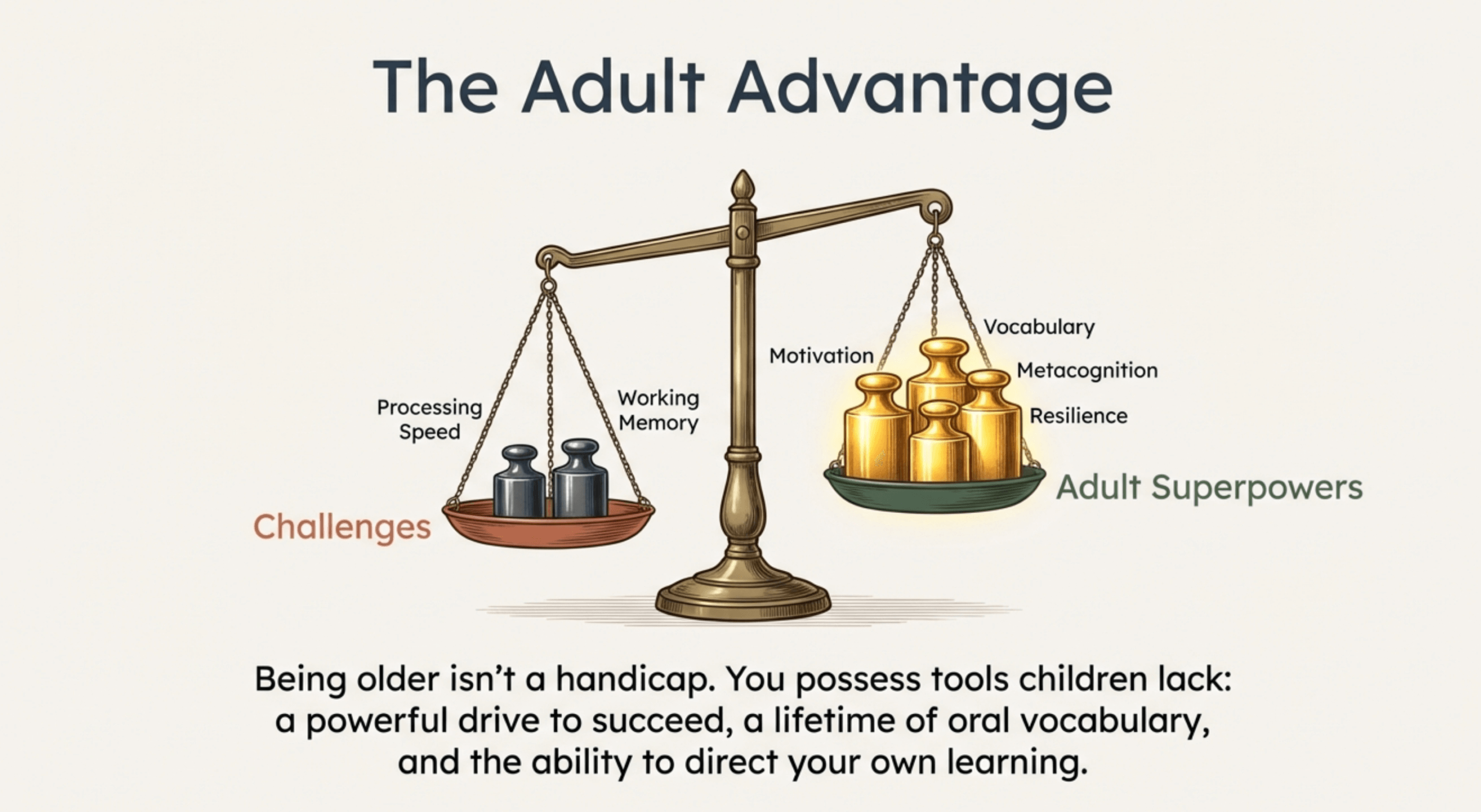
Adult dyslexic learners often have strengths that support their learning:
- Strong motivation: Years of struggle create powerful drive to succeed
- Life experience: Broad vocabulary and world knowledge support comprehension
- Problem-solving skills: Years of coping strategies demonstrate resilience
- Metacognition: Adults can understand and direct their own learning process
Why Our Program Works for Dyslexic Adults
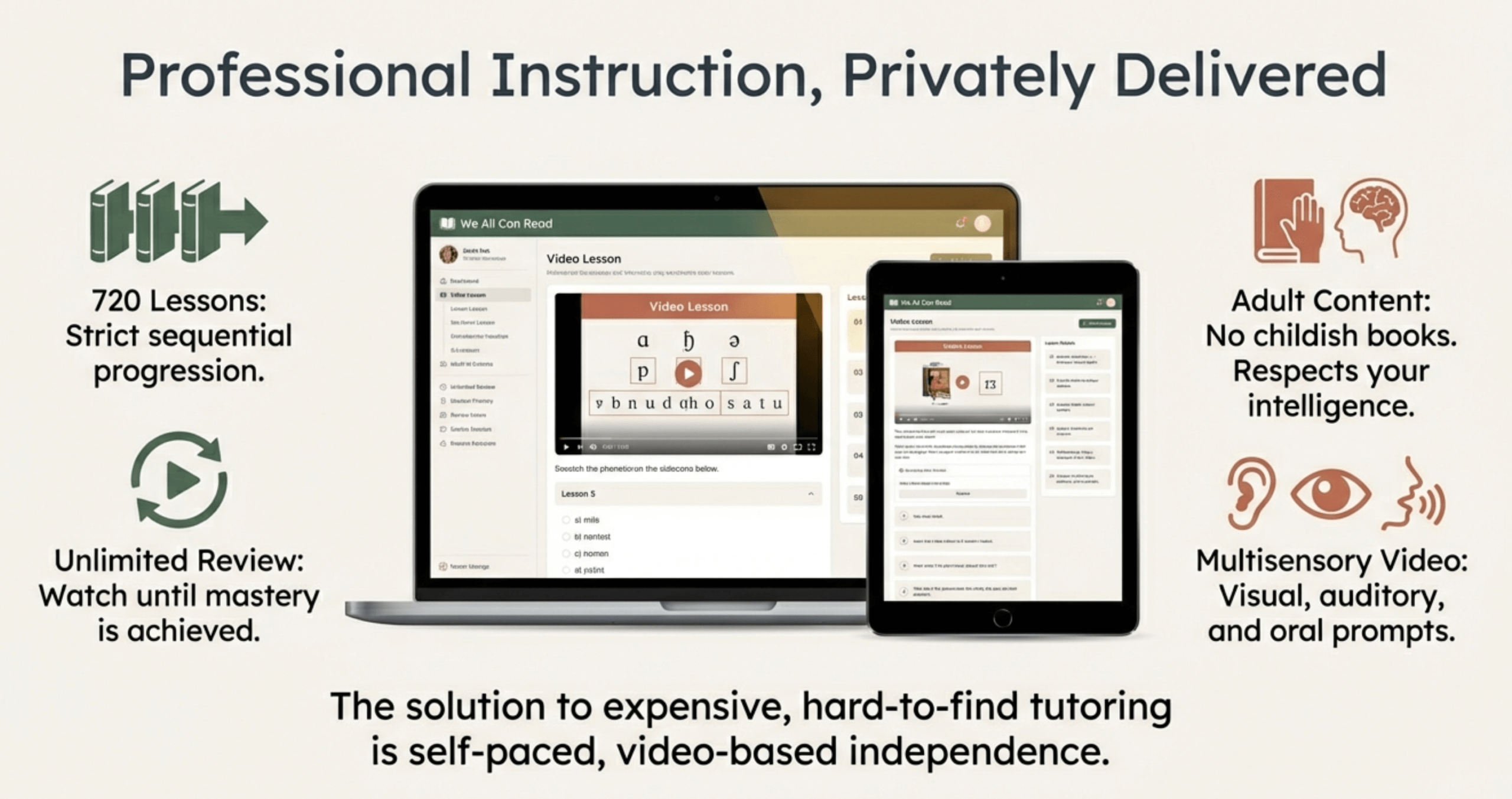
Designed for Independent Adult Learning
Traditional Orton-Gillingham tutoring requires one-on-one instruction with certified tutors—expensive ($60-$160/hour) and often unavailable in rural areas. Our adult phonics program adapts Orton-Gillingham principles for independent, self-paced video instruction.
Key Features for Dyslexic Learners
1. True Systematic Progression
Our 720 lessons follow strict Orton-Gillingham sequencing. You can’t skip ahead—you must demonstrate mastery before advancing. This prevents the gaps that plague dyslexic learners in typical school settings.
2. Unlimited Review and Repetition
Unlike tutoring sessions limited by time and cost, our online lessons can be reviewed unlimited times. Dyslexic learners who need more repetition can watch videos repeatedly, redo worksheets, and retake quizzes until mastery is achieved.
3. Multisensory Video Instruction
Every lesson engages multiple senses:
- Visual: See letters, words, and patterns on screen
- Auditory: Hear sounds, words, and explanations
- Kinesthetic: Write words, practice exercises
- Oral: Say sounds and read aloud
This multisensory approach is crucial for dyslexic brains.
4. Extensive Nonsense Word Practice
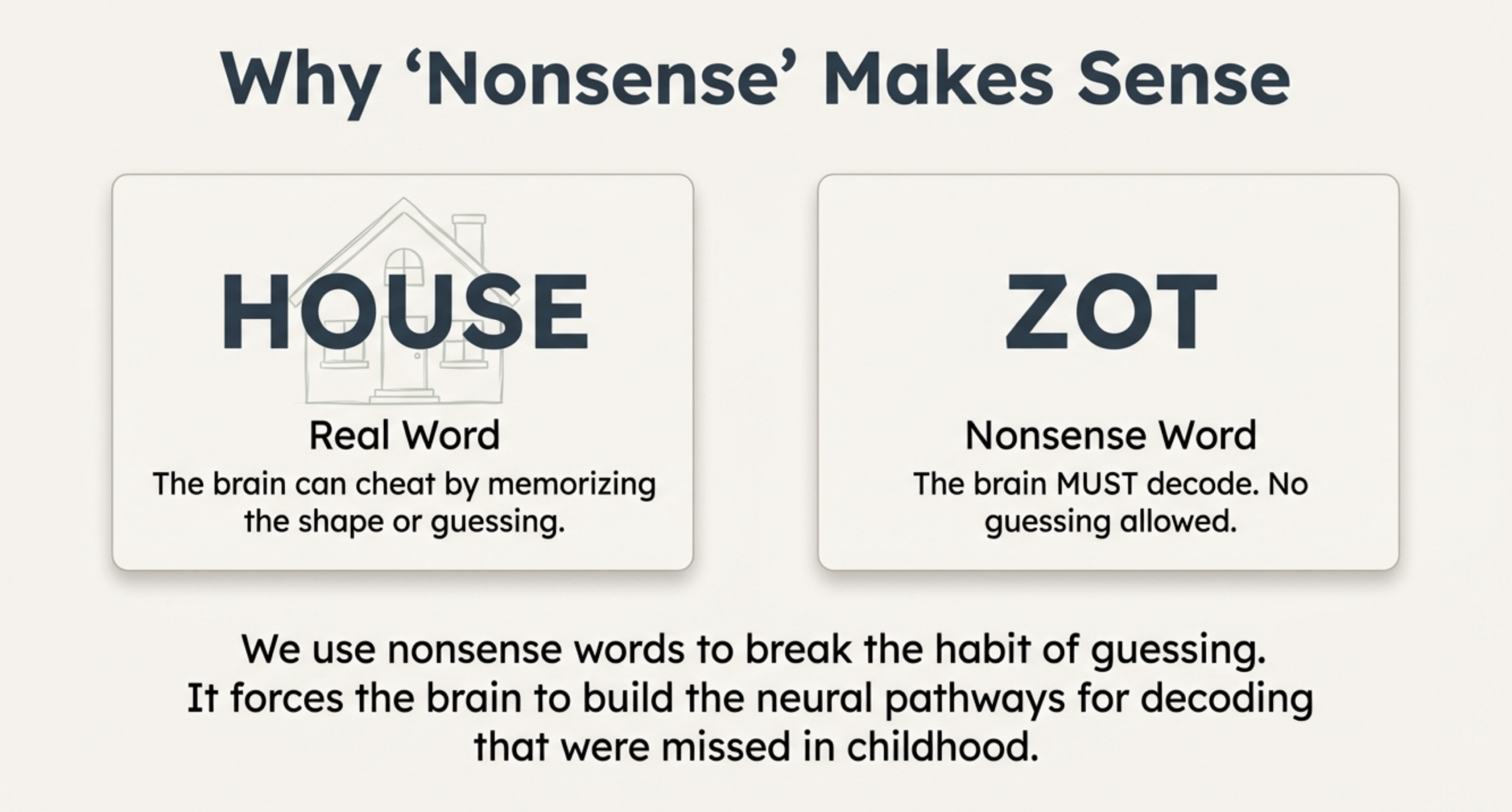
Our program makes extensive use of nonsense words—made-up words that follow phonics rules. This is especially important for dyslexic learners because:
- Forces reliance on phonics skills (can’t guess or memorize)
- Builds true decoding ability rather than sight word recognition
- Develops the systematic thinking dyslexic brains need
5. Mastery-Based Quizzes
Regular quizzes ensure true mastery before advancement. For dyslexic learners, this is critical—weak foundational skills compound into major problems later. Our quizzes prevent this.
6. Self-Paced Flexibility
No classroom pressure to keep up with others. Dyslexic adults can spend extra time on challenging concepts without embarrassment or time limits.
7. Adult-Appropriate Content
Age-appropriate vocabulary and examples respect adult intelligence. Dyslexic adults aren’t asked to read childish materials—examples and practice words are relevant to adult life.
Common Questions from Dyslexic Adults
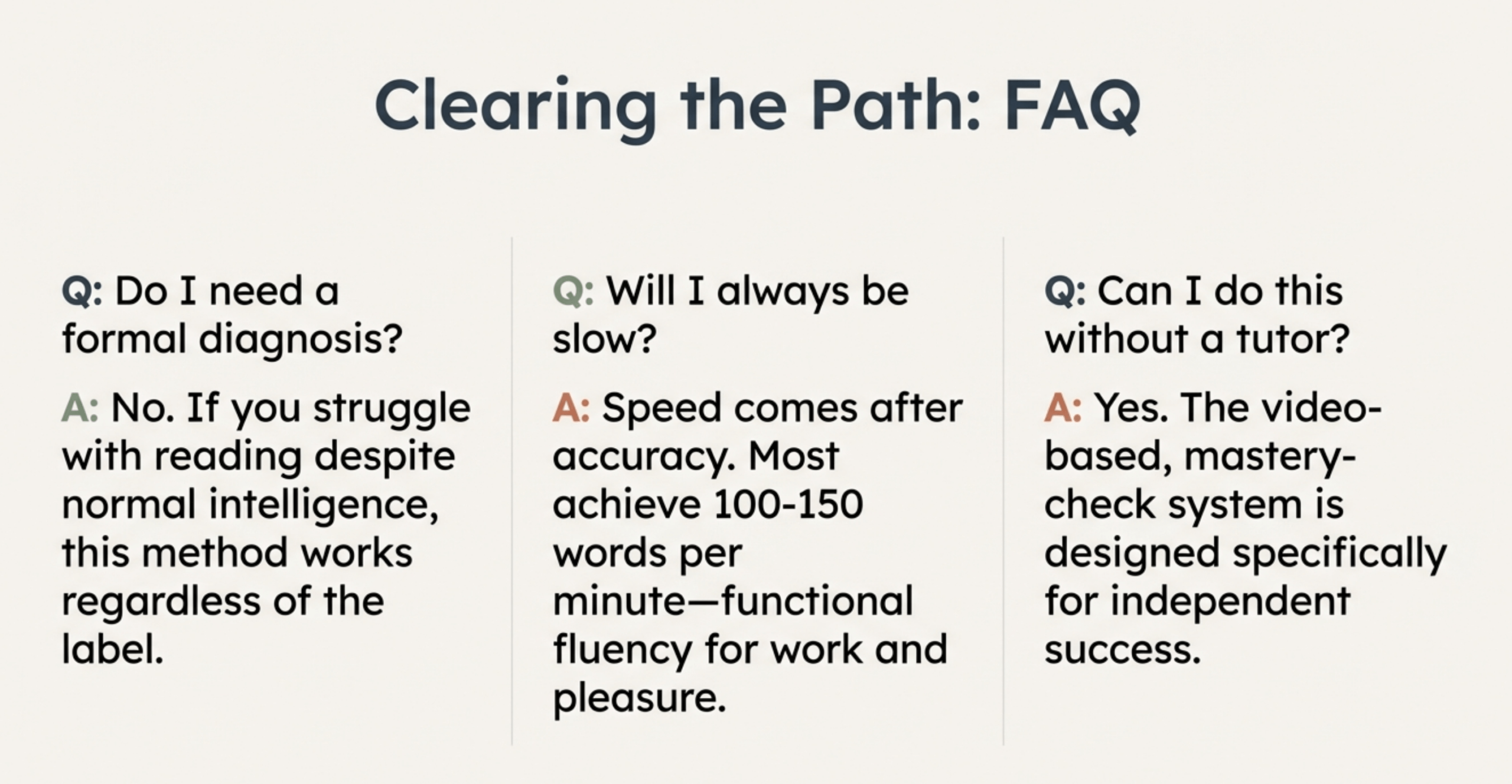
Do I need to be diagnosed with dyslexia to use your program?
No. Formal diagnosis helps you understand your challenges but isn’t required to benefit from Orton-Gillingham instruction. Many successful students were never formally diagnosed—they simply knew reading was harder for them than it should be.
Our program works for:
- Formally diagnosed dyslexic adults
- Adults who suspect dyslexia but lack diagnosis
- Any struggling adult reader, regardless of cause
If you’ve struggled with reading despite normal intelligence and adequate effort, Orton-Gillingham instruction likely helps regardless of formal diagnosis.
Will I always be a slow reader?
Not necessarily. While processing speed challenges mean dyslexic readers may never match the fastest non-dyslexic readers, with proper instruction, most dyslexic adults achieve functional fluency (100-150 words per minute or more)—adequate for work, education, and pleasure reading.
Speed isn’t the primary goal; accuracy and comprehension are. Most dyslexic adults find that once accurate decoding becomes automatic, reading speed improves significantly.
Can I learn without a tutor?
Yes. While traditional Orton-Gillingham emphasizes one-on-one tutoring, our video-based program successfully teaches dyslexic adults independently. The systematic instruction, unlimited review, and mastery-based progression provide the support dyslexic learners need.
Thousands of students—many likely with undiagnosed dyslexia—have succeeded with our self-paced approach.
What if I’ve failed multiple times before?
Previous failures don’t predict future outcomes when you use proper instruction. Most dyslexic adults “failed” previously because they received instruction not designed for dyslexic brains.
Whole language approaches, minimal phonics, context-guessing strategies—these don’t work for dyslexia. Systematic, explicit, multisensory Orton-Gillingham instruction does.
Your previous failures reflect inadequate instruction, not inability to learn.
Should I disclose my dyslexia at work/school?
This is a personal decision. Many adults prefer improving their skills privately before disclosure. Our program’s self-paced, private nature allows you to develop confidence before revealing struggles to employers or educators.
Once you’ve achieved reading competence, you can decide whether and how to discuss your dyslexia based on whether you need accommodations or want to advocate for others.
Can I learn both reading and spelling with dyslexia?
Yes, though spelling typically takes longer than reading for dyslexic learners. Our program integrates reading and spelling instruction—every lesson teaches both skills simultaneously.
This integration is crucial: understanding spelling patterns reinforces reading skills and vice versa. While spelling mastery may take 24-30 months compared to 18-24 for reading fluency, both are absolutely achievable.
Tips for Dyslexic Adults Learning to Read
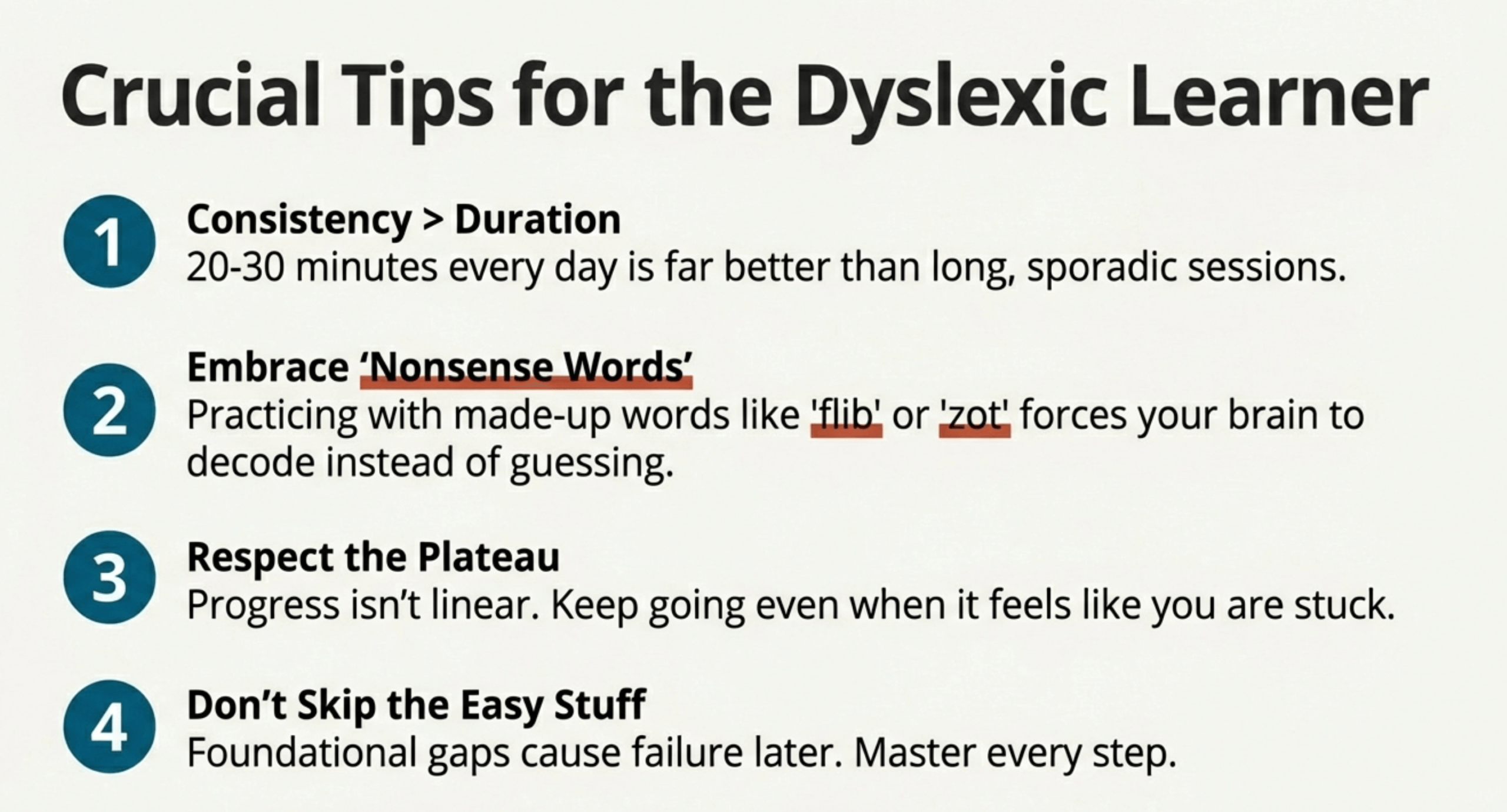
1. Commit to Daily Practice
matters more than duration. Even 20-30 minutes daily produces better results than longer, sporadic sessions. Dyslexic brains need regular reinforcement to build automatic skills.
2. Trust the Process During Plateaus
Learning plateaus are normal, especially for dyslexic learners. Your brain is consolidating skills even when visible progress seems to stall. Continue consistent practice through these phases—breakthroughs follow plateaus.
3. Don’t Skip Lessons
Even lessons that seem easy are important. Dyslexic learners especially need the cumulative review and systematic progression. Skipping “easy” lessons creates gaps that cause problems later.
4. Embrace Nonsense Words
Nonsense word practice feels strange but is especially crucial for dyslexic learners. It forces your brain to use phonics rules rather than memory—exactly what dyslexic brains need to develop.
5. Review Regularly
When concepts feel shaky, review earlier lessons. This isn’t “going backward”—it’s reinforcement. Dyslexic brains need more review than typical learners, and our program allows unlimited review without shame or cost.
6. Celebrate Small Wins
After years of reading failure, celebrate every success: decoding a new word type, passing a quiz, reading a paragraph fluently. These small wins build the confidence and motivation to continue.
7. Be Patient with Yourself
Learning takes 18-30 months. That’s okay. You’re rewiring neural pathways your brain never properly developed. This takes time, but it works. Trust the process and your own capability.
The Science: Why This Works
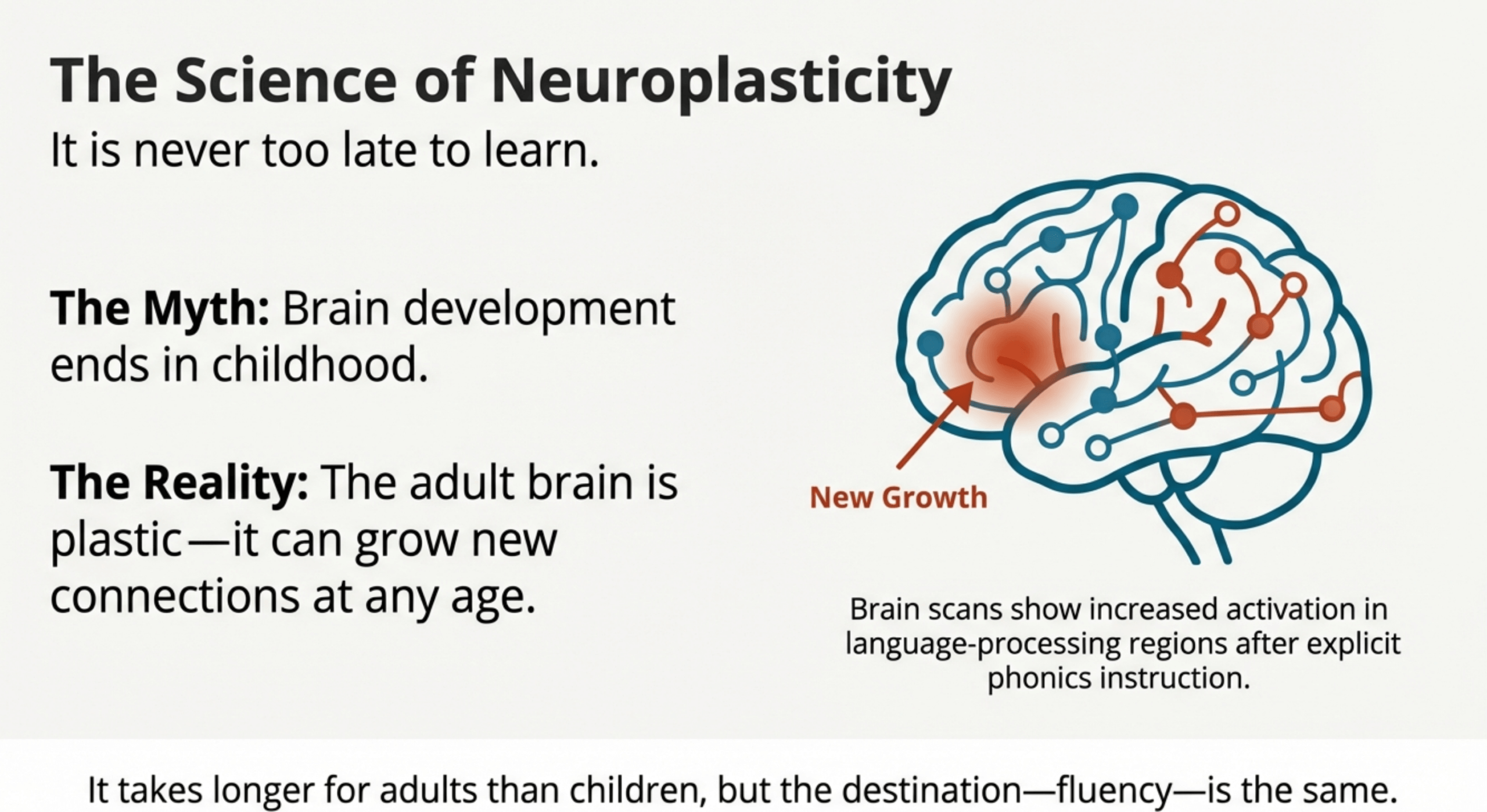
Neuroplasticity in Adult Brains
For decades, scientists believed brain development ended in childhood. We now know adult brains remain “plastic”—capable of forming new neural connections throughout life.
This means dyslexic adults can develop the neural pathways for reading that didn’t form properly in childhood. It takes longer than in childhood but is absolutely possible.
Research on Adult Dyslexia Intervention
Studies show that systematic, explicit phonics instruction produces measurable changes in adult dyslexic brains:
- Brain scans show increased activation in language-processing regions
- Standardized test scores improve significantly with proper instruction
- Neural pathways become more efficient over time
- Changes persist long-term—gains don’t disappear without practice
The science confirms what successful students demonstrate: dyslexic adults can learn to read with proper instruction.
Start Your Journey Today
Many evidence-based programs for dyslexic adults come with substantial costs. Wilson Reading System tutoring typically costs $6,000-28,800 for complete instruction, while Barton Reading & Spelling System requires a family member or tutor to teach the program (books cost $400-500, but tutoring adds significantly to the total investment). Lindamood-Bell programs can exceed $20,000 for intensive instruction.
These programs are effective because they use systematic, multisensory Orton-Gillingham methodology—the same approach proven to work for dyslexic learners. We All Can Read provides this same foundational methodology in a self-paced online format at $73/month, making systematic phonics accessible to dyslexic adults who cannot access or afford high-cost tutoring.
The key question isn’t whether expensive programs work better—it’s whether you need one-on-one tutoring or can learn effectively through comprehensive online instruction. For a complete comparison of adult phonics programs including those designed for dyslexia, see our Adult Phonics Cost Comparison Guide.
If you’re a dyslexic adult who’s struggled with reading for years, you now understand:
- Your struggles aren’t your fault—they reflect inadequate instruction
- Dyslexia doesn’t prevent learning—it requires specific instruction methods
- Orton-Gillingham approaches work specifically for dyslexic brains
- Adult brains remain capable of developing reading skills at any age
- Timeline is 18-30 months, but success is absolutely achievable
Our adult phonics program provides Orton-Gillingham instruction designed for independent adult learners:
- 720 systematic lessons in proper sequence
- Multisensory video instruction
- Mastery-based progression
- Unlimited review and repetition
- Self-paced—no pressure to keep up with others
- Adult-appropriate materials
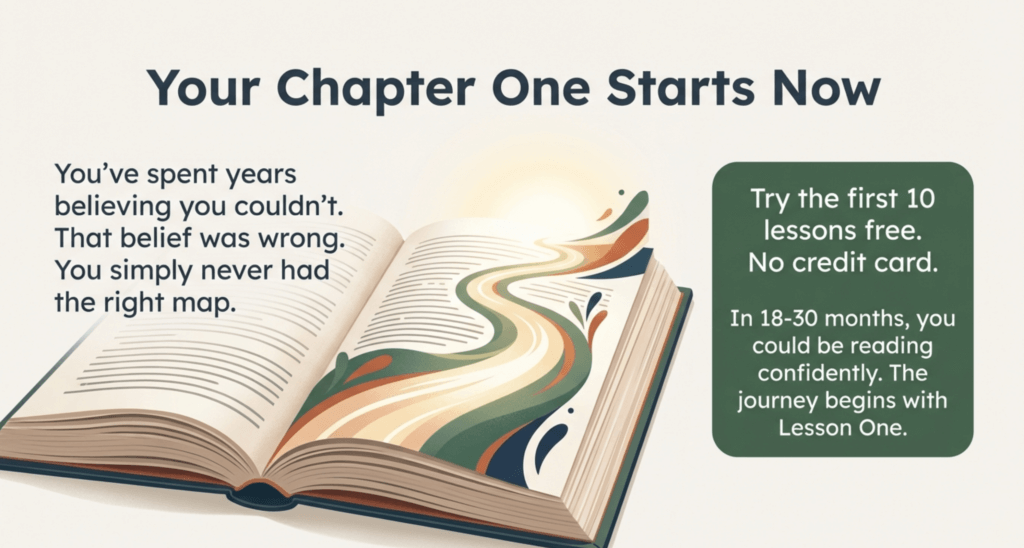
Try the first 10 lessons completely free—no credit card required. Experience Orton-Gillingham instruction designed specifically for how your brain learns.
If those first 10 lessons help you improve, continue with the full program for $73/month. Cancel anytime.
You’ve spent years believing you couldn’t learn to read. That belief was wrong—you simply never received instruction designed for dyslexic brains.
In 18-30 months, you could be reading confidently, independently, and fluently. The journey begins with lesson one.
Related Resources
Adult Phonics Success Stories – Read detailed journeys of students who overcame reading struggles
How Long Does It Take Adults to Learn Phonics? – Realistic timelines for all adult learners
Orton-Gillingham Principles – Understanding the method designed for dyslexic learners
Adult Phonics Program Overview – Complete curriculum details